Category: DevOps Practice

  • CloudBees Unfurls Dual CI/CD Strategy at DevOps World Event

    CloudBees Unfurls Dual CI/CD Strategy at DevOps World Event

    During a DevOps World event, CloudBees took the wraps off the first major update to the open source Jenkins continuous integration/continuous delivery (CI/CD) platform made in the past several years.

    At the same time, the company also unveiled a proprietary DevSecOps platform based on Kubernetes that is optimized for building and deploying cloud-native applications based on portable Tekton pipelines.

    Shawn Ahmed, chief product officer for CloudBees, said the updates to Jenkins make it possible to horizontally scale Jenkins controllers while at the same time ensuring high availability. The latest update also provides a workspace caching mechanism to simplify sharing them across multiple jobs in a way that significantly reduces the amount of compute and storage resources consumed, he added.

    CloudBees also added a Baseline capability to the Jenkins repository to improve startup times without causing build storms.
    Collectively, those capabilities will increase the number of jobs that can be simultaneously executed to improve overall productivity, said Ahmed.

    CloudBees has also added a Pipeline Explorer tool in the cloud-based edition of Jenkins that enables DevOps teams to visually debug and troubleshoot pipeline jobs. That tool will also provide the foundations for self-healing and artificial intelligence (AI) capabilities that CloudBees plans to add to the Jenkins platform later this year and into 2024, added Ahmed. For example, AI tools will surface suggestions on how to fix a problem in a pipeline, he noted.

    The DevSecOps platform, meanwhile, leverages Tekton pipelines to provide DevOps teams with more granular control over how pipelines can be orchestrated, said Ahmed. It also provides access to GitHub Actions-style domain-specific language (DSL), support for feature flagging, security, compliance, pipeline orchestration capabilities, analytics and value stream management (VSM) tools that can be deployed by an internal IT team or accessed via a single or multi-tenant managed cloud service.
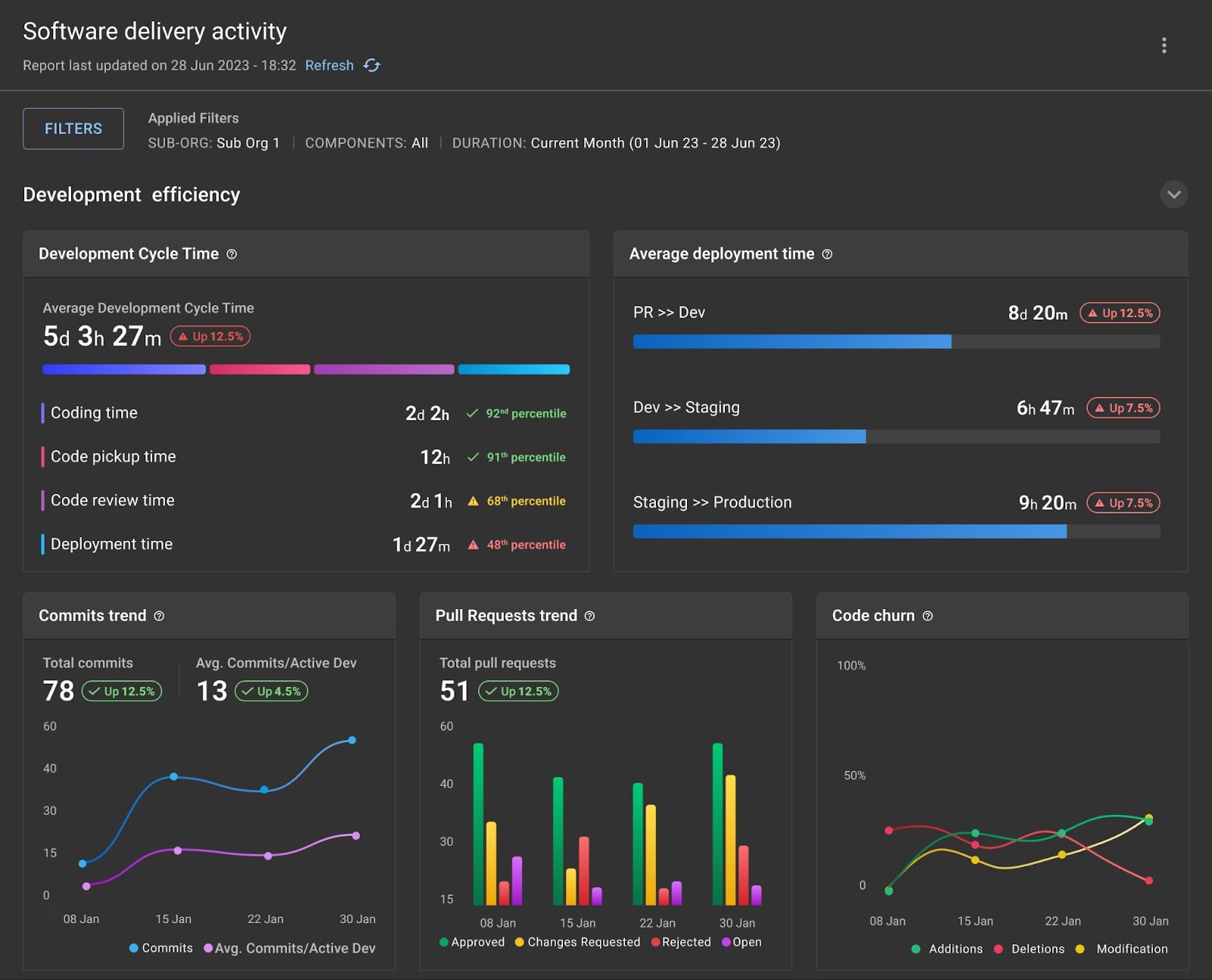
    Those built-in capabilities will make it simpler for platform engineering teams to centrally manage building and deployment of cloud-native applications by enabling developers to self-service their own engineering requirements via an internal developer platform (IDP), said Ahmed. The overall goal is to provide a more integrated approach that breaks down software engineering silos that exist in many existing DevOps workflows, said Ahmed.

    Each DevOps team will need to decide for themselves to what degree to move forward using Jenkins to build and deploy applications versus opting for a more modern alternative in the form of the DevSecOps platform. CloudBees, however, is committed to providing plug-ins and integrations across both platforms to enable DevOps teams to protect their investment in existing tooling, noted Ahmed.

    The status of Jenkins X, an open source CI/CD platform based on Kubernetes that CloudBees previously donated to the Cloud Delivery Foundation (CDF), is not immediately clear. Regardless of the approach, however, there is a clear opportunity to revamp DevOps workflows by upgrading Jenkins or switching to a more modern platform such as DevSecOps. The challenge, as always, is determining the pace at which any such transition might be made.

  • Will ChatGPT Replace Human Software Developers? Probably Not

    Will ChatGPT Replace Human Software Developers? Probably Not

    Since the release of ChatGPT, there has been a great deal of hype around generative AI and how companies can leverage it to cut costs and democratize software and application development. Naturally, with discussions of cost-cutting and democratization come whispers about what will happen to software developers.

    This is a real and valid concern, but software developers’ skills, expertise and creativity are still very much needed.

    While generative AI and AI code generation tools like ChatGPT have shown some promise and potential benefits, they are still in their infancy—like many other innovative technological advancements. We also don’t know what scenarios they may present down the road or their true abilities when the technology matures. For instance, how will it integrate with other technologies? We don’t know what will happen when a ChatGPT-generated line of code breaks or needs to be changed. We don’t know if it can provide a novel solution to a unique problem or what security threats it will present.

    Given these unknowns, technology executives should think twice about replacing experienced and creative technology talent, such as software developers, with AI code generators.

    Will ChatGPT create novel code to solve a unique problem never encountered before? Probably not.

    A Tale as Old as Time (Or at Least a Decade)

    The technology industry has been searching for and developing new ways to make certain software development tasks much easier and more streamlined for years. One example of this is low-code/no-code.

    The notion of simplifying application development and replacing software developers with laypeople (citizen developers) has been around for more than a decade now, as low-code and no-code solutions have grown more popular. These solutions have promised that companies don’t need technical talent to get their software and app projects off the ground.

    However, if you look at the impact of these solutions today, their use can result in large amounts of technical debt and almost always require the skill of experienced software developers.

    The reason? Building complex software and applications is extremely difficult; it’s an art.

    Low-code and no-code solutions have their rightful place and can make things easier if a company is looking to launch a simple app or static web page. These solutions can increase the pace of development and time-to-market and enable everyday people without any development skills to facilitate them. However, they are not actually a complete solution and often overlook aspects of development that a human software developer would typically address. Without a skilled expert involved, low-code/no-code platforms often can’t solve a unique problem a company has.

    So, how does this relate to AI code generators like ChatGPT? Here’s how.

    A Similar Situation—With One Key Difference

    When thinking about their place in the development process, AI code generators are not that different from low-code or no-code solutions. The thinking is that they will also enable non-technical individuals to create software and applications with ease.

    Yet, there is one key difference—they promise expertise, too. But is the expertise coming from the AI code generator or the person piloting it? The answer is simple; it is not from the code generator.

    There have been examples of companies and individuals that have tried using ChatGPT to build code, and they have appeared to be successful. However, without the input of the individuals using it, it never would have been able to create the code on its own unprompted.

    This means that the expertise of skilled, human software developers is still very much needed, especially when building intricate software and apps that require complex functionality such as optical character recognition (OCR), internet-of-things (IoT) connectivity and more.

    A Future With Software Developers

    Because of the expertise still required to create elaborate and innovative software and applications, AI code generators will not replace software developers anytime soon, if ever.

    The technology used in these tools is still in its infancy, presenting many lingering questions and potential challenges. We will see this confirmed by the trials and tribulations experienced by the few companies and executives attempting to replace software development teams with tools such as ChatGPT.

    Knowing AI code generators follow a similar path as low-code and now-code solutions, companies and executives should use them as developer enablement tools. These tools should complement the work of software developers by empowering them to focus on the complex tasks software and apps today require.

  • The Path to App Modernization: Benefits, Pitfalls and the Route to Success

    The Path to App Modernization: Benefits, Pitfalls and the Route to Success

    There are many reasons an organization may find itself on the path to considering the risky journey of application modernization. It could be to gain an edge or to build a more competitive positioning, or a business could have a legacy system running on infrastructure that is no longer viable, leaving them no other choice. But the conundrum for organizations still resurfaces when considering app modernization; they must select one of these two routes: Either “the failure rate is high, and failure is simply not an option” or “Everyone is still doing it, so let’s forge ahead.”

    The Benefits of Choosing Application Modernization

    Whether an organization chooses this path out of necessity or ambition, modernizing an old IT environment can deliver several benefits, ranging from reducing outdated hardware and software to creating new value through innovation. Specifically, the key benefits are:

    ● Reducing technical debt and improving the underlying infrastructure: Improved security, operations, reliability and scalability.
    ● Decreasing expenses: Lowering the cost spent on expensive hardware and software improves the utilization of resources, thereby decreasing the total cost of ownership of technology operations.
    ● Accelerated time to market: Modernized IT and product development gain value from technological improvements that decrease the time it takes to develop and deploy new products and services.
    ● Agility in the market: Modernization enables an organization to react to changes at an accelerated rate, providing a competitive edge in the market.

    Choosing the Best Path to Application Modernization

    There are different paths to modernization, each with its own focus. On the one hand, there’s the infrastructure aspect of building your platform engineering practice versus adopting a service approach with a platform-as-a-service (PaaS). On the other hand, there is the actual process of modernization with options like refactoring, re-platforming or rewriting your systems, either in-house or through outsourced services. It ultimately starts with modernizing the relationship of the application with its infrastructure and changing some assumptions.

    Once you have a baseline, running everything else should come from a cost-benefit analysis. A scalable, well-managed monolith is valuable despite its age. Ensuring horizontal scalability and a robust backup strategy are key to effectively managing mutable data.

    First, understand the blockers in your current implementation that would complicate a shift to the cloud. Or identify where the result may not deliver any value.

    There are very common anti-patterns that remain anti-patterns, whether on the cloud, running on managed hosting or on-premises. Identifying them allows you to start absorbing technical debt regardless of whether a move to the cloud happens as intended.

    Anti-patterns to look out for are:
    ● Weak separation of code and configuration: You want to be able to run many parallel instances of each application as separate environments. Telltale signs are hard-coded URLs and service credentials. The dependency is the capability of running ephemeral preview environments that are quick to launch and quick to destroy, such that you know that you are “cloud ready.”
    ● Weak separation of the read/write domain from the read-only domain: In a cloud deployment, you want a build step that creates immutable artifacts that are not modifiable in production, and you need to know where all the actual data resides. Older applications tend to “believe” they own the whole disk.
    ● Manual configuration of services: You should be able to run “stock” services without any manual configuration in case the need for a specific database configuration arises and signals the likelihood of an application issue that requires debugging.

    Simply packaging a Docker container or a VM image and deploying to an IaaS won’t create any benefit and only increases costs. The first step to success is a thorough clean-up and update of the documentation to start the process.

    The one basic rule to follow is the ability to run an arbitrary number of instances of every element. Achieving this will allow everything else to flow. There is no need to rush to transform all Crons into “separate workers” and break the monolith into microservices. But the proof that it is possible now exists.

    The Best Approach to Application Modernization: In-House or Outsourced

    A mixed approach between in-house and outsourced is often optimal. There are many elements to consider. If you have a minimal in-house understanding of what the cloud imposes as constraints, you may be tempted to go for the simplistic lift-and-shift approach. Outsourcing everything can lead to huge amounts of lock-in.

    There are ways to cut corners that could simplify and accelerate the initial project, but this could increase the costs down the line. There needs to be a level of abstraction where using a PaaS is a winning proposition and can provide quite a bit of abstraction at no cost.

    Without control, the project may end up as something that “runs on the cloud” without the actual benefits. But there are many ways to do that.

    The Right Mindset Will Help Avoid Pitfalls Along the Way

    By neglecting constraints and skipping the necessary preparation, the costs may escalate. Running big chunks of hardware continuously versus using small ephemeral resources as needed typically leads to significantly increased costs over time. Full rewrites often go wrong when trying to obtain all the benefits immediately.

    A simple four-step approach for success is:

    ● Start with modernizing the relationship of the application with its infrastructure and changing assumptions.
    ● Identify and address the blockers in the current implementation–this makes a shift to the cloud less complicated and enables a smoother transition.
    ● Set a baseline that allows everything else to run from a cost-benefit analysis. Ensure horizontal scalability and implement a robust backup strategy to effectively manage mutable data.

    Accepting that app modernization will be a journey and that the initial implementation is a slightly more scalable and resilient version of the original. This is often a better mindset that leads to a more effective process.

  • JFrog Launches New Channel Partner Program

    JFrog Launches New Channel Partner Program

    At JFrog’s swampUP event in San Jose, California, the company launched its Global Channel Partner Program. The program, led by Kelly Hartman, VP of alliances and partners, is JFrog’s first formal program to work with the channel to bring its DevOps and DevSecOps solutions to market.

    Rather than the traditional pyramid model, Hartman, who was formerly at AWS, has designed a flatter program; partners can choose to work with JFrog in a co-selling arrangement, as a traditional reseller or as part of JFrog’s government sales partners. Partners can choose which type of relationship they want to use on a case-by-case, deal-by-deal basis. This gives them lots of flexibility.

    This program is a sign of JFrog’s continuing evolution from a startup to a public company. Several of the founding channel partners in the program weren’t surprised at the announcement; the feeling was, as Mike King of IT Methods said, “They have been knocking on this door for some time.” Hartman added that the goal was not to make JFrog a 100%-channel company. Rather, the aim is to have as much business run through the partners as JFrog’s customers want while keeping the emphasis on the JFrog customer base.

    The program is primarily aimed at DevOps consultants worldwide, rather than the larger integrators, JFrog said. The DevOps consultant market is broadly fragmented, and made up of numerous sized companies – from one to two-person operations all the way up to 1,000+-person organizations, such as IT Methods.

    Hartman said she is learning from her past experience at AWS and other organizations. She has not crafted a traditional program with tiers and marketing development funds; instead, much of what partners need is built into a self-service portal, including a campaign in a box and social media kits.

    IT Methods is an ideal partner for JFrog, King said. They offer a fully-managed SaaS, single-tenant platform allowing their customers to manage their DevOps environments. IT Methods supports more than 45 DevOps tools and its major clients are large enterprises. They have offered JFrog via their platform for six years, but welcome the formal partner program and accompanying certification offered for SMEs. King said he was pleasantly surprised at the JFrog program’s maturity, considering it is a new program. He added that joint lead generation and closing capability and partner enablement offerings would put JFrog “at the head of the class.”

    The JFrog channel partner program joins their existing technology partner and cloud partner programs. In fact, Hartman said they are working with their cloud provider partners to source new channel partners. 

    It was an exciting new development in what promises to be a gangbuster swampUP here in San Jose. More developments will follow.

  • Latest eBPF Advances Are Harbingers of Major Changes to IT

    Latest eBPF Advances Are Harbingers of Major Changes to IT

    The open source community advancing the extended Berkeley Packet Filter (eBPF) gathered at a virtual eBPF Summit today that featured a demonstration of eBPF being used in a Windows environment. eBPF enables applications to run within a sandbox in the Linux microkernel.

    Microsoft has signaled its intent to employ eBPF within Windows like the latest version of Linux already does today. That capability makes it possible to, for example, run networking, security, observability and storage software closer to the kernel to dramatically improve performance versus running that software in user space.

    Liz Rice, chief open source officer for Isovalent, a provider of networking software based on eBPF, said that while it’s clear eBPF will have a major impact on IT, the transition to eBPF won’t be a single event. Instead, it will be more of an evolutionary process that will occur as organizations upgrade their operating systems and the various tools and applications they employ.

    The eBPF Foundation, an arm of the Linux Foundation, was formed to expand the use of eBPF across all operating systems. Members of the eBPF Foundation include Facebook, Google, Isovalent, Microsoft and Netflix.

    In effect, eBPF changes the way operating systems are designed. It bridges the boundary between kernel and user space by enabling developers to combine and apply logic across multiple subsystems that were historically completely independent. That approach enables, for example, a security tool to scale to the point where it can identify threats at much higher levels of throughput at a time when brute-force cyberattacks are overwhelming existing cybersecurity tools.

    Similarly, networking, storage and observability tools should be able to run at much higher levels of scale. That’s especially critical for DevOps teams embracing observability platforms that need to dynamically process massive amounts of data in near-real-time.

    Less clear is the degree to which eBPF might one day drive convergence across distinct categories once multiple tools and applications run at the microkernel level.

    IT organizations would be well-advised to ask their vendors when they plan to support eBPF as they plan their upgrade cycles. It’s not likely IT teams are going to want to upgrade every tool and application that can benefit from eBPF all at once. In fact, updates to these applications that don’t support eBPF might even be postponed in the knowledge that a much larger and arguably more critical update is on the immediate horizon.

    In the meantime, as the number of organizations running the latest versions of Linux continues to increase, more hands-on experience with eBPF will be gained. IT teams may not need to concern themselves with what is occurring in the microkernel of the operating systems, but they should at least understand how eBPF ultimately helps reduce the total cost of running IT and how it makes the Linux microkernel more programmable. Those IT teams, however, will soon discover how stark a difference in performance there will be.

  • Nitric Adds Support for Additional Languages to IaC Alternative

    Nitric Adds Support for Additional Languages to IaC Alternative

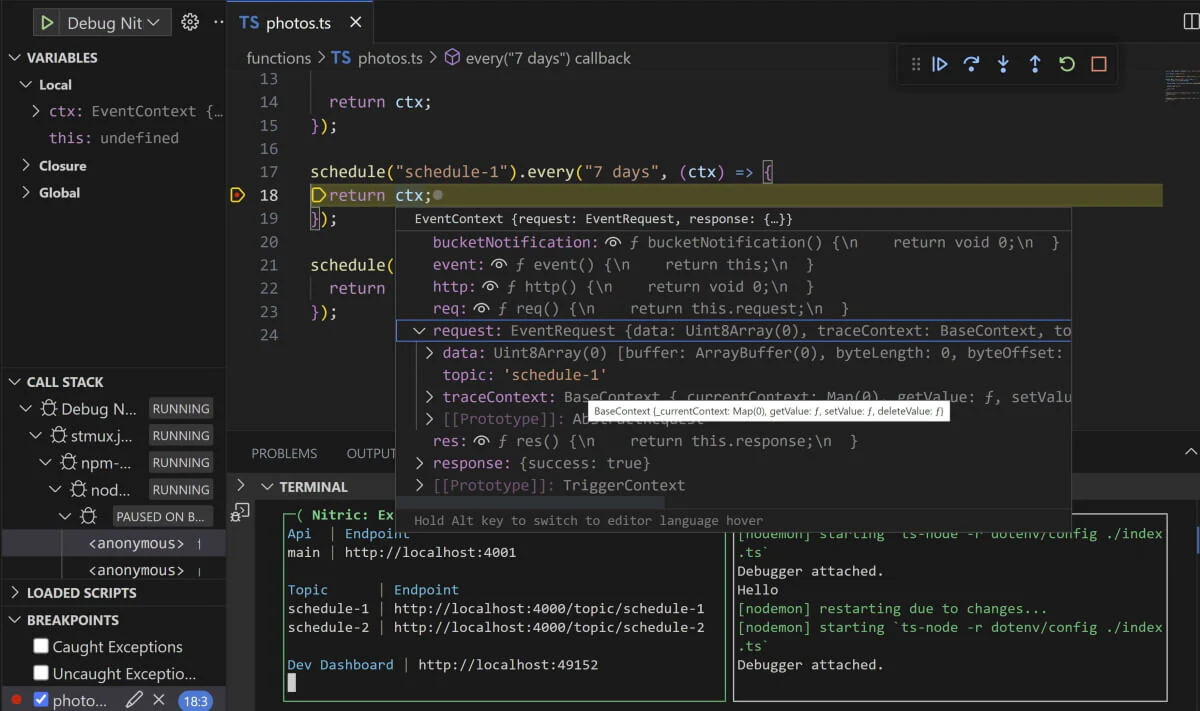
    Nitric today announced it has added support for the Go and Kotlin programming languages to its application framework. The framework automatically creates code to provision infrastructure based on the way the code used to write an application has been developed.

    Rak Siva, vice president of engineering for Nitric, said that approach eliminates the need to rely on developers using infrastructure-as-code (IaC) tools to configure platforms.

    Nitric previously supported JavaScript, Python and C# along with frameworks such as Express, Fastify and Nest.js to enable infrastructure to be automatically configured based on an intent expressed in the codebase enabled by a software development kit (SDK). In effect, Nitric infers how to optimally configure infrastructure. DevOps teams can then choose to either rely on the configurations created by the Nitric framework or customize it to add support for their own policies, said Siva.

    While IaC tools have played a major role in streamlining the application development and deployment process, they are also the root cause of many cloud security incidents. Developers that use these tools typically have limited cybersecurity expertise, so the probability that cloud infrastructure will be misconfigured in a way that cybercriminals can exploit is high.

    Nitric is attempting to take the concept of managing infrastructure-as-code to the next logical level by automating the process so it can be consistently applied and managed, said Siva. That approach provides the added benefit of improving the overall developer experience by eliminating a task that most developers view as a means to a larger end, he added.

    It’s not clear how much of the cloud infrastructure that DevOps teams are relying on to build and deploy applications is misconfigured, but given the varying levels of skill among developers, there are very few organizations that have not encountered a cloud security issue. The challenge is not so much the security of the underlying platforms as it is the shared responsibility model relied on to secure these platforms. Cloud security platform providers assume that organizations that programmatically invoke infrastructure have the expertise required to securely provision it. However, very few organizations can achieve that goal 100% of the time, which results in organization having to make considerable investments in additional tools and platforms to monitor and enforce cloud security policies.

    As more organizations focus their efforts on securing software supply chains, many of them will be revisiting how cloud infrastructure is provisioned. In fact, one of the reasons platform engineering is gaining traction as a DevOps methodology is to improve the developer experience and strengthen application security.

    Cultural change, of course, is difficult. IaC tools such as Terraform are deeply embedded within many DevOps workflows, so any alternative approach to provisioning infrastructure will require time to take hold. However, as regulations that hold organizations more accountable for application security become increasingly more stringent, it’s now a question of when rather than if change will come to how cloud infrastructure is provisioned.

  • JFrog Extends DevOps Reach to Manage and Secure AI Models

    JFrog Extends DevOps Reach to Manage and Secure AI Models

    At its swampUP 2023 conference, JFrog today added additional security capabilities to its continuous integration/continuous development (CI/CD) environment as well as making it possible to manage machine learning models within the context of a DevOps workflow.

    The latest edition of the JFrog Software Supply Chain Platform adds an integrated static application security testing tool (SAST) to scan source code alongside the existing JFrog Xray tool for scanning binaries.

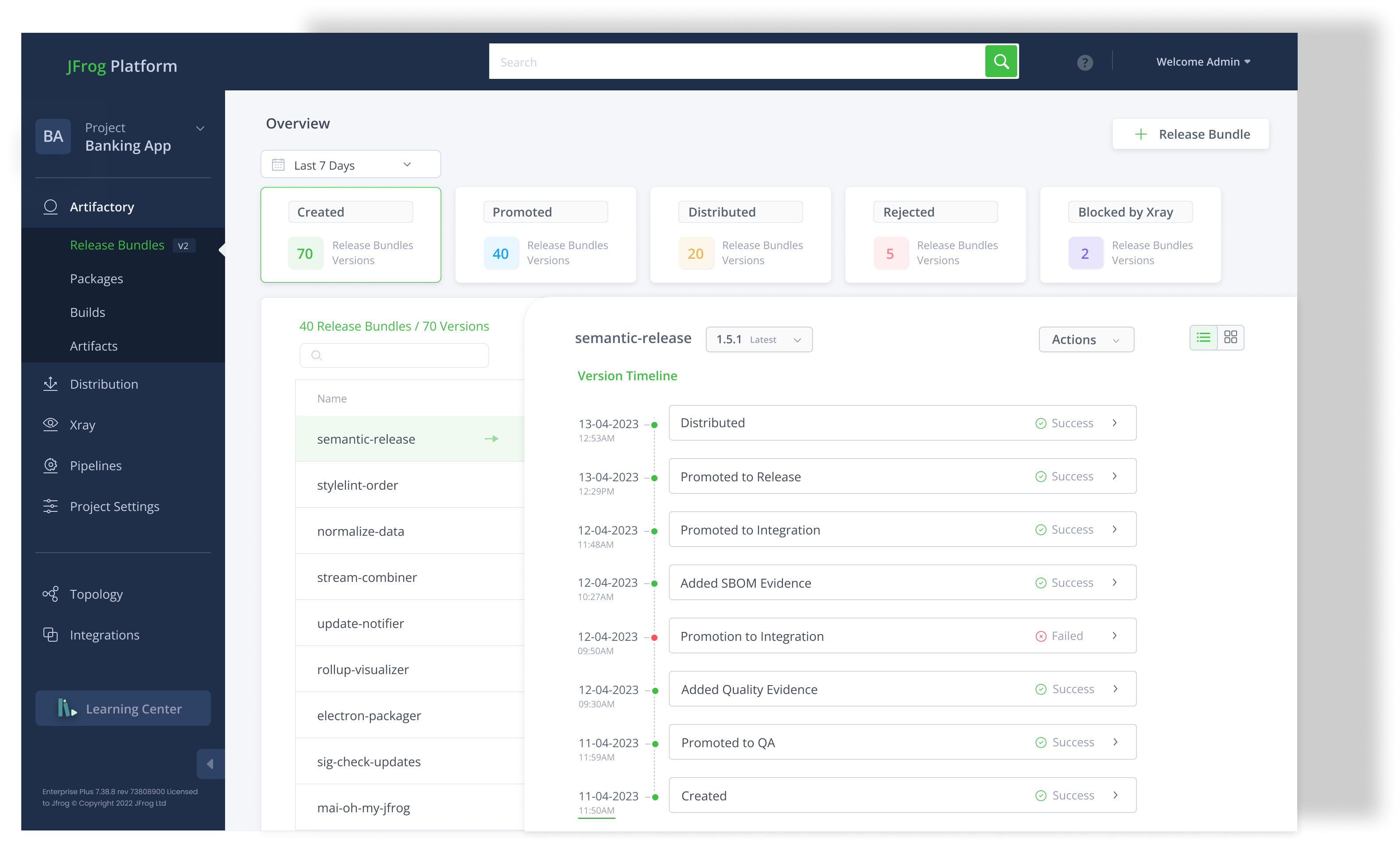
    JFrog has also added an Open-Source Software (OSS) Catalog to the JFrog Curation service to make it simpler for DevOps teams to discover specific packages that have been determined to be secure. JFrog is also adding Release Lifecycle Management (RLM) capabilities that enable aggregating software artifacts into an immutable software package that serves as the single source of truth as multiple iterations of an application are developed. JFrog RLM uses anti-tampering systems, compliance checks and evidence capture to collect data and insights to ensure the immutability of signed binaries.

    Finally, ML Model Management capabilities, available in beta, are being added to the platform to make it possible to store AI models, run AI models from Hugging Face, a provider of open source AI models, as a proxy in cache via an application programming interface (API) and apply DevSecOps best practices to govern, secure and ensure licensing compliance.

    JFrog CTO Yoav Landman said that as DevOps teams become more familiar with AI models, it’s becoming increasingly clear they are managed like any other software artifact incorporated into a DevOps pipeline. He noted that the approach provides the added benefit of helping to ensure AI models have not been poisoned by malicious data and prompts that would deliberately cause a hallucination.

    Most AI models today are created by data scientists using machine learning operations (MLOps) best practices that each organization defines. In some instances, those processes include what is known as a feature store that enables data scientists to track which components are being used at any given time. However, once a model is completed, it needs to be integrated into an application—a process that, from a DevOps perspective, is best facilitated by storing an AI model in a Git repository alongside other components that need to be managed.

    It’s still early days as far as the convergence of DevOps and MLOps practices are concerned. Going forward, as it becomes apparent almost every application will be invoke some type of AI model, the need to integrate these workflows is becoming a more pressing concern.

    It’s now only a matter of time before AI models become a pervasive element of the software development life cycle as they are continuously retrained and updated. It will generally fall to DevOps teams to manage the deployment and updating of those AI models in collaboration with the data science teams that train them. The immediate challenge, of course, will be to bridge the significant cultural divide between two very different types of IT professionals.

  • Unused Code: Proving a Negative

    Unused Code: Proving a Negative

    We have a ton of code that is no longer being exercised. We really don’t talk about it much, but it’s out there. From feature flags shutting off code to API versioning making an interface obsolete, it’s just hanging around out there. Like an albatross. Waiting for someone to misuse it. Or, to address the more pedestrian concerns, confusing people new to the codebase. But that code is not contributing a thing.

    Easy example. You are on version 3.2 of your API. Version 2.1 is not called by anything, but the code is still hanging out there. It is not that 2.1 cannot be called, but that it is not currently called. The problem with that is that new devs have to work through what’s current, and since 2.1 and 3.2 probably share 95% of their code bases, what portion of that code base is unused? And the API is sitting there, waiting for someone to penetrate your network and find malicious uses for it.

    Proving a Negative

    But here is the problem: Identifying that a bit of code–be it an API, a method, just a few lines in an if statement, whatever–is never exercised is terribly difficult and, in highly complex environments, borders on the impossible (it is never impossible, assuming IT owns all of the code that could exercise that bit). The old adage about proving a negative absolutely applies. We can–and testing tools in both the functional and security spaces do–generate a list of code that is exercised, or identify code that isn’t being exercised. But not a list of code that is never exercised. That functionality in test tools is super useful, because it helps prioritize issues that are being used a lot and leaves the ones not seeing a ton of traffic for later resolution.

    But I’ll say that in most organizations, that’s no longer far enough. The cruft in your code causes problems, and you need to clean it up. If you’ve worked in IT for any length of time, you’ve been through the “Oh, that bug is because the developer called something no longer used” scenario at least once. And it is a straight-up waste of time.

    So here is my proposal. Test tools generate a list of what isn’t called from systems under test. Pick one–security testing or functional testing–and require it for any bit of code, no matter how small, to go into production. That means that the system knows about all source code and thus knows definitively if a bit of code has been exercised.

    Clean Up as You Go

    Is that a tall order? Yes. Testing isn’t free. But given a scenario where you reduce technical debt by eliminating excess code, I think it will pay for itself. And that is not counting the security posture improvement that reducing the code base implies.

    You’re running the systems that present your organization to the world, so you may as well do some due diligence on yourselves. Keep making cool new stuff and upgrading the old, but clean up as you go with some form of monitoring, this or a more procedural one, so the quality is high and the excess is low.

  • Survey Surfaces Spike in Generative AI Usage Across IT

    Survey Surfaces Spike in Generative AI Usage Across IT

    A survey of 800 DevOps and application security operations (SecOps) leaders published today found nearly all (97%) are making use of generative artificial intelligence (AI).

    Conducted by the market research firm Sago on behalf of Sonatype, the survey found that beyond writing code, a full 45% of the 400 security operations professionals have already embedded generative AI into their workflows compared to 31% of the 400 DevOps professionals.

    Security operations teams also reported greater time savings than their DevOps counterparts, with 57% saying generative AI saves them at least six hours a week compared to only 31% of DevOps respondents that saw the same benefit.

    The top benefits cited by security operations teams is increased productivity (21%) and faster issue identification/resolution (16%) compared to faster software development (16%) and more secure software (15%) cited by DevOps professionals.

    It’s still early days as far as embedding generative AI in workflows is concerned, but it’s clear the ability to write code faster is trumping concerns about the increased number of vulnerabilities that might find their way into application environments. The most widely used generative AI platforms are trained on a massive corpus of data that includes code of varying quality. As such, a lot of the code generated by a general-purpose AI platform will likely have as many errors, including vulnerabilities, as the code used to train it.

    The level of faith organizations will place in that code will be heavily influenced by use cases. A script used to automate DevOps workflows that are not externally facing may be one example of where a general-purpose AI platform can boost productivity. In other instances, code that contains vulnerabilities that find their way into a web application might be much more problematic.
    Despite those concerns, however, the survey finds nearly three-quarters (75%) of all respondents feel pressure to use generative AI.

    There are, of course, already large language models trained on code that has been vetted by software engineers. In the months ahead, the code generated by AI platforms specifically designed for that purpose should significantly improve.

    Sonatype CTO Brian Fox said it’s only a matter of time before IT organizations focus more on ensuring the generative AI platforms are tuned for specific tasks. In the meantime, however, application security may get worse before it gets better, with more than three-quarters of DevOps respondents noting that generative AI will result in more vulnerabilities in open source code. Only 58% of security operations professionals are similarly concerned.

    It will be up to the engineers that make up these teams to bring discipline to code quality practices and make sure the code running in a production environment is of high quality, regardless of how it was created, noted Fox. For the moment, the issue is that AI augmentation is now occurring at a faster pace than the AI advances that should one-day help DevOps teams cope with increasingly larger codebases, he noted.

    Survey respondents are also concerned about who might own the code generated by AI. A total of 40% said developers or the organizations they work for should own the copyright for AI-generated output, and most of them agreed developers should be compensated for the code they wrote if it’s used in open source artifacts in LLMs (DevOps 93% versus SecOps 88%). A total of 42% of DevOps respondents and 40% of SecOps respondents said a lack of regulation could deter developers from contributing to open source projects.

    DevOps and SecOps leads both want more regulation: Asked who they believe is responsible for regulating the use of generative AI, 59% of DevOps leads and 78% of SecOps leads said both the government and individual companies should be responsible for regulation.

    At this point, the proverbial generative AI genie is out of the bottle, so there is no going back. The issue that remains to be seen is how DevOps and security operating teams will adjust to that new reality.

  • Generative AI and Software Testing Tools to Manage Technical Debt

    Generative AI and Software Testing Tools to Manage Technical Debt

    It is easy to take a pessimistic view of generative AI and large language models (LLMs), especially when a growing list of AI experts and public figures have voiced concern about their potential to lead to dire consequences—even to human extinction. But we must also consider how these same technologies might mitigate these risks. There is no doubt that we are living in an accelerated cycle of technological progress and repercussions. However, the intelligence, speed and agility of AI—and particularly machine learning (ML)—may be just what we need to roll with the punches.

    As the speed of development outpaces our ability to mitigate potential risks posed by the systems we build, we are set on a path to accruing massive technical debt—the ever-increasing costs associated with modernizing code later rather than sooner. Too often, organizations in the private and public sectors are reluctant to pay off this debt, choosing an “if it ain’t broke, don’t fix it” mentality toward software maintenance and security. The problem is that as technology outgrows and outpaces our critical infrastructure systems, the potential for catastrophe escalates.

    Machine Learning: A Tool for the New “Space Race”

    Automated testing has proven superior in regression testing, especially in visually recognizing potential issues at the pixel level. If, for example, an important element of your interface is missing from the screen after an update, a visual test script can identify that faster than a human can. AI (and in particular, machine learning) generates test plans that provide more comprehensive coverage of the system under test and more practical coverage.

    Traditional testing methods usually begin with a broad and hypothetical analysis of user interactions. Test engineers begin by casting a wide net to cover the many possible user engagement scenarios they imagine. In contrast, AI-assisted systems learn from actual user interaction, building script libraries that focus on known points of weakness and vulnerability. It also does this at speed and scale. This technology is going to be essential to software test engineers as they inevitably find themselves unable to keep up with the abundance of code generated from LLMs using traditional testing methods.

    Technical Debt is Inevitable but not Unsolvable

    Every new iteration of software has the potential to introduce unforeseen problems ranging from glitchy bugs to catastrophic failures. The risks of releasing new software vary immensely between applications: It’s one thing if the latest release of your music streaming app crashes and quite another if the system that runs the regional power grid fails. One will result in unhappy customers; the other, the potential loss of life.

    The most critical systems (e.g., financial, transportation, safety, medical) are more likely to get frozen in time. Once a stable iteration is released, companies are generally not keen to make changes unless absolutely necessary—beginning the cycle of technical debt accumulation that grows until that debt is paid off by modernizing the code.

    Deciding when to pay off technical debt has always been a matter of weighing pros, cons, costs and benefits. But sometimes, such as in the case of an epic failure, that decision is forced. Both the risk of breaking the system and the cost of modernization compel developers to leave well enough alone. Meanwhile, the longer a system remains unchanged, the more isolated, outdated, and obsolete it becomes, setting the stage for failure.

    By introducing generative AI technology to the development stack along with other tools for authoring, compiling and testing software, developers will soon find themselves driving in the fast lane. With the security of knowing that code can be produced rapidly and released safely, owners of aging legacy systems will be more likely to modernize software sooner, helping them to pay off technical debt more quickly. That, in turn, could lead to increasingly rapid software development and release cycles, more work for developers, and more innovation. Such a workflow could very well become the embodiment of accelerating change, taking us from an “if it ain’t broke, don’t fix it” mentality to one where we anticipate the need for new code and avoid future catastrophic failures, or for that matter, human extinction.