Category: DevOps Practice

  • Why GraphQL is a Better Choice for Building Microservices

    Why GraphQL is a Better Choice for Building Microservices

    There’s been a long debate about whether it’s better to use REST or GraphQL for building microservices. Both technologies have their proponents and critics, but when it comes to the specific needs of microservices architectures, GraphQL emerges as the clear front-runner. Here’s why.

    Understanding the RESTful Concerns

    While REST has been the go-to API style for many years, lauded for its simplicity and general applicability, its limitations become glaringly apparent in the context of microservices. These limitations include:

    • Over-fetching of data
    • Multiple HTTP requests for related data
    • Complex versioning strategies

    Such issues can impede microservices architectures’ performance and scalability.

    Over-fetching of data: REST APIs are designed to return a fixed set of data, which often results in over-fetching. This redundancy is particularly problematic in mobile networks, where every extra byte of data can lead to slower applications and degraded user experiences.

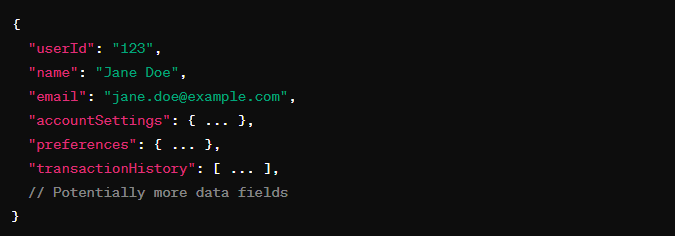
    For example, imagine we have a REST API endpoint /api/user/{userId}, which returns the following data for a user:


    In scenarios where mobile apps only require specific user details like name and email for a profile overview, fetching comprehensive user data means over-fetching.

    This excess data usage can be costly for users with limited data plans and result in slower app performance and degradation of user experience.

    Latency and the N+1 problem: Microservices often require data spread across multiple services.

    Suppose you have an ecommerce application where the order domain handles product, customer, order and return entities, and the stock domain manages product, stock, warehouse and delivery entities. A common operation might be to display order details along with the current stock status for each product.

    Let’s say we have an order microservice and a stock microservice to handle orders and stocks.

    In our scenario, a customer places three orders (N=3) and each order contains four different products. To display the order details with the stock status for each product, the application initially makes one request to fetch the orders. Then, for each product in each order, it makes additional requests to the stock microservice to retrieve stock information. This results in one initial request, plus 12 subsequent requests (three orders times four products per order), summing up to 13 API calls. This multiplicative increase in requests leads to higher latency due to multiple round-trip times (RTT) and increased load on the network and servers, embodying the N+1 problem.

    Versioning challenges: Maintaining REST APIs over time involves complex versioning strategies, such as introducing new endpoints or embedding version numbers in the API path. This can lead to bloat and confusion, complicating API development and consumption.

    The GraphQL Advantage

    GraphQL addresses many REST weaknesses.

    Domain-Driven Design: Microservices thrive on a domain-driven design, where each service is built around a specific business capability. GraphQL’s schema-centric approach aligns perfectly with this, enabling a more organized and coherent structure for microservices.

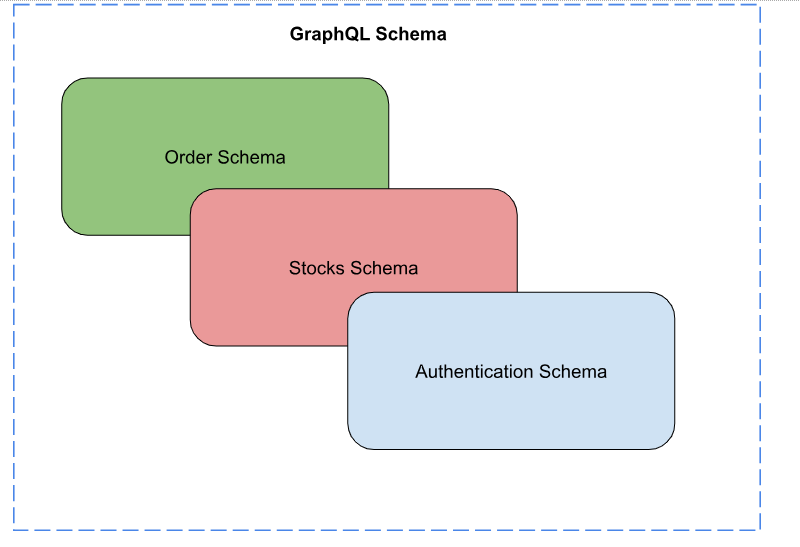
    Unified schema: In a microservices architecture, each service may have its schema, representing a portion of the business domain. GraphQL stands out by allowing these schemas to be combined or stitched together, presenting a unified interface to clients. This means that clients can query data from multiple services in a single request, drastically reducing the complexity and number of network calls.

    Solving the N+1 problem: GraphQL’s ability to fetch data with a single request, regardless of how many underlying services need to be called, directly addresses the N+1 problem inherent in REST architectures. This not only improves performance but also simplifies client-side data fetching logic.

    For the N + 1 problem described earlier, if the services support GraphQL, it can be used to fetch nested data in a single query, effectively solving the N+1 problem.

    Efficiency and performance: By allowing clients to specify exactly what data they need, GraphQL eliminates over-fetching and under-fetching issues common in REST APIs. This leads to more efficient data retrieval, reduced bandwidth usage, and faster applications, particularly noticeable in mobile environments.

    In the earlier scenario where mobile apps only require specific user details like name and email for a profile overview, clients can request name and email alone.

    Simplified versioning: Unlike REST, GraphQL reduces the need for versioning by allowing new fields and types to be added to the schema without impacting existing queries. This forward compatibility means that clients and servers can evolve more smoothly over time. GraphQL stands today as a mature technology that addresses specific needs in modern web development that are not fully met by traditional REST APIs. Its design promotes efficiency, flexibility, and developer productivity.

    Looking ahead, the future of GraphQL is bright, with community-driven efforts focused on addressing its current limitations, particularly around security, performance and standardization. As these efforts bear fruit, GraphQL’s adoption is expected to widen, consolidating its position as a key technology in the API landscape.

  • Hasura Adds “Supergraph” to Platform for Managing APIs

    Hasura Adds “Supergraph” to Platform for Managing APIs

    Hasura, whose product helps compose GraphQL APIs backed by databases and services, today made available in beta an update to its platform. The company is adding a graph modeling framework that makes it simpler to manage application programming interfaces (APIs) at scale.

    The goal is to make it easier for IT teams to declaratively create APIs and then manage them at scale, said Hasura CEO Tanmai Gopal. As application environments made up of multiple backend services and databases become the enterprise norm, there is a pressing need to simplify the management of what has become thousands of APIs in an enterprise IT environment using query compilers and routing capabilities built into the platform, he added.

    In version 3.0 of the Hasura Data Delivery Network (DDN), the “supergraph” execution engine is based on a serverless runtime engine that, the company says, will replace its previous graph technologies to manage both GraphQL and REST APIs.

    In addition, all connectors provided by Hasura have been rebuilt using an open specification and are now available as open source software on the Hasura Connector Hub. Hasura is also making available a software development kit (SDK) to enable IT teams to build custom connectors.

    Written in the Rust programming language, the supergraph framework eliminates the need to create and manage GraphQL servers or services to deploy a graph. Additional data domains as a result can be added or replaced without breaking the graph used to manage other APIs.

    The update to the Hasura DDN also adds new build system to provide instant API previews and support for rollbacks, a redesigned console featuring a graphical supergraph viewer, API analytics, observability, and auto-generated API documentation capabilities. Every iteration of the Hasura supergraph is instantly available as an immutable build that can be tested in preview. Every change to the supergraph is also validated before build, letting users identify potential bugs, stylistic issues, syntax, and type errors.

    In addition, Hasusa has added a sub-millisecond cold start capability to enable rapid autoscaling and plane to shortly add caching to improve API performance in edge computing environments.

    Longer term, the company plans to add additional a range of artificial intelligence (AI) capabilities to enable IT teams to identify issues requiring troubleshooting earlier and generate reports, Gopal added.

    While REST APIs are still more commonly used than GraphQL, more IT teams are employing the latter. That’s because GraphQL provides more control over how data is accessed and consumed. Most organizations will soon be using a mix of REST and GrapgQL APIs, but it might be years before REST is supplanted as the dominant format simply because those APIs are more familiar to developers and easier to create.

    Regardless of the type of API used, however, their numbers continue to steadily increase with each microservice added to an IT environment. It’s not always clear which teams within an IT organization are managing those APIs but increasingly best DevOps practices are being used to deploy, manage, secure and update them alongside every other type of software artifact. The challenge, of course, is making it simple to manage those API workflows in a way that doesn’t require yet another specialist to be added to the DevOps team.

  • Five Great DevOps Job Opportunities

    Five Great DevOps Job Opportunities

    devopsy.kinsta.cloud is now providing a weekly DevOps jobs report through which opportunities for DevOps professionals are highlighted. Our goal in these challenging economic times is to make it just that much easier for DevOps professionals to advance their careers.

    Of course, the pool of available DevOps talent is still relatively constrained, so when one DevOps professional takes on a new role it tends to create an opportunity for others.

    The five job postings shared this week are selected based on the hiring company, the vertical industry segment and naturally, the pay scale being offered.

    We’re also committed to providing additional insights into the state of the DevOps job market. In the meantime, for your consideration:

    Indeed.com

    SAP
    Bellevue, WA
    DevOps Engineer
    $182,312

    CareerBuilder.com

    HRL Laboratories
    Malibu, CA
    Senior DevOps Engineer
    $145,745 to $186,688

    LinkedIn

    Visa
    Atlanta
    DevOps Data Engineer
    $142,000 to $179,900

    SimplyHired.com

    Amazon Web Services (AWS)
    Seattle
    Senior Software Development Engineer
    $134,500

    Dice.com

    Travelers
    Hartford, CT
    DevOps/Machine Learning Operations (MLOps) Engineer
    $94,900 to $156,600

  • Survey Sees AI Playing Larger Role in Test Automation

    Survey Sees AI Playing Larger Role in Test Automation

    A survey of 1,028 senior IT professionals and application developers in the United Kingdom, U.S., Germany and Singapore finds nearly half (47%) still use manual testing for mobile applications. More than a third (38%) noted that their organization could save between half and three-quarters (51-75%) of funding allocated to testing per year by fully automating mobile application testing.

    Conducted by the market research firm Censuswide on behalf of Tricentis, a provider of a test automation platform, the survey also found that just under half of respondents (49%) reported their organization is already applying artificial intelligence (AI) to application testing. Another 21% plan to apply AI in the next six months. Almost three-quarters (74%) said their organization’s general sentiment toward AI in mobile software development testing is positive.

    Respondents also expected AI to improve mobile application quality (37%), increase productivity (36%) enhance end-user experience (34%) and to reduce the number of vulnerabilities and/or bugs (32%) in their applications.

    Mav Turner, chief product and strategy officer at Tricentis, said that rather than continuing to rely on expensive testing services, more organizations are looking to reduce costs by automating a wider range of testing workflows within the context of a DevOps workflow. In fact, the survey finds just under a third of respondents (32%) expect their organizations will invest more than $1 million to further automate testing.

    As modernization of testing processes continues, the return on investment in mobile application development will only continue to improve, noted Turner.

    The survey identifies the primary benefits of investing in test automation, which are increased productivity (32%), increased revenue (31%), increased user retention (28%) and increased compatibility across devices (28%).

    The primary obstacles organizations encounter as they strive to achieve that goal are competing priorities (28%), lack of technology and talent (25%), time (25%) and cost (24%), the survey finds.

    A full 87% said the quality of mobile applications is critical to their business, with 90% noting that poor mobile application quality costs their business as much as $2.49 million in lost revenue per year. However, just over a quarter (27%) said they believe their organization’s current mobile application development and testing strategy exceeds expectations.

    As part of efforts to automate testing, it’s not clear just how far responsibility for testing is shifting left toward developers, but there is no doubt many more are being exposed to the results earlier in the software development life cycle. The goal is to provide continuous testing capabilities without overly disrupting code writing. It’s also becoming simpler for developers to leverage generative AI tools to provide summaries of tests along with recommendations to improve code. The end result should be higher-quality applications that require less troubleshooting once deployed in a production environment.

    In the meantime, as organizations continue to become more dependent on mobile applications to drive a wide range of digital transformation initiatives, the cost of testing will continue to pale in comparison to the potential amount of lost revenue that might occur when end users either don’t invoke a specific feature or capability or, more commonly, simply abandon the application altogether.

  • A Brief History of DevOps and the Link to Cloud Development Environments

    A Brief History of DevOps and the Link to Cloud Development Environments

    The history of DevOps is worth reading about, and “The Phoenix Project,” self-characterized as “a novel of IT and DevOps,” is often mentioned as a must-read. Yet for practitioners like myself, a more hands-on account is “The DevOps Handbook” (by the same author, Gene Kim, and others), which recounts some of the watershed moments around the evolution of software engineering and illustrates it with technology that provides good references around implementation. This book describes how to replicate the transformation explained in the Phoenix Project and provides case studies.

    In this brief article, I will use my notes on that book to outline a concise history of DevOps, add my personal experience and opinion and establish a link to cloud development environments (CDEs), i.e., the technology category at the center of the platform that we have been developing at my company, Strong Network.

    In particular, I explain how a cloud development environment finalizes the effort of bringing DevOps “fully online.” This notion of completeness, i.e., how CDEs mark the end of moving software development online, is my main contribution to this brief article. To clarify the link between DevOps and CDEs, let’s first dig into the chain of events and technical contributions that led to today’s main methodology for delivering software.

    The Agile Manifesto

    The creation of the Agile Manifesto in 2001 sets forth values and principles as a response to more cumbersome software development methodologies like Waterfall and the Rational Unified Process (RUP).

    One of the manifesto’s core principles emphasizes the importance of delivering working software frequently, ranging from a few weeks to a couple of months, with a preference for shorter timescales. The Agile movement’s influence expanded in 2008 during the Agile Conference in Toronto, where Andrew Shafer suggested applying Agile principles to IT infrastructure rather than just application code.

    This idea was further propelled by a 2009 presentation at the Velocity Conference, where a paper from Flickr demonstrated the impressive feat of “10 deployments a day” using Dev and Ops collaboration. Inspired by these developments, Patrick Debois organized the first DevOps Days in Belgium, effectively coining “DevOps.” This marked a significant milestone in the evolution of software development and operational practices, blending Agile’s swift adaptability with a more inclusive approach to the entire IT infrastructure.

    The Three Ways of DevOps and the Principles of Flow

    All the concepts discussed so far are incarnated into the “Three Ways of DevOps,” which are the foundational principles that guide the practices and processes in DevOps. In brief, these principles focus on:

    1. Improving the flow of work (first way) by eliminating bottlenecks, reducing batch sizes, and accelerating workflow from development to production.
    2. Amplifying feedback loops (second way) by quickly and accurately receiving information about any issues or inefficiencies in the system.
    3. Fostering a culture of continuous learning and experimentation (third way) by encouraging a culture of continuous learning, experimentation and taking risks.

    Following the lead of lean manufacturing and Agile, it is easy to understand what led to the definition of the above three principles. I delve more deeply into each of these principles in other articles. For the current discussion of how DevOps history connects to cloud development environments, we must look at the first way, the principle of flow, to understand the causative link.

    Chapter nine of the DevOps Handbook explains that version control and containerization are central to implementing DevOps flows and establishing a reliable and consistent development process.

    First, incorporating all production artifacts into version control serves as a single source of truth, enabling the recreation of the entire production environment in a repeatable and documented fashion. This ensures that production-like code development environments can be automatically generated and entirely self-serviced without requiring manual intervention from operations.

    The significance of this approach becomes evident at release time, which is often the first instance where an application’s behavior is observed in a production-like setting, complete with realistic load and production data sets. To reduce the likelihood of issues, developers are encouraged to operate production-like environments on their workstations, created on-demand and self-serviced through mechanisms such as virtual images or containers, utilizing tools like Vagrant or Docker. Putting these environments under version control allows the entire pre-production and build processes to be recreated.

    From Developer Workstations to a CDE Platform

    The notion of self-service is already emphasized in this 2016 book as a key enabler of the principle of flow. Looking back at the TPS, the notion of self-service aims to empower Toyota’s workers to be more effective in controlling the development process. Using 2016 technology, this notion is realized by downloading environments to the developers’ workstations from a registry (an online portal) that provides pre-configured, production-like environments.

    Through this operation, developers, in effect, (1) Copy files with infrastructure information to their machines, (2) add source code to it, and (3) build the application using their workstation computing resources.

    Once the application works correctly, the source code is sent (pushed) to a central code repository, and the application is built and deployed using online or cloud-based resources.

    The three steps listed above are, in effect, the only operations in addition to authoring source code using a “local” IDE. In other words, they use workstations’ physical storage and computing resources. All the rest of the DevOps operations are performed using web-based applications used as-a-service by development (even when these applications are self-hosted by the organization). The goal of cloud development environments is to move these operations online as well.

    To do that, the CDE platform, in essence, provides the following basic services:

    ● Manage development environments online, as containers or virtual machines such that developers can access them fully built and configured, replacing step (1) above.
    ● Provide a mechanism for authoring source code directly online, such as inside the development environment using an IDE or a terminal, replacing step (2).
    ● Provide a way to execute build commands inside the development environment (via the IDE or terminal), replacing step (3).

    Note that the replacement of step (2) can be done in several ways: For example, the IDE can be browser-based (in a cloud IDE), or a locally installed IDE can implement a way to remotely author the code in the remote environment. It is possible to use a console text editor via a terminal such as vim.

    I cannot conclude this discussion without taking a recursive step to rethink the developer’s workflow. Often, multiple containerized environments are used for local testing, particularly in combination with the main containerized development environment. Hence, cloud IDE platforms need to provide the ability to run containerized environments inside the cloud development environment (itself a containerized environment). If this becomes a bit complicated, no worries. We have reached the end of the discussion, and we can move to the conclusion.

    What Comes Out of Using Cloud Development Environments in DevOps

    A good way to conclude this discussion is to summarize the benefits of moving development environments from the developers’ workstations online. For example, the use of CDEs for DevOps leads to the following advantages:

    ● Streamlined Workflow: CDEs enhance the workflow by removing data from the developer’s workstation and decoupling the hardware from the development process. This ensures the development environment is consistent and not limited by local hardware constraints.
    ● Version Control Integration: With CDEs, version control becomes more robust as it can uniformize the environment definition and all the tools attached to the workflow, leading to a standardized development process across the organization.
    ● Self-Service Environments: The self-service aspect is improved by centralizing production, maintenance and evolution of environments based on distributed development activities. This allows developers to quickly access and manage their environments without the need for operations manual work.
    ● Consistency Across Teams: The use of CDEs leads to uniform environments and tooling, which opens the possibility of harmonizing the entire development workflow, making it easier to onboard new team members and ensure that all developers are using the same configurations and tools.
    ● Reduced Local Resource Dependence: Migrating the consumption of computing resources from local hardware to centralized and shared cloud resources lightens the load on local machines and leads to more efficient use of organizational resources and potential cost savings.
    ● Improved Collaboration: Ubiquitous access to development environments, secured by embedded security measures in the access mechanisms, allows organizations to cater to a diverse group of developers, including internal, external and temporary workers, fostering collaboration across various teams and geographies.
    ● Scalability and Flexibility: CDEs offer scalable cloud resources that can be adjusted to project demands, facilitating the management of multiple containerized environments for testing and development, thus supporting the distributed nature of modern software development teams.
    ● Enhanced Security and Observability: Centralizing development environments in the cloud bolsters security and provides immediate observability due to their online nature, allowing for real-time monitoring and management of development activities.

    By integrating these aspects, CDEs become a comprehensive solution for modern software development. They align with the principles of DevOps to improve flow, feedback and continuous learning, while also addressing the practical needs of development teams for security, accessibility and resource efficiency.

    Dispelling a Few Myths About DevOps

    For starters, “The DevOps Handbook” aims to dispel common misconceptions about DevOps and how it is applicable across diverse business environments, including non-software product delivery. That last point was one of my first moments of personal enlightenment when reading the book about the general applicability of the method. That led me to suggest to a friend creating a business of globally designed yet locally manufactured home furniture that designers post their models via a platform for furniture pieces to be built by local (relative to the delivery address) woodshops and that his manufacturing process perfectly fits a DevOps canvas.

    Furthermore, the book refutes the notion that DevOps means eliminating IT operations. Instead, it highlights the importance of collaboration and integration between development and operations teams. On that point, it also strikes me that the mention of DevOps still has a strong attachment to the IT operations of building and deploying software rather than to the design and coding phases of that process. In other words, some managers fail to recognize that developers are indeed “doing DevOps” in the same way that IT operators are. Platform engineering aims to further reduce the gap between developers and IT operations by empowering developers (and other roles) to perform complex IT operations in a self-service environment.

    Lastly, the idea that DevOps is solely about “infrastructure as code” and automation is also challenged in the book. While automation is a crucial component of many DevOps patterns, the book stresses that DevOps also requires a cultural shift and an architecture that supports shared goals across the IT value stream.

    The RUP was the main software engineering methodology that IBM used to structure its development process and the ones of its customers, at the time I was part of the IBM Research division at T.J. Watson, New York in the 2000s. We sold RUP across every industry, including automotive manufacturers (a nice feedback loop), when they started to embed gigabytes of software in cars.

    At IBM Research, we even evolved the RUP into a methodology to fit the needs of software-laden product development from a system perspective, dubbed model-driven systems development. This is important because software in manufacturing needs to communicate and actuate with independently-built hardware. I have taught that concept in Japan at Keio University (along with Prof. Nishimura) from 2006 to the mid-2010s.