Category: DevOps and Open Technologies

Editorial Calendar for February 2016

  • Squaring the Circle: How to Make Public APIs Private

    Squaring the Circle: How to Make Public APIs Private

    APIs have become an integral part of enabling seamless data exchange and functionality between systems and businesses. In fact, APIs are trebling every year. Public APIs are, by their nature, designed to be open and discoverable. By definition, this also means that APIs are open to attacks from the networks. This is why APIs have become the number one attack vector.

    APIs becoming the top attack vector makes sense. All our other business apps are hidden behind private networks–usually MPLS (AWS Direct Connect, Azure ExpressRoute, etc.), VPN or zero-trust network access (ZTNA). But APIs are exposed to the public Internet.

    Day 2 API Security Solutions and Snowflakes

    This network exposure is why there are so many ‘Day 2′ API security solutions – WAFs, API security platforms, IDS, etc. These solutions do a great job of blocking threats that have already been identified, yet there are successful API attacks each day. Why?

    Each API is unique and evolves rapidly–constant changes in business logic, authentication, authorization and configurations. APIs are snowflakes. The result is that many API attacks are effectively zero-day attacks–novel attacks that exploit recent and unique changes to specific APIs.

    A Difficult Race to Win

    Network exposure and snowflake characteristics are why API-related vulnerabilities multiply each day.

    The ‘snowflake’ issue means many attacks are unknown to the Day 2 solutions – they attack vulnerabilities that didn’t previously exist. So, after the novel attack, we race to apply a fix. Who are we racing against? Every attacker on the internet. The API is public–exposed to the networks–not like our other business apps, which are private behind an MPLS, VPN or zero-trust solution. Racing against attackers on the internet is difficult–and coming second may result in a service outage, data breach or customer compromise.

    Why Not Avoid the Race?

    So why not make the APIs private, avoid exposing them to the internet, put them behind MPLS, VPN or ZTNA, like we do for all our other business apps? API clients are too distributed and dynamic; there is no good way to manage agents or dedicated circuits across all those API clients. Those solutions were not made for APIs–it is like fitting a square peg in a round hole.

    Zero-Trust API Networking Needs to be Built for APIs

    To make our APIs private like the rest of our business apps, we must first meet the business need. API providers need to achieve the business velocity and agility they require. On the technical side, we need a secure networking solution which is built to manage the distribution of the API clients, and assume that there will always be snowflake-like vulnerabilities.

    Let’s look at an open source solution for zero trust APIs which is purpose-built for those business, technical and operational requirements:

    There are usually three reactions to the diagram above:

    1. OK, tell me how it works. See below.
    2. Looks complex. Nope. All software, spun up in minutes, centrally managed.
    3. Seems like a proprietary solution for users accessing their applications. Yes! It uses principles similar to the user-to-app zero-trust world but secures APIs.

    How Zero-Trust API Networking Works

    Here are the four pillars of zero-trust API networking:

    1. Eliminate public access. Your API clients will use private IPs or domains to reach your APIs. If your company name is Acme, then your clients might now use api7.acme.unreachable (you make up any domain you want). Envision an attacker trying to interrogate *.acme.unreachable to find snowflake vulnerabilities. Not possible because it is not a public domain—your API server is no longer reachable.
    2. Identity, authentication, authorization, mutual TLS. Authorized API clients do need to access your APIs from the internet. Your zero-trust API overlay network is accessed from the internet only with X.509-certificate cryptographically authenticated identities, continuous authentication and least privileged access authorization via mTLS links. You move the policy enforcement point (PEP) from your DMZ to your API clients. Your API clients add a few lines of zero-trust networking code to enable this model. This code replaces VPNs, MPLS, etc. (there are non-code options too). For example, some of your API clients likely use Resty, a popular open source REST client library for Golang. Their existing Resty code adds a few lines of zero-trust API networking code: 
    3. Outbound-only. You eliminated the inbound access. Your server will instead open identified, authenticated and authorized sockets to your zero-trust API overlay network (you’ll close all your inbound ports and only enable outbound ports to specific overlay network router IPs or to your x.acme.unreachable domain).
    4. Management. API networking security is not very valuable without simple management. The zero-trust API overlay cloud is software-only and cloud-native. You spin up your private API clouds in minutes, anywhere, without deploying hardware. If an API client is compromised, one click or automated action removes its access. Network usage for each client/API is in your web console or management dashboard.

    The above is based on the open source OpenZiti zero-trust networking platform, but any zero-trust API platform should provide similar functionality. Specifically, it should enable:

    • Speed. Securing APIs but slowing down business or complicating operations is not the trade-off most organizations want. Security and speed is the goal.
    • Minimize the threat surface. Close all inbound ports in front of your API servers. Use private, unreachable addresses or domains to minimize your attack surface and stop racing against network-based attackers.
    • Extensibility. Software-only, cloud-native architectures. Preferably open source based.
    • Operations excellence. Centralized visibility, controls, policies and identities. Rich telemetry data. Performance-optimized overlay networks.
    • Zero-trust security. Identity-based networking, continuous authentication, strong authorization, mutual TLS (mTLS), encrypted delivery, microsegmentation.
    • Flexibility. API clients add a few lines of code to get zero-trust API networking. Other API clients use API-specific agents or DNS to access the overlay, if desired, while your API server/gateway is still private.
    • Recovery. Assume breaches. Implement microsegmentation, prevent data exfiltration and provide simple controls to immediately remove threats.

    Zero-Trust API Networking

    While APIs will always be snowflakes, they no longer need to be our only business app that is exposed to the networks. By minimizing the attack surface, without compromising business velocity and API client experience, we can finally mitigate against our greatest API security risk. This also simplifies our day two API security, the solutions that inspect API queries after they enter our DMZ.

    Rather than trying to filter the internet, day two solutions can focus on detecting authorized API clients that may have been compromised. Similarly, our operations teams are freed to focus on sessions from authorized API clients rather than wading through oceans of data from port scanning, DDoS attacks, unauthorized API queries and attempts to interrogate public APIs to find new snowflake vulnerabilities.

  • The Practicalities of Open Sourcing

    The Practicalities of Open Sourcing

    I’ve been deeply immersed in the world of developer products for the past decade, and let me tell you, I’ve been quite the open source enthusiast. Over the years, I’ve had the pleasure (and occasional pain) of shepherding open source projects of all shapes and sizes. It’s almost become a rite of passage in some teams – the moment when your APIs and libraries step into the spotlight. After all, customers want to know what kind of software is going into their code concoctions. But, let’s be real, I’ve also witnessed open source used as a bit of a smoke-and-mirrors exercise. So, if you’re contemplating the daring act of open sourcing your projects, here are some things to know before you set out.

    Manage Your Expectations of External Contributions

    If I had a penny for every open source manager disappointed by unrealistically high hopes of a flood of external contributions, I’d have enough pennies to… well, still not meet those expectations. The truth is that the majority of open source projects never witness a bustling community of external code contributors. Just because your software is popular doesn’t guarantee open source success. Open source is like nurturing a garden; it takes time and effort to grow. Building a community involves shaping your APIs, fine-tuning functionality, defining boundaries and managing expectations. Expecting an avalanche of external contributions in the early days is a recipe for disappointment.

    OSS can be Intimidating

    While developers generally relish the idea of sharing their work with the world, I’ve stumbled upon situations where junior engineers were a tad shy about coding in the public eye. In some cases, we’ve had to delay open sourcing because engineers wanted to tidy up their work before unveiling it to the world. Especially if your team is a mix of early-career engineers, it might be easier for senior team members to offer coaching and conduct code reviews in a more private setting without the intimidating public glare.

    Issue Triage and the Support Price Tag

    In theory, maintaining a public issue tracker is distinct from open sourcing the code itself. In practice, these two are closely linked. Opening up your product’s priorities to the public means putting them on display alongside real interactions and feedback from customers. This doubles the importance of being responsive to customer issues, efficiently triaging them, and setting the right external expectations. For successful open source projects, this is a genuine labor of love.

    The Need for a Private Mirror

    There comes a time when you need to work on something in private, perhaps in preparation for a grand launch event. Unfortunately, last time I checked, GitHub doesn’t offer private branches. You might find yourself wrestling with the challenge of setting up a private mirror. What happens when you’re juggling a significant launch on an internal mirror while simultaneously managing customer bug fixes on the open source repository? Mirrors are like trying to keep two squirrels synchronized – challenging.

    Saying Goodbye to Obscurity

    Some software on the internet relies on obscurity for its security. Open sourcing it would be like sending hackers an engraved invitation to a party they don’t need directions to.

    Unfriendly Dependencies

    If your project is tangled up with third-party libraries sporting licenses that are less open source-friendly than a cactus in a desert, you’re in for a headache. I sincerely hope you don’t run into this, as unfriendly licenses often come hand in hand with unfriendly people.

    Navigating the Ecosystem: Dealing With Dependency Upgrades

    Open source codebases often face a common challenge – the relentless pressure to keep dependencies up to date. This is especially true for libraries and APIs embedded in customer applications, where managing transitive dependencies and supporting older versions can be a delicate balancing act.

    Teams typically adopt one of two approaches. Some isolate these dependencies in a separate namespace to avoid conflicts, while others enforce a policy to always use the latest versions. Regardless of the chosen method, open source projects frequently encounter external contributions aimed at upgrading dependencies. Handling such contributions publicly, and sometimes declining them, can be a tricky task.

    Maintainers must navigate this terrain diplomatically, explaining that the proposed change might not be suitable for all users by paraphrasing, “You’re not our only customer, and this could affect many others.” This balancing act showcases the challenges of maintaining open source projects in a dynamic ecosystem.

    Unexpected Benefits

    Now, let’s not forget the unexpected perks I’ve stumbled upon during my open source adventures. After all, I’ve done enough complaining.

    ● Modernization: Open sourcing often nudges you to modernize your build and deployment pipelines because, frankly, it’s easier to get them right than to get them wrong.

    ● Privacy and security: Open sourcing can make addressing questions about privacy and security a breeze. In an era of regulatory crescendo, it’s your golden ticket to showcasing your data-handling ballet. It’s like saying, “Hey, world, check out our moves!”

    ● Building trust with customers: I’ve found some outstanding team members through successful open source projects.

    ● Trust in open standards and code: Organizations are increasingly placing their trust in open source software. Your larger customers might care about this more than you’d imagine.

    And that’s a wrap, folks. Best of luck with your open source journey!

  • OpenText Extends Tool for Auditing Source Code Using Machine Learning

    OpenText Extends Tool for Auditing Source Code Using Machine Learning

    OpenText this week updated a static analysis tool it provides to audit code using machine learning algorithms to provide deeper insights into on-premises IT environments.

    Announced at the OpenText Security Summit 2024 conference, the latest generation of Fortify Audit provides additional artificial intelligence (AI) models capable of learning the unique attributes of custom source code.

    The latest version of Fortify Audit Assistant also adds the ability to detect drift in a model and, if necessary, automatically refresh it. OpenText is now committing to refreshing those models every quarter.

    The discriminant AI model from OpenText enables machine learning algorithms to learn how humans conducted an application audit to then run similar tests on other applications. Previously, Fortify Audit relied on the same core model to audit both on-premises and software-as-a-service (SaaS) applications based on data collected by OpenText. Fortify Audit Assistant now provides support for more than 30 language-specific models to improve testing performance.

    Dylan Thomas, senior director for Fortify engineering and product for OpenText Cybersecurity, said this capability ensures that any sensitive data never leaves an on-premises IT environment.

    The overall goal is to streamline the number of alerts that would otherwise overwhelm a DevSecOps team trying to identify the root cause of an issue, he added. For example, Fortify Audit Assistant will identify test code that is not vulnerable because it was never deployed in an actual production environment. That approach makes it easier for DevOps teams to prioritize which vulnerabilities to fix first in their source code using a lightweight AI model that still enables them to deeply scan source code, noted Thomas.

    Historically, DevSecOps teams need to make a trade-off between lightweight approaches and deep scans of source code that is no longer required, he added.

    As regulations pertaining to software supply chain security become more stringent the number of development teams that will be subject to some type of audit is only going to increase. The cost of failing an audit will also inevitably increase as regulatory bodies look to make examples of organizations that are not properly securing their software supply chains.

    It’s not clear how aggressively organizations are embracing best DevSecOps practices to address myriad software supply chain security issues that were highlighted in an executive order issued by the Biden administration to Federal agencies. However, with the rise of AI and other forms of automation, it should become simpler to identify more vulnerabilities before they wind up being exploited in a production environment.

    There will always, of course, be a need to secure production environments because there’s always a probability mistakes will be made. However, given the lax practices many organizations have employed to build and deploy applications, it’s probable the number of vulnerabilities that exist in production environments today is beyond counting. In many cases, the better part of valor might be to replace many of those applications entirely with ones built using DevSecOps best practices.

    Regardless of the path to better application security chose the one thing that is certain is cybercriminals are only going to become even more adept at discovering those vulnerabilities.

  • IBM Adds Lower-Cost Linux Mainframe to Portfolio

    IBM Adds Lower-Cost Linux Mainframe to Portfolio

    IBM today made its most aggressive move yet in its quest to make mainframes running Linux more affordable, launching an entry-level platform starting at $135,000.

    The IBM LinuxONE 4 Express is a pre-configured rack system that is based on the same 5.2Ghz IBM Telum processor that IBM uses in its Z16 series of mainframes.

    In addition, the platform supports IBM Secure Execution, which is designed to thwart any attempt to decrypt data in the future using quantum computers.

    IBM claims organizations that move Linux workloads from x86 servers to an IBM LinuxONE 4 Express can save over 52% on their total cost of ownership over five years.

    The overall goal is to make it simpler for organizations to consolidate workloads that otherwise would need to be deployed across a distributed computing environment, she added. That approach ensures higher levels of availability for workloads that are increasingly processing massive amounts of data using two levels of physical and two levels of virtual cache in a way that consumes less energy, noted Tina Tarquinio, vice president of product Management for IBM Z and LinuxONE.

    The IBM LinuxONE 4 Express also includes an integrated accelerator for running artificial intelligence (AI) inference engines using more than 6 TFLOPs compute capacity per chip.

    IBM expects that as more organizations process sensitive data to drive AI applications, there will be increased interest in deploying applications in more secure on-premises IT environments, said Tarquinio. Mainframes provide a more cost-effective way to achieve that goal at a time when DevOps teams are embracing methodologies such as platform engineering to centralize the management of workloads, she added.

    At the same time, increased reliance on automation is making it simpler for IT teams to rely on multiple types of platforms to optimally process workloads. That capability enables IT teams to make platform decisions that are based on fit-for-purpose best principles more easily, noted Tarquinio.

    It’s not clear how many organizations will now be able to afford a mainframe when the initial cost of an x86 server is still much lower. But in the face of ongoing economic uncertainty, it seems more organizations are willing to consider all their options. The issue is that adding additional X86 servers is often viewed as the path of least resistance to increasing compute capacity.

    Naturally, each IT team will need to decide what path forward makes the most sense for them, but as workloads continue to become more data-intensive, it’s clear that infrastructure requirements are changing. The more data that needs to be processed, the more challenging it becomes to maintain service level agreements that are based on maintaining specific levels of application performance, noted Tarquinio.

    The challenge now is determining where best to run those workloads across an increasingly hybrid cloud computing environment that continues to offer more options as IT platforms evolve and expand.

  • Why Startups are Betting Big on Low-Code/No-Code

    Why Startups are Betting Big on Low-Code/No-Code

    It is exhaustive — from infrastructure to app delivery, from data to applications — to modernize your practices, processes and providers to ensure you have the underlying foundation to take advantage of whatever comes next.

    Two or three years ago, apps created through low-code/no-code platforms were not usually as detailed under the surface as software developed from scratch, yet they sufficed for certain purposes. There was even a clear distinction between software developers and everyone else out of necessity because software development was incredibly difficult to master.

    But now, as we head towards more advanced AI, the SaaS-based low-code/no-code (LCNC) platforms empower businesses to create software exponentially faster and cheaper than a code-based approach.

    The future, therefore, of startups in this changing business landscape becomes even more competitive, taking into account the increasing importance of customer-centric UI modeling, data product development and cutting-edge technologies like machine learning and deep learning.

    High-Value Acceleration

    Applications built through traditional software development can take months or even years to launch. If you create a code-based solution, it’s also easy to blame others and there’s a lack of understanding if it’s not well-documented. “Low-code no-code functionalities can change this dynamic,” says Dr. Ingo Mierswa, an industry-veteran computer scientist and founder of Altair RapidMiner. “The visual workflow describes what it’s doing, so people can understand it, buy into it and take ownership of the results.”

    Visual workflows can be understood and created by more people. “They make it easier to maintain and explain why anything, such as a model’s decision or a bug, has happened because the workflows are documenting themselves,” Mierswa articulates. “It would be hard to create such an explanation if you had to sift through 100,000 lines of code, especially if the code had been changed 17 times in the past two weeks.”

    You need to iterate, you will make mistakes, and you don’t want to waste time with coding non-critical things. “My big advice for all starters is to always think about what’s critical for your product. What’s your IP? What do you need to own and customize? And if coding is not that important for your product, I think going low-code/no-code is always the better way,” Mierswa shares. “It’s more important for startups because you have less resources, less time, more competitive pressure and markets are moving very quickly.”

    Everyone is a Citizen Developer

    In the early 1960s and 1970s, there was a clear distinction between software developers and everyone else out of necessity. Software development was incredibly difficult and time-consuming to learn and master. But now with the onset of low-code/no-code solutions, everyone from custodial teams to C-level executives can create and customize applications that make their jobs more efficient.

    Because no-code/low-code platforms are built on the fundamental premise. “People closer to the problem are better equipped to find simpler and effective solutions,” says Kissflow CEO Suresh Sambandam. “It’s a team sport, and accountability, the most important benefit of LCNC solutions, accelerates development and empowers even more people to collaborate the right way.”A big advantage,” Sambandam says, “is that CIOs of large enterprises can solve the IT talent shortage plaguing the industry today by leveraging expert business users who are ‘citizen developers.’ Many companies can’t avoid struggling to recruit and retain tech talent in a highly competitive market, but low-code/no-code solutions exceedingly help bridge that talent gap by freeing up the bandwidth of existing resources.”

    At the highest level, you always need people who understand the business problems that need to be solved. LCNC functionalities also empower adjacent team members — designers, product managers, data scientists and others — to take part in the different stages of development as the product takes shape.

    Reducing Technical Debt to Overcome Friction

    In an enterprise scenario, most of the core systems like ERP, CRM, SCM in the front end, as well as in the back end, are bought from standard vendors. There is NO differentiation, as all the top enterprises buy from the same vendor. On the other hand, the bulk of differentiation comes from middle-office processes that are unique to an enterprise. Sambandam points out, “Often these are business processes that require heavy domain knowledge that frequently change to adapt to the evolving business conditions and hence business users are better equipped to build these workflow automations.” He highlights that conventional software development models don’t do justice to the agility required by business users and are too complex for them to use. While business users have the domain knowledge, the system would also require integration touch points with other enterprise systems. These integrations often require deeper technical expertise.

    It is essential to create a cultural change within your organization, where it is not just about having the right tools, but also about investing in your employees and skilling them up, commented DevRev Head of Engineering Ahmed Bashir.
    It still is hard work, and there will be friction. “Overcoming friction requires creating a tighter loop across departments and managers, closing the gap between developers and customers,” he underscores. “And LCNC platforms are designed to act as a system of action, surfacing real-time information that connects work with developers, customers and product.”

    This is exactly where platforms like Kissflow, Blaze and Bubble, which support both no-code and low-code use cases come in and let business users handle the domain portion of the application (90%) and IT teams configure the integration points (10%). This greatly reduces friction between IT and business users, especially when it comes to solutions for long-tail internal workflows.

    Long-tail applications include things like approval management, creative requests, incident management, customer onboarding and IT helpdesk. “We looked at the space and decided to tackle this,” Sambandam shares.

    Long-tail apps and processes are often viewed by IT as a drain on time/resources they don’t have, yet it’s a lack of internal workflow processes automation that gum up digital transformation. “We found as we scaled the company that when you empower business users to quickly build and augment workflows that directly impact their day-to-day by giving them the tools to do so without advanced technical knowledge, they are motivated to make it happen,” he affirmed.

    Security is a Business Enabler

    The main objective of security is to protect organizations and people. Organizations prepare for potential security threats by implementing policies and ensuring they have the tools to mitigate and quickly respond to outside threats.

    However many low-code/no-code adopters do not have security expertise on their team so they rely on the LCNC platform to offer security features readily available for the apps they build. Because creating applications with custom code can lead to a variety of security issues. And such applications are difficult to secure, with the majority of tested applications containing one or more session management vulnerabilities, and others with input validation errors.

    Getting a firm handle on security means considering what to do. That sounds simple enough, but it’s surprising how many startups make blunders because of poor planning and shoddy strategies. “We’ve been looking at a trend. Companies want enterprise-level security like audit logs, SSO and other data security requirements for their apps,” commented Nanxi Liu, Co-CEO of Blaze. “Seeing this strong trend, we worked to design our platform with enterprise security and scalability in mind, since most early-stage companies do not have security expertise on their team and rely on platforms to offer advanced security features for the applications they build.”

    Make, however, no mistake — there is no best security but the best practices. “That’s part of why,” Liu says, “compliance-driven businesses like financial services and healthcare companies that require the highest level of security to build their customer portals, consider enterprise-grade no-code and low-code platforms that provide the required level of security.”

    With low-code/no-code platforms, your applications are secure with industry-standard protocols, data protection practices, and features to block unauthorized access.

    To underscore: LCNC allows non-technical people to build complex apps without needing to be familiar with traditional software logic. You don’t need computational thinking because visual components in low-code/no-code platforms automatically have the logic built-in. “And now with the mind-bending AI breakthroughs,” Liu remarks, “users can tell AI in natural language the workflow or feature they need and see it instantly created.”

  • Cycode Discloses GitHub Actions Vulnerability in Google Bazel Project

    Cycode Discloses GitHub Actions Vulnerability in Google Bazel Project

    Cycode today revealed it discovered a command injection vulnerability in the way the GitHub Actions continuous integration/continuous delivery (CI/CD) platform was used to update the open source Bazel project that many organizations employ to build and test software.

    The vulnerability, now remediated, could have been used to create a backdoor through which malicious code could have been inserted into a codebase that is managed by Google.

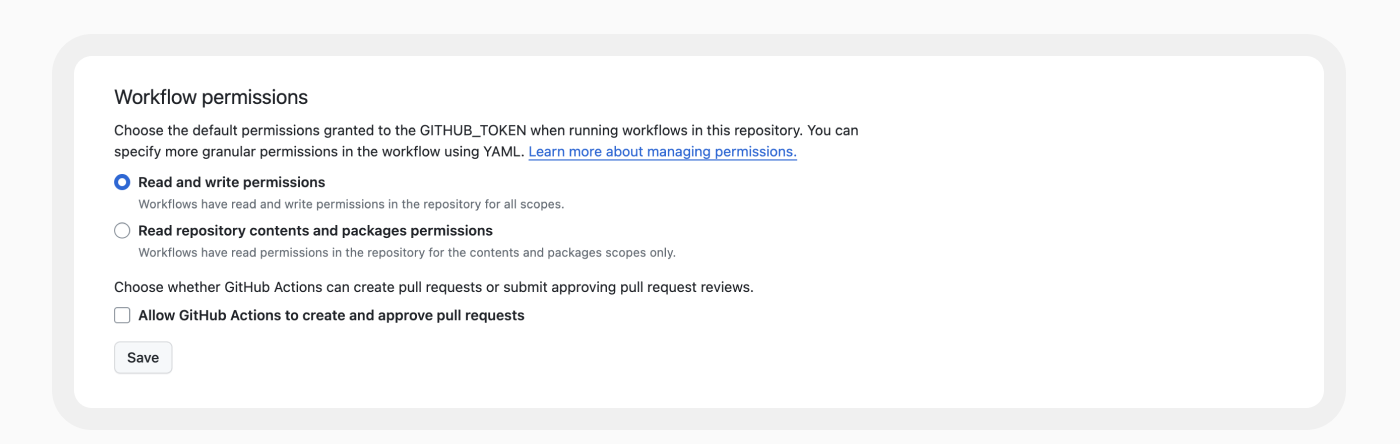
    Cycode researchers shared their discovery with Google, which has since updated the way it employs GitHub Actions to manage the Bazel codebase. Specifically, Google updated the base permissions to embrace least privilege principles to resolve the vulnerability discovered by Cycode.

    The vulnerability was discovered using RAVEN, an open source tool for scanning CI/CD platforms for vulnerabilities that Cycode makes available.

    Elad Pticha, senior security researcher for Cycode, said the vulnerability is the latest example of an instance of an open repository for building software that has been shown to be potentially vulnerable to an attack on a software supply chain that could theoretically impact any number of downstream applications and projects, including Kubernetes, Angular and platforms and services provided by Uber and LinkedIn.

    A Custom Actions capability that enables application development teams to create their own workflows presents any cybercriminal attempting to compromise of software supply chain with a tempting target, noted Pticha. A few changes to lines of code in a workflow can translate into thousands or even millions of lines of code, many of which an organization may never detect. Out of 3.4 million workflows examined by Cycode, nearly all (99%) make use of one or more Custom Action.

    Cycode has previously identified dozens of vulnerabilities in open source projects by mainly focusing on vulnerabilities within workflows. This latest research shows those vulnerabilities extend to indirect dependencies, such as Custom Actions, noted Pticha.

    Each DevOps team should review its own workflows for similar vulnerabilities at a time when more cybercriminals than ever are intent on compromising software supply chains. While many organizations have embraced DevSecOps workflows to improve application security, there is a natural tendency to overlook vulnerabilities that might exist in the workflows used to build and deploy software. The challenge is that DevSecOps workflows are still immature. A recent survey of 500 U.S. CISOs, AppSec directors and DevSecOps team members conducted by Cycode found 78% admitted application security attack surfaces are unmanageable, with 90% acknowledging relationships between their security and development teams need to improve.

    It’s not apparent if the vulnerability discovered by Cycode was actually ever exploited, but as most cybersecurity professionals know, if it can be imagined, someone has tried it. As such, any organization that uses Bazel might be well-advised to conduct a code review.

    In the meantime, it’s already apparent that regulations pertaining to securing software supply chains are only going to become more stringent in the months ahead. In the wake of the executive order from the Biden administration requiring federal agencies to lock down their software supply chains, it’s now only a matter of time before similar requirements are baked into legislation and various other regulations are implemented. The challenge and the opportunity now is to get ahead of this issue before a mandate with a hard deadline that can’t be ignored winds up disrupting the entire software development life cycle.

  • How to Make the Most of In-House Software Development

    How to Make the Most of In-House Software Development

    Let’s be blunt: Maintaining an in-house software development team can be tough. You must hire skilled developers – which is no easy feat in today’s economy, where talented programmers remain in short supply – and then manage them on an ongoing basis. You must also ensure that your development team is nimble enough to respond to changing business needs and that it can adapt as your technology stack evolves. Given these challenges, it’s no surprise that most organizations now outsource application development instead of relying on in-house teams.

    But I’m here to tell you that just because in-house development can be hard doesn’t mean that outsourcing is always the best approach. On the contrary, IT organizations that choose to invest in in-house development for some or all the work can realize lower overall costs and a competitive advantage by creating domain-specific expertise. Keeping development in-house can help organizations address unique security requirements and maintain full control over the development lifecycle and roadmaps. For businesses with specialized technology, security and operational needs, in-house development is often the best strategy.

    Managing an in-house development team presents some steep challenges. At Komprise, we have refined several practices to keep our team efficient and productive, even in a business environment that is constantly changing.

    Scaling Up

    Scaling teams up is a key challenge for in-house development teams. Finding skilled developers to grow a team can be very difficult, especially when working with a bespoke technology stack.

    There is no simple solution to this challenge, but there are steps you can take to maximize your ability to find and hire development talent. For example, we invest significantly in engaging with college students, allowing us to identify promising developers while they are still in training.

    At the same time, we invest in upskilling our developers who are already on our team so they can take on additional responsibilities. We train our engineers in the latest cloud development and security skills and knowledge. The notion of embedding security into our designs and practices is fundamental to what we do. We also rotate engineers between different teams so they learn new technologies that are important to our business. This strategy allows us to align the work for every developer with their interests and to build reusable skills within our teams. We also hold a technical brown bag three times per month where we cover issues like development for cloud and how it differs from on-premises due to costs or how to design for performance and scalability.

    Focus on Customer Value

    Figuring out which features customers want most is a constant challenge. To address it, we quantitatively track how our customers use our product – which functionality they use most often, for example, and how usage patterns vary across different customer demographics. We evolve these metrics as we develop the product. Additionally, we identify customers who are “power users” and occasionally set up calls between them and our developers to gain additional insight into what customers want. Our marketing team also conducts customer advocacy interviews with our users to learn more about what they like and don’t like.

    Looking at third-party applications and interfaces helps us gain perspective on how best to meet user needs, too. For example, we might examine how Wayfair or Amazon are evolving their UI constructs to inform how we could change our product interface in ways that better meet customer needs. We want our B2B product to be as easy to use as consumer products.

    Invest in QA

    Quality Assurance (QA) operations are distinct from development operations, but if you want a successful in-house development team, you need a great QA team, too. Our QA engineers complement our in-house developers by helping them to deliver the highest-quality product, while also strategizing over how best to handle scale and efficiency challenges. In addition, we’ve invested heavily in QA automation, allowing us to test our applications thoroughly while keeping our team lean and efficient. This ensures that as our product feature set expands, our ability to test the entire product does not increase and we can maintain a monthly release cadence. We use test harnesses to simulate error and failure conditions, by injecting failures into the system or making our network experience a brownout or a blackout. You can’t automate every software test, but you can automate most of them, and QA automation is one of the key ingredients in effective development operations.

    Leverage AI Strategically

    AI is not the solution to every development challenge, but when used properly, AI can accelerate development and help in-house developers work more efficiently. Using AI tools to churn out code has become a hot use case for AI in development since the introduction of solutions like Copilot. AI can be a very useful solution, but the quality of the results it delivers hinges on the quality of the data it ingests. Inhouse development teams working on AI applications have much to consider from the data perspective. To leverage unstructured data, they need ways to find it across data silos, enrich it with new metadata as needed to support search and leverage AI tools like Amazon Macie and Rekognition to further refine the data.

    Optimizing In-House Development for the Long Term

    The importance of keeping in-house development teams happy and productive is likely only to increase as the tasks they work on grow more complex and as new paradigms, like those driven by AI, change the way developers work. The more IT organizations and enterprises can upskill their existing developers and empower them with the right tools and processes to succeed, the better they can leverage their teams to build products and features that bring value to the business.