Category: DevOps Culture

  • Highlights from GitOps Evolution Virtual Summit

    Highlights from GitOps Evolution Virtual Summit

    GitOps has become increasingly popular in the DevOps space. DevOps teams have been adopting GitOps in order to better deploy, manage and monitor Kubernetes clusters and applications. On Sept. 23, the DevOps community came together at GitOps Evolution Virtual Summit to explore ways in which organizations can use GitOps to solve real problems.

    The virtual event, hosted by MediaOps, offered expert-led sessions and panel discussions focused on a variety of topics, including:

    • GitOps and the evolution of DevOps
    • A developer’s guide to adopting GitOps
    • Metrics to measure in GitOps environments

    GitOps Evolution Virtual Summit is now available on-demand for up to 30 days after the live event. Register now to get exclusive access to the on-demand virtual environment.

    Meet the GitOps Evolution Leaders

    GitOps Evolution Virtual Summit featured an exceptional lineup of industry thought leaders and doers in the GitOps space, including:

    • Tracy Ragan, DeployHub CEO and CDF board member
    • Viktor Farcic, developer advocate at Upbound, member of the Google Developer Experts and a published author
    • Paul Curtis, principal solution architect at Weaveworks
    • Ravi Lachhman, evangelist at Harness
    • Jayne Groll, DevOps Institute CEO
    • Alan Shimel, MediaOps CEO

    GitOps Evolution Sessions

    GitOps – An Introduction, by Alan Shimel and Paul Curtis

    In this session, Paul and Alan discussed the four principles of GitOps, how an enhanced developer experience increases productivity, how to boost stability and reliability in Kubernetes environments and how to bake in security from the start.

    Automating the Human Side of GitOps, by Tracy Ragan

    GitOps requires many manual steps, from updating .yaml files for each new container image, and managing Pull Requests, Merges and Commits. In this session, Tracy explored how to move GitOps to a fully automated DevOps process and reviewed the basic architecture of GitOps, how it is managed manually and how GitOps needs to evolve to be part of the continuous delivery pipeline.

    How To Apply GitOps On Infrastructure, by Viktor Farcic

    During this talk, Viktor Farcic explored Crossplane combined with Flux as a potential solution for all our infrastructure needs and whether it fits into the broader Kubernetes ecosystem.

    GitOps Blind Spots – Introduction to Pragmatic GitOps, by Ravi Lachhman

    Check out Ravi’s session to learn how GitOps can be a continuum in a journey and introducing Pragmatic GitOps practices and approaches no matter where you are in your software development approaches. Ravi talked about common blind spots with embracing on a pure GitOps approach might leave to be solved for.

    The Evolution of GitOps Maturity for Business Success, by Paul Curtis

    In this session, Paul went on a four-step GitOps journey that started with operating a single cluster and application, to managing large deployments and fleets. He discussed the requirements and business benefits of each step and tied them back to improving Software Delivery and Operational (SDO) performance—including deployment frequency, shorter lead time, mean time to recovery and change failure rate.

    Fireside Chat: The People, Process, and Technology of GitOps, by Jayne Groll, Tracy Ragan and Viktor Farcic

    Join Jayne Groll, Tracy Ragan and Viktor Farcic for a panel discussion probing further into the people, process and technology of GitOps – including what’s next, challenges to culture and theory versus practical implementation.

    For more information and to access the on-demand environment, visit the GitOps Evolution Virtual Summit website.

  • Clubhouse Becomes Shortcut to Transform Software Project Management

    Clubhouse Becomes Shortcut to Transform Software Project Management

    Shortcut, formerly known as Clubhouse Software, today announced that its project management software for software development teams has been expanded to include additional workflow capabilities.

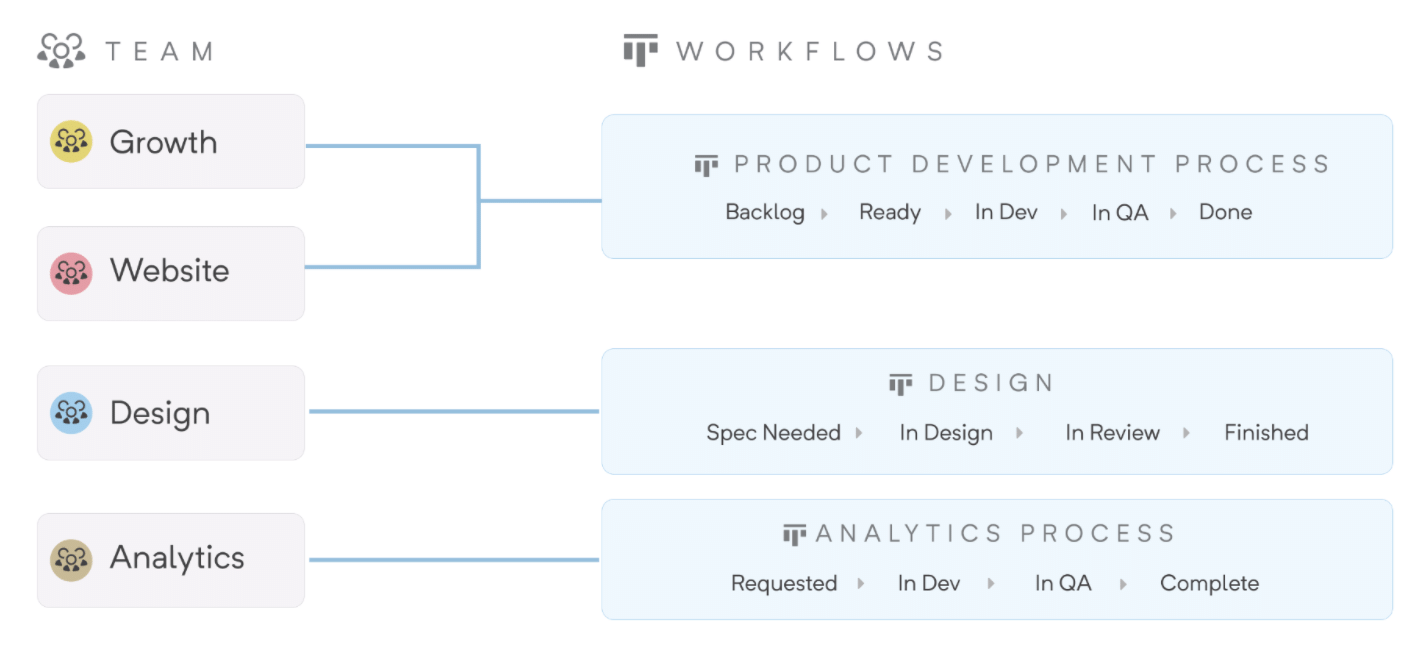
    CEO Kurt Schrader said team-to-workflow functionality is being added to the software-as-a-service (SaaS) platform and will make it easier to share workflows across software development teams in a more standardized way.

    Organizations can standardize workflows across multiple teams while still giving each team the ability to customize workflows for their own unique processes. As work gets created and assigned, it automatically moves into a workflow without having to manually update processes.

    Shortcut is designed to make it simpler for development teams to collaborate in a way that maintains transparency with other teams working on projects that are part of the same larger initiative, said Schrader. It allows product managers, engineers and designers to plan, track and measure their work without friction as the organization continues to grow in size, he added.

    For example, Shortcut will surface what teams need to focus on as priorities and timetables change within a specific project in addition to allowing users to define sprints using start and end dates, and the tool then sends reminders so the team can reserve time to focus on specific projects.

    Shortcut will also integrate with continuous integration/continuous delivery (CI/CD) platforms via application programming interfaces (APIs) to enable the development of custom workflows that include, for example, integration with real-time conversations occurring via the Slack collaboration service.

    Most of the project management software DevOps teams employ today is too complex and intimidating for the average business executive. Rather than forcing business users to learn how to master these applications, a case can be made for a more intuitive set of project management tools for both software development teams and the product managers they ultimately serve.

    As more organizations realize how dependent they are on software to drive business processes, many of them are reviewing the tools they currently rely on to manage software development. The goal is to not only reduce friction and enable more transparency across teams but also to provide stakeholders outside of the development team with more visibility into the status of any given project.

    At the same time, organizations are simultaneously launching more software development projects that have many dependencies. Many of those initiatives are based on microservices that are being built in isolation from one another before being aggregated to create an application. The dependencies between those microservices require organizations to make sure they are developed and deployed in a way that doesn’t leave one software development team waiting on another to finish a project before they can complete their work.

    Shortcut

    Schrader said that humans, as a species, are bad at organization. Project management applications should make it simpler for companies to understand how projects are not only organized but also all the dependencies that exist between them.

    Regardless of how software development projects are managed the need for greater visibility is obvious to all. Less clear is the best way to go about achieving that given all the communications channels available.

  • Empowering Pro and Citizen Developers

    Empowering Pro and Citizen Developers

    When I was the CISO years ago, we had a talented team build the incident management system for our new CIRT. The team built intake forms, interfaces with some of our tools and the workflow to hold it all together. We were fortunate to have the resources of one of the largest companies in the world (at the time), which we used to make our incident response processes faster and more efficient. Thanks to this system, we saved many thousands of hours per year.

    That was 15 years ago, and now organizations are automating processes without the need for talented (and expensive) developers. In fact, this year’s moniker is “Year of Low-Code”—the beginning of a new era. Gartner predicts low-code will continue to evolve, stating that by 2025:

    • 70% of new applications developed by enterprises will use low-code or no-code technologies (up from less than 25% in 2020) and
    • 75% of large enterprises will be using at least four low-code development tools for both IT application development and citizen development initiatives.

    As Gartner’s forecast on low-code applications comes to fruition, product and IT leaders collectively have a lot of work to do to not only provide these tools to customers but internally for their teams, as well. As organizations rise to meet the demand for automation to streamline their customers’ and their own processes, it’s important to remember that this is new territory for many.

    The absence of a well-established route for migrating to automated processes can create challenges if not done correctly. As organizations look to pioneer low-code, I’d like to offer a two-step guide for leadership to begin this low-code journey through personal insights and real-life examples–providing an “automation blueprint” for IT leaders.

    Getting Developers on Board

    Although low-code is about bringing capabilities to non-technical resources, don’t neglect the importance of getting your existing developers on board early. Chris Byers wrote this great piece on why developers should not be worried they will become “extinct” by this new outlook. On the contrary, your core developers are going to benefit from these changes–freeing them up from tedious low-value work and allowing them to focus on higher-order challenges.

    Change of any sort can be daunting, and as with any shift like this, transparency is key. I often write quick blogs in our project management system or update my developer community in their dedicated collaboration platform channel to update the team on any new processes or changes with complete transparency. My team can ask me questions directly on the platform, and they are usually pretty direct. This visibility is key, allowing everyone to feel like they have a say and stake in how the company is accomplishing shared goals.

    It’s instrumental to partner with your DevOps team and ask their advice, as they are your “low-code” experts while you navigate these waters—either creating software with these offerings in your product portfolio for your customer base or deploying tech internally with low-code tools. With the former, your developers really should have no problem getting on board.

    Introducing the Concept to Citizen Developers

    Next, we must empower people to adopt the role of citizen developer by equipping them with the knowledge they need to be successful. Otherwise, we will find ourselves back at square one with the work developers did to create low-code workflows wasted. Whether you’re working with customers, partners, or your internal teams, here are a few ways to building your citizen developer crew:

    • Bring back the lunch-and-learn (hey, they were popular for a reason) via videoconference or collaboration channel: Send out gift cards for participants to order lunch and host a live session to walk through workflows and answer questions.

    • Provide on-demand tutorials: Beef up your company’s video library with a couple of “how-to” videos on using workflows for ongoing reference. Everyone loves an excellent how-to explainer.

    • Write a guide of your own: One of our technical partners is known for its workflow, and they’ve written a guide to their low-code product’s capabilities. It’s available online, and it’s geared towards citizen developers. So it might be worth taking the time to do one in-house; a one-stop-shop for everything low-code.

    Workflows are everywhere you look – not one team in an organization operates without interacting with identity workflows. Take HR, for instance; you might think, “HR deals with people; they don’t need to build workflows.” This overlooks how many HR processes are workflow-driven. Imagine if an organization could tap HR as citizen developers—the department could establish a workflow unique to onboarding, for example. A new hire’s manager receives an automatic prompt to approve access to applications needed for that role. Imagine the time saved, which means more time spent on other business-essential tasks like recruiting quality candidates.

    The investment you make today getting buy-in from developers and educating your citizen developers will pay off in the long run. Now is the time to get started. The road of innovation is always bumpy, but that doesn’t mean you shouldn’t try to make it as streamlined as possible. To play a role in pushing boundaries forward amidst the digital transformation we are experiencing, you will need everyone—developers and citizen developers—on the same (web)page.

  • Empowering Teams to Make Mission: Impossible Possible

    Empowering Teams to Make Mission: Impossible Possible

    “Your mission, should you choose to accept it….”

    That’s the way the original Mission: Impossible TV show and, later, the movie series drew us in. The bad guy’s operation was explained. The goal was clearly defined; infiltrate and destroy. And although the task at hand was extremely difficult and fraught with unknowns, the team of good guys was briefed and everyone understood what they were doing and why. Cut to the good guys succeeding despite the odds being stacked against them.

    For most of us in product development, I think we’ve all faced—or are facing—our own impossible mission. We’re all working on “urgent” projects against some pretty tough odds. Except, unlike the old TV show, we often lack a clear goal. Sure, we’ve got our best team members on it—but does everyone understand why we’re doing what we’re doing? What, exactly, is our mission?

    No Dossier, No Chance

    In the frantic rush to “digitally transform” by churning out new products and features, the mission (if there ever was one) is often lost. Without context, developers can feel like order takers instead of outcome producers. This dynamic is a ticking time bomb; not just in terms of value delivery and business success, but for developer happiness, too. With a worldwide developer shortage and, more importantly, the fact that 80% of developers are reporting burnout, something needs to change. And fast.

    Improving the software developer experience must be a priority. And a clear mission is a great place to start. When we’re not mission-driven, our chances of being innovative, experimenting with new ways of work and empowering ourselves to be at our best are severely limited. 

    Liberated Mercenaries 

    By adopting a mission-oriented approach, development teams gain purpose. Bringing them in on the business problem that needs solving can motivate them and stimulate their creative thinking. And the cherry on top? We can even help reduce their workloads by removing meaningless blackhole tasks. We begin cultivating a work environment that helps realize the “joy;” part of one of Gene Kim’s Five Ideals. 

    For those overseeing DevOps or other continuous improvement initiatives, we can improve our odds by creating our own Mission: Impossible-like teams. To cite John Doer, venture capitalist, we can build teams of missionaries instead of mercenaries. Folks who are motivated, passionate and outcome-driven. Those galvanized by the excitement of knowing that their efforts will impact the business in a big way will inspire greatness. 

    It is the leader’s role to articulate the mission. When practitioners are empowered to use their creativity for problem-solving, innovation is unleashed and there is little room for misguided, wasteful activities.

    Preparing your Mission Dossier

    You are not alone if your answers to the following are no better now than they were five years ago:

    • Are we prioritizing our customers’ problems first?
    • Are we enabling customers to pull value rather than pushing what we believe is value?
    • Are we providing abundant opportunities for customer feedback and pivoting with learnings from failures?
    • Are we routinely surprising and delighting our customers with exceptional value?

    These are the kinds of questions that indicate how well we understand our mission. If we are aligned with customers, then, by definition, we are aligned with the business since businesses only exist to serve customers.

    So then, how do we articulate the mission so our teams clearly understand their purpose? Here are three steps to get you started.

    Step One—OKRs

    We must emphasize our focus on solving problems for our customers, both internal and external. The objectives must be clearly stated, as they were for Mr. Phelps. And, likewise, we must communicate the sense of urgency that this mission encompasses for the fleeting window of opportunity that exists before customers seek alternative solutions. 

    One highly effective approach is to employ objectives and key results (OKRs) and an OKR tree so that everyone, from the trenches to executive leadership can have line-of-sight to the purpose of their work and their role in the mission. Since DevOps Enterprise Summit 2020 in Europe, OKRs have emerged as a hot topic as leaders seek to translate urgent corporate objectives into meaningful goals for their business and technology teams.

    Step Two—Focus on Flow of Customer Value

    We must set the stage for the successful delivery of customer value. Our processes must be aligned with real customer needs while simultaneously capable of delivery excellence. The best way to do so has been proven out for over 40 years now, i.e.: adopting a continuous improvement approach to the activities which make up the value stream from customer request to fulfillment. 

    That means capturing customer needs via our OKRs and accelerating the flow of work across the value stream against those OKRs. To do that, we must have a means to systematically and continuously remove impediments to flow across all key stages, before and after development

    This approach encourages everyone—top-down, bottom-up—to become single-minded and obsessive about our mission.

    Step Three—Tracking The Mission

    With the mission clear and the teams aligned, we must also be prepared to react and preempt uncertainty. No mission runs perfectly. But we can put literal measures in place to identify danger ahead. Combining team performance metrics, such as DORA, with higher-level value stream management (VSM) metrics that focus on the flow of business value across the whole system can help everyone in the field and in the control room communicate effectively. For instance, if work upstream is holding our developers back from cracking the code, VSM metrics can help direct leadership to send support into the business analysis room.

    With mission alignment and means of communication, accepting a mission becomes enticing for everyone involved and the chances of success improve dramatically. 

  • Transposit Survey Shows DevOps’ Impact on CIO, CTO Relationship

    Transposit Survey Shows DevOps’ Impact on CIO, CTO Relationship

    A survey of 415 CIOs and CTOs conducted by Transposit, a DevOps process orchestration platform provider, finds that as organizations continue to adopt DevOps processes more widely, friction between these types of senior IT leaders is rising within many organizations.

    As a C-level role, ‘CTO’ first gained traction in the wake of the dot com boom. In more recent years, many traditional enterprises added CTOs alongside CIOs as they realized how dependent the organization had become on software. In the wake of the COVID-19 pandemic, there is now more focus than ever on digital business transformation initiatives that are dependent on the timely delivery of software.

    Transposit CEO Divanny Lamas said that as more organizations’ structures revolve around product teams, there are a lot more CTOs. In some cases, CIOs are reporting to CTOs.

    The majority of organizations surveyed have both roles. A full 83% of CIOs said there is also a CTO at their organization, while 86% of CTOs said there is also a CIO. Just under a quarter of respondents (24%) said they perform both roles.

    At the same time, 98% of survey respondents reported increased focus on digital transformation within their organization in the past three years, with three-quarters (75%) noting that focus has increased since the start of the pandemic. A full 85% report their budget has increased over the last three years.

    Not surprisingly, 92% of respondents said that their responsibilities have changed in the last three years, with over half (56%) reporting their role changed significantly. Both are now graded according to key performance indicators (KPIs) related to managing revenue, with 66.3% of CIOs and 78% of CTOs saying their position is now either directly involved in or required to lead a business strategy.

    But only 34%, or just over a third, said that ownership of most aspects of digital transformation initiatives is a shared responsibility between the CIO and CTO. Specifically, just under a third (32%) noted ownership of software development in their organization is a shared responsibility. A full 88% of respondents apply DevOps practices, and 83.4% believe that DevOps is important to digital transformation at their organization. Almost all (98%) plan to expand their DevOps practice, and 83% already have a plan in place to do so.

    Lamas says software engineering-first principles are changing not just how applications are built but also how IT teams are structured in a way that advances innovation.

    More than a third (35%) of respondents said ownership of software operations developed in-house is a shared responsibility in their organization, while 28% said ownership of managing SaaS or operating commercial off-the-shelf (COTS) software in their organization is a shared responsibility. A third (33%) also noted ownership of the technology for the external customer experience in their organization is a shared responsibility.

    A full 95% of survey respondents also confirmed that the performance of their team is measured by key performance indicators (KPIs) related to revenue, specifically revenue growth (75%), rate of innovation (60%) and uptime (54%).

    It’s too early to say how the relationship between CIOs and CTOs will evolve, but the one thing is clear: The pressure for these roles to collaborate more effectively is on the rise.

  • 3 Ways to Prevent Developer Burnout

    3 Ways to Prevent Developer Burnout

    Without developers, software companies wouldn’t exist—and yet, the experience of these experts can be far from ideal. A recent report from Haystack found that nearly 80% of developers report being burned out and the pandemic isn’t even one of the primary factors. Despite similar job requirements, the experience of developers significantly varies across the industry, adding complexity to an already challenging job. Conflicting coding styles, communication styles and requirements from different teams conspire to make the development process inefficient and difficult and leave developers feeling overwhelmed. Between different organizations and even teams within the same organization, the differences in team culture and educational opportunities can lead to radically different job experiences for the same job title. To retain talented developers in the workforce and maximize their potential, the collective developer experience needs to be improved through a developer-first and inclusive culture and better access to professional development for developers at every level.

    Build a Strong Culture of Documentation, Communication and Knowledge Sharing

    One of the biggest challenges team leaders encounter is how to communicate key information between team members. Many developers are incredibly skilled at their trade but aren’t properly trained or given the time to work on sharing that information with either colleagues or end users. Having skilled technical writers means that the team can provide consistent, clear information about the software—and this is crucial for company success. Having technical writers on the team improves communication and efficiency and enables developers to more quickly and easily locate the resources and support that they need to perform their tasks

    The developer’s goal is to innovate and build successful and maintainable systems. Achieving this requires good team processes and a solid system of documentation. Without user-facing documentation, adoption will suffer as users struggle to get things done with the system. Similarly, without documentation of the individual components, knowledge cannot be shared between teams and so the teams working on the application cannot collaborate effectively. A positive culture around documentation and investment in best practices by all contributors, including developers, makes a huge difference in how successful an organization can be.

    Welcome Employees with Comprehensive and Constructive Onboarding

    Strong communication is especially vital during the onboarding process; it’s one of the most important periods for developers early in their careers. Getting developers up to speed in a new team quickly is crucial—and streamlining education beginning during onboarding can make a big difference. Onboarding is a golden opportunity to bring new developers into the cultural fold and enable them to contribute to the team quickly. Doing so also reduces the risk of losing developers from the team.

    Prioritize an Inclusive and Supportive Culture at all Levels

    The experience of software developers is greatly influenced by the culture of the company they work for. The values of a company and the way that departments interact make a big impact on developers—and it’s not always a positive one. Opportunities for career development, promotions, mentorship programs and training are critical for all employees, but especially those in fields with the potential for high turnover or burnout like developers. Providing developers with resources to further their own understanding and mastery of the job—such as access to a budget for attending conferences and further study—is a critical investment for their success. Organizations both large and small must take initiative to ensure developers see a path forward for themselves at their current company and within the industry—or risk losing their talented developers entirely. 

    While developers’ experiences vary across the industry, between departments and even smaller internal teams, there is inherent value in improving communication, investment and culture on a micro and macro scale. To attract and retain highly skilled and innovative developers and ensure success for teams and companies as a whole, executive leadership must work with their developers to find a cohesive system and create an experience that works for everyone. Like any other specialized professional in a complex trade, developers are invaluable to their teams and community; advocating for the improvement of their work experience throughout their careers is the best way for tech companies to keep developers creating software that improves our world.

  • DevOps Dozen² Awards 2021 Nominations Now Open

    DevOps Dozen² Awards 2021 Nominations Now Open

    The DevOps Dozen² Awards are back and open for nominations. This past year has been quite a journey and we are very proud of the DevOps community in their ability to pivot, innovate, adapt and think ahead in these challenging times. Some outstanding leaders and vendors have worked nonstop to reach their goals and achieve the highest level of success. We are thrilled to celebrate their hard work and achievements.

    The DevOps Dozen² Awards honor the most dedicated and inspiring thought leaders and innovators who have made significant contributions to the community. For the second year, we have expanded our awards program to include two different DevOps Dozen sections: DevOps Dozen Tools and Services Awards and the DevOps Dozen Community Awards.

    There are 12 awards for each section:

    • DevOps Dozen Tools and Services Awards — Recognizing the companies that develop and deliver outstanding solutions to empower developers, DevOps and IT operations teams.
    • DevOps Dozen Community Awards — Honoring the leaders who have made a positive impact in the DevOps community.

    Nominations are made by the audience. Anyone can nominate a tool or service, although there is a $250 entry fee for the Tools and Services Awards nominations. We implemented this fee last year to cut down on spam and superfluous nominations. However, there is no fee for Community Awards nominations. Please note that commercial tools and services are not eligible for the Community Awards and will not make it through to the finals.

    Finalists will be selected and winners will be chosen from among the finalists. The finalists will be determined by general public voting (weighted for 40% of the final total) and our judges’ selections (weighted for 60% of the final total).

    The last day to submit your nominations is October 22. To vote, follow the steps outlined on the DevOps Dozen² website.

    Who Are the DevOps Dozen² Judges?

    The following DevOps experts make up the DevOps Dozen² Awards 2021 panel of judges, and will review the submissions made by the public and choose the winners:

    • Alan Shimel, founder, CEO and editor-in-chief at MediaOps
    • Jayne Groll, co-founder and CEO at the DevOps Institute
    • Mitch Ashley, founder and CEO at Accelerated Strategies Group
    • John Willis, senior director of the Global Transformation Office at Red Hat
    • Helen Beal, chief ambassador at DevOps Institute and ambassador at Continuous Delivery Foundation

    The 2021 DevOps Dozen² Categories

    DevOps Dozen Tools and Services Awards

    • Best End-to-End DevOps Tool/Service
      Consolidation in the DevOps space has led to a greater selection of platforms offering end-to-end solutions. This award honors the platform with the most diverse and robust solution for DevOps teams.
    • Best DevOps Repo/GitOps Tool/Service
      Git has led to GitOps and it has become an integral part of the DevOps toolbox. This award is presented to the most outstanding Repo/Git/GitOps tool.
    • Best CI/CD Tool
      This award recognizes the best CI/CD tool that helps teams to deliver quality code better.
    • Best Value Stream Management Tool
      Value stream management has come into its own as an important tool for measuring the business value of DevOps and application development. This award recognizes the value stream management tool that most effectively helps visualize the value stream, track metrics and measure improvement.
    • Best Observability Solution
      This award recognizes the best observability solution for observing and monitoring to understand the performance of individual components and systems and entire applications.
    • Best DevSecOps Solution
      This award honors the best DevSecOps solution, which enables security to be included earlier and continuously throughout the SDLC.
    • Best Testing Service/Tool
      Testing is a mainstay in the DevOps toolchain. This award recognizes the best testing tool for ensuring the quality of code.
    • Best Kubernetes Platform/Service
      The adoption of containers has paved the way for an entire solutions ecosystem supporting and enhancing the container technology. Kubernetes is perhaps the most widely recognized and utilized tool in the space. There are many platforms and services that offer Kubernetes-based solutions. This award honors the best Kubernetes platform/service available.
    • Best Cloud-Native Security Solution/Service
      The cloud-native movement has taken the IT world by storm due to the depth and breadth of the solutions available and the benefits of building applications and services specifically for cloud-native environments. This award recognizes the best tools, solutions and services considered cloud-native.
    • Best DevOps for Mainframe Solution
      Mainframes are far from being the dinosaur of the IT world, and a variety of solutions are available for enabling DevOps practices in mainframe environments and hybrid environments. This award recognizes the best of them.
    • Best DevOps for DataOps/Database Solution
      Databases often have been left out of the DevOps conversation, but that is changing. The whole concept of DataOps is gaining greater traction. This award recognizes the best solution in the database for DevOps and DataOps categories. 
    • Best New DevOps Tool/Service Provider
      This award recognizes the best new service provider or tool that has brought innovation to the DevOps space in the past year (must be less than 24 months old).

    DevOps Dozen Community Awards

    • Best DevOps Industry Implementation
      This award honors organizations that have successfully adopted and implemented DevOps principles and practices.
    • Best DevOps Survey/Analysis/Research
      This award recognizes research that has significantly and positively impacted the DevOps community.
    • Best DevOps-Related Video Series (video)
      This category highlights the most entertaining, educational and inspirational DevOps video series—those with the most engaging and highest-quality content.
    • Best DevOps-Related Audio Podcast Series
      Which is your favorite DevOps podcast from this year? This category celebrates the many great DevOps podcasts sparking some interesting discussions on a multitude of topics from CI/CD and testing to DevSecOps, Kubernetes, containers and more.
    • Best DevOps Book/eBook of the Year
      Each year sees a plethora of well-crafted DevOps-related books and ebooks. This category highlights the most popular and best read of the year.
    • Top DevOps Evangelist
      This category is one of our favorites. There are so many great evangelists who spread the DevOps gospel and we want to know who does it best. Nominees can work within the DevOps space or outside of it.
    • Best DevOps Transformation (non-vendor)
      In a year in which digital transformation became a must-have for survival, we want to know which organizations stood out in their efforts to transform their business through DevOps.
    • Best DevOps Virtual Event of the Year
      COVID-19 has changed the game when it comes to hosting events. In 2021, virtual events remain the norm, reaching a global audience while everyone stays safe at home. Which DevOps virtual event stands out from the others?
    • Most Innovative DevOps Open Source Project
      Open source projects are meant to promote innovation and increase efficiency, velocity and quality. While there are many great open source projects out there, the best ones are those that create a community of people who work on and with the technology and support each other.
    • DevOps Executive of the Year (non-vendor)
      This category celebrates excellence among DevOps leaders at the C-suite (or equivalent) levels.
    • Best DevOps Presentation of the Year
      This category recognizes the best DevOps-themed presentation from the many (virtual) conferences during the year. 
    • Best DevOps.com Article of the Year
      DevOps.com publishes multiple new articles every day. Which was the best article from 2021? Let us know so we can recognize the author.

    All the solutions nominated to the Tools and Services Awards will automatically be registered into the DevOps Tools Guide authored by Techstrong Group. This initiative is our effort to create a comprehensive listing of tools and tools vendors to help end users better understand the DevOps market landscape.

    Choosing a winner is difficult when there are so many talented and inspiring leaders doing an incredible job to empower and support our community. Although not everyone can win an award, being nominated says a lot about each and every one of you. We greatly appreciate your dedication and service to the DevOps community.

    For more information, please visit the DevOps Dozen² website. If you have any questions regarding entry process, awards, timing or any technical issues regarding the website, please contact us at DD@devops.com.

  • Solving the DevOps Accountability Problem

    DevOps accountability is the idea that both the development and operations teams have equal responsibility for success. But putting this approach into practice has been a thorn in the side of DevOps teams for the past decade, largely due to outdated organizational structures that place responsibilities on a single employee or team.

    These outmoded structures restrict the lean flow of operations needed for DevOps and contribute to costly downtime when issues arise. But redistributing functions across the organization can help solve this problem. 

    For cross-functional teams that rely on organization-wide collaboration, redefining the org chart can clarify ambiguities about accountability and help organizations overcome internal obstacles.

    Legacy Organizational Structures

    Many organizations have not instituted an organizational structure that reflects a shared accountability model. This is partially due to leadership’s assumption that large teams work faster and more dynamically. In reality, after a team exceeds nine individuals, the rate of return diminishes and people are more likely to assume someone else on the team will take responsibility for a task. As a result, accountability falls through the cracks.

    Additionally, there is frequently an imbalance in assignments and responsibilities between junior and senior employees. When senior employees take on the majority of important or interesting tasks, junior employees can feel overlooked and less responsible for their team’s success. This is both an individual and a company-wide issue; younger workers tend to bring fresh perspectives and insights—they can also adapt more quickly to unprecedented changes and issues.

    Picture a team consisting of a line manager and team members, with a structure that places all major responsibilities on the manager. If the manager happens to be out of the office when an issue arises, the team would have to wait for their boss’s return to resume operations.

    But the consequences of single-point accountability go far beyond lost time and downtime costs. When employees feel like they don’t have a significant stake in a project, they feel less aligned with the organization’s overall purpose and are less likely to be engaged.

    DevOps is most effective when teams are built around a common goal rather than around the performance of individuals. If an employee can’t see the impact their work is having on the overall organization or project, it can create blind spots and disconnect between the business and its people. Shifting business frameworks is no easy feat, but with the right strategy, it can improve how tasks and responsibilities are allocated in your organization.

    Three Ways to Switch up Your Org Chart for Greater Accountability

    The days of allowing responsibilities to fall on a single employee are over. But to successfully embrace a shared accountability approach, you need to reimagine your entire organizational chart. Beyond de-prioritizing seniority and minimizing team sizes, consider these three initiatives to help settle DevOps accountability issues:

    1. Blueprint your organizational structure around products. Organize your work structure around products—not projects. Traditional project management models rely on passing responsibilities between specialized teams, which can slow down innovation and degrade the quality of work. With an organizational structure built around products, you can build a cross-functional team with all necessary skills for each system. For example, if you have a team that’s accountable for the payroll system, all necessary expertise you need to keep that system running smoothly is based on a single contact point.
    1. Redistribute talent. The product-oriented approach requires changing up talent distribution across teams. Let’s say you have a 24-person team for a single SaaS product and seven of those team members have similar skill sets and backgrounds. In this instance, you could move several of those workers to a different team where their skills are in demand.
    1. Establish hybrid workplace environment norms. Face-to-face communication has always been a critical part of successful teams. But in light of the COVID-19 pandemic, workplace norms are evolving and organizations need to adapt to new ways of working. Many teams are no longer able to participate in informal knowledge sharing and other typical in-office interactions, so it’s critical to identify new norms for your team. Initiate conversations about applying DevOps concepts in a hybrid world, along with creating rules of engagement and accountability that are realistic for remote work.

    The Great Redistribution

    As technology advances, so should your organizational structure. To optimize efficiencies and ensure products reach the market on time, consider rethinking your org chart. In practice, this will enable you to more seamlessly adopt a culture that celebrates shared responsibility and employees who feel they have a stake in your product’s future.

  • MediaOps, Boca Code Award ‘Engineer the Change’ Scholarship

    MediaOps, Boca Code Award ‘Engineer the Change’ Scholarship

    I am really proud to announce that, in partnership with Boca Code, MediaOps has awarded a scholarship for the Fall 2021 term to the Software Engineering Career Course, a 10-week rigorous and fast-paced coding boot camp from Boca Code. Alina Maliuk, a first-generation immigrant from Ukraine, is the recipient.

    The Engineer the Change scholarship was initiated by MediaOps to help foster diversity in the local tech industry and empower individuals from underserved communities to develop the skills needed to succeed in IT. Boca Code offers comprehensive training in software development to enable course attendees to develop these skills. 

    Need for Diversity in STEM fields

    Research shows a staggering lack of diversity in STEM fields, most noticeably within computer and engineering positions. The tech industry is predominantly white and male, which appalls me (yes, even though I am a white male), and I wanted to do something to encourage more diversity across our industry. Gender and race inequity are glaring workforce disparities that require both recognition and responsibility from those at the highest levels in the tech world to create a more diversified and equitable workforce.

    Two Full Scholarships Awarded Annually

    MediaOps sponsors two $10,000 scholarships each year to enable students to enroll in Boca Code’s flagship Software Engineering Career Course. The full-time, 10-week intensive course combines theory and hands-on, project-based learning to prepare students for a career in software engineering. As part of their coursework, students take on development projects for local businesses, providing the students immediate, hands-on experience with real projects.

    The Engineer the Change scholarships combine two goals that are core to the MediaOps team and me. The first is doing our part to make South Florida a world-class hub for the tech industry. The second is providing opportunities for individuals from disadvantaged communities to acquire the skills they need for a successful career in tech. My hope is that we also serve as an inspiration to other local companies to fund similar programs in support of these worthy goals.

    About Our Winner, Alina Maliuk

    Alina Maliuk scholarship
    Alina Maliuk, Engineer the Change scholarship winner

    Alina hails from Ukraine, where she earned a bachelor’s degree in management. After college, she married and had her first son. During her maternity leave in 2012, her family emigrated to New York. Being first-generation immigrants, they had to start their life here in the United States from scratch. For the first few years, Alina and her husband worked in entry-level jobs. In 2018, now a mother of two, Alina took several online classes in web development and rediscovered her love of learning—particularly software development. Now a resident of Boca Raton, Alina found Boca Code and attended a workshop in web development.

    Alina was energized by that workshop, which furthered the continuing education she had already begun. Through that initial course, the Boca Code team inspired her to go even further. She is ready to move on to her next career, which she wants to be in software engineering. Thanks to the Engineer the Change scholarship, she will now have an opportunity to accelerate her tech career. At the same time, she is demonstrating to other female immigrants in Florida that if you can dream it and work hard to achieve it, you can make it happen.

    Alan Shimel

    CEO, MediaOps

    Additional Resources

  • Do’s and Don’ts of Phased Rollouts Software Delivery

    Do’s and Don’ts of Phased Rollouts Software Delivery

    When it comes to app stability and user experience, the “move fast and break things” approach is a recipe for disaster. To protect brand reputation and to stay ahead of evolving needs and customer expectations, leading Silicon Valley companies’ software engineering teams have adopted phased rollouts, a software development method that involves the gradual implementation of a new feature to a smaller cohort of users at one time rather than all users at once.

    Phased rollouts help companies maintain the highest-quality customer experience (CX) for their users while making changes and software updates. When significant features and updates aren’t rolled out to production all at once, the organization’s software engineering team doesn’t have to deal with all the potential implementation issues at once. With phased rollouts, engineering teams catch issues early in the process so they can quickly fix them and resume the rollout of the experiment, which prevents issues from impacting millions of users down the road.

    While companies everywhere try to emulate the app development techniques of these Silicon Valley tech leaders, many are unable to achieve successful phased rollouts at scale. What they often don’t realize is that before even implementing a phased rollout approach—whether it be to 5%, 10% or 15% of their user base—there are a few steps that must be taken to ensure success. Below, I’ll walk you through the do’s and don’ts of a successful phased rollout plan.

    Do: Release Stability Management

    Companies must drive consistently stable app and web experiences in order to succeed in the market today. Therefore, it’s critical to continually monitor the stability of releases throughout development and testing to catch problems early and decide when to roll features out to users. By measuring and monitoring app stability in real-time, release managers inject accountability, predictability and complete peace of mind into the organization. Taking control of release stability management helps engineers deliver stable applications to drive world-class digital experiences.

    On top of that, software development teams must constantly improve mobile and web apps with new features and capabilities that better enable users to accomplish what they want to do. These kinds of improvements give companies the competitive edge they need to survive in today’s competitive business environment. In addition, monitoring release stability provides engineering teams with real-time visibility into every issue impacting application stability and CX. This level of visibility is critical for quickly diagnosing and understanding the root cause of errors so that engineers can roll out fixes before users are negatively impacted.

    Do: Testing and Early Access

    For a phased rollout, engineering teams must run A/B tests and quality assurance (QA) testing. A/B testing (also referred to as split testing or bucket testing) is a method of comparing two versions of a web page or app against each other to determine which one performs better. This includes trying out features like different screenshots, videos and even different app icons to measure which format users like the most.

    QA testing ensures that the organization delivers the best products or services possible by detecting usability issues that might not be technical. It tests for any problems that impact the end-user experience, from poor navigation to slow load times or unclear web copy.

    With phased rollouts, you must also provide early access to new features for select users to collect feedback and stamp out critical issues before launch. Many software products collect user feedback by including a small checkbox somewhere asking users to help make the software better by sending insights into how they use the application. In addition, social media has become an undeniable avenue for collecting candid user feedback. We’ve all seen it—when a platform changes its interface for certain users before others, users will post on social media sites about whether they are pleased with the new update or not. Historically, there has been backlash when significant changes are made and the company then has to decide whether to keep, change or cancel the new changes to the platform.

    As mentioned above, with an app stability monitoring tool, you can see if new features or experiments are introducing new stability issues and make decisions about pulling back or rolling out to a larger subset of users. By conducting testing and allowing early access to only a specific cohort of users, software engineering teams can balance release speed with application stability to create the best experience possible.

    Do: Allow for A Staging Period Before Going into Production

    As you launch new features, you’ll want to test them in a production-like environment after they go through QA testing. This is called staging, and it has become a popular concept with Silicon Valley companies. Staging is a near-exact replica of a production environment for software testing. Staging is meant to test code, builds and updates to ensure quality under a production-like environment before application deployment.

    A production-like environment is similar to when the app is released into production for users, but it’s not public yet. It provides an accurate view of how the update or new feature will operate and look in a production environment to avoid glitches that are only noticeable in production. Staging can include manual tests or, in some cases, engineering teams use automated software testing, which is more costly to implement and may only be attainable for larger enterprises.

    In this phase, software engineers should conduct additional tests and experiment with the new features to ensure that these capabilities—when released to production or to the larger user base—will not compromise the app’s stability. The last thing you want is for a new feature to break the user experience.

    Don’t: Try to Fix Every Bug or Error as it Occurs

    Since engineering teams often don’t have the bandwidth to fix every coding error that should arise, they need to prioritize and fix the errors that impact customers directly in order to protect revenue. Although organizations should have visibility into every error or bug, not all of them are worth fixing. This causes the signal-to-noise ratio that plagues developer efficiency.

    This is where app stability management plays an essential role. However, many of the app stability monitoring solutions on the market today can help with identifying errors, but leave it up to development teams to figure out which ones need to be prioritized. Engineering teams have to quickly determine which errors are the most urgent to fix, so they need to have reliable tools such as an app stability and error monitoring platform to provide them with visibility to make these important decisions in real-time.

    Phased Rollouts for Progressive Delivery

    Phased rollouts allow software engineers to continuously optimize the digital experience, without impacting the whole user base and negatively affecting the brand. Once mastered, phased rollouts can be used as part of a cutting-edge progressive delivery approach to software engineering and development.

    A progressive delivery approach includes shipping code (sometimes unfinished code) to a production environment multiple times a day, exceeding many companies’ risk tolerance. In order to do this successfully, engineers must have control over who can ship releases and when, and which users can access certain features and updates at what time. Phased rollouts provide a way to shield the majority of customers from the failures that occur at those rapid release speeds. To ship new software releases faster, engineers have to spend less time on QA and testing, but that doesn’t mean they should be overlooked completely. Then, by delivering the new release to a small subset of users first, you can manage risks more effectively and iterate accordingly.

    It’s important to call out that if the engineering team is making minute changes that no users will see or care about, you don’t need to use a phased rollout approach. That said, if it’s a significant cosmetic or operational change, such as updates to the UI, then phased rollouts are crucial. A phased rollout strategy is key for making software or app updates at scale that are necessary for a successful launch in today’s highly competitive market.