Category: DevOps Culture

  • Cisco Extends Scope and Reach of Observability Platform

    Cisco Extends Scope and Reach of Observability Platform

    Cisco this week expanded the scope of its observability platform by adding predictive and generative artificial intelligence (AI) capabilities along with log analytics and a Core Web Vitals tool to make it simple to ensure web pages don’t lose their search engine ranking because of poor user experience.

    In addition, Cisco is now leveraging extended Berkeley Packet Filters (eBPF) in the kernel of Linux operating systems to provide visibility into Kubernetes workloads and a session replay capability for cloud-native applications. In addition, Cisco has allied with Komodor, a provider of a Kubernetes management platform, to gain additional visibility into these environments.

    Cisco also added digital experience monitoring (DEM) capabilities based on real user monitoring (RUM) and the full-stack observability it provides following its recent acquisition of Accedian, a provider of an analytics platform for monitoring end-user experiences.

    Finally, Cisco added a Data Security Posture Management (DSPM) Observability module to the company’s Business Risk Observability platform based on the same core platform.

    Announced at a Cisco Live EMEA event, these latest updates are part of an ongoing Cisco effort to extend the reach of its observability platform well beyond DevOps workflows.

    Gregg Ostrowski, executive CTO for Cisco AppDynamics, said as part of that effort, Cisco is making it simpler to aggregate telemetry data for the AI for IT operations (AIOps) capabilities it provides by pulling directly from platforms such as Cisco ThousandEyes and Cisco DNA Center as well as from third-party partners such as VMware, Zabbix and ServiceNow. Similarly, Cisco is now leveraging eBPF to collect data from Kubernetes environments.

    Ostrowski added that the overall goal is to reduce the amount of instrumentation effort that IT teams would have to undertake to instrument highly distributed IT environments.

    There will still be a need to instrument applications, but the collection of telemetry data from the underlying IT infrastructure environment is going to be increasingly automated, he noted. In the meantime, it’s become less expensive to instrument applications using open source OpenTelemetry agent software, added Ostrowski.

    In general, Cisco, in addition to enabling organizations to rationalize existing tools, is also making a case for improving collaboration by, for example, making use of natural language capabilities enabled by generative AI to launch queries and provide summarizations.

    At the same time, Cisco is partnering to add additional capabilities, such as the ability to monitor machine learning algorithms via an alliance with Aporia and AS/400 systems via an alliance with Perform IT.

    Ultimately, Cisco is betting that observability across the entire enterprise IT environment is going to become more unified as organizations increasingly look to correlate business processes with specific IT events, including indications of cybersecurity breaches. It’s not clear how far down that path enterprise IT organizations are just yet, but given the total cost of observing and monitoring IT environments today, there is more pressure than ever to find more cost-effective approaches to holistically managing IT. The challenge, as always, is unifying all the existing fiefdoms in IT organizations that have already embraced a wide variety of tools and platforms they are hesitant to give up.

  • How Can DevOps Teams Use Customer Intelligence Data?

    How Can DevOps Teams Use Customer Intelligence Data?

    Customer intelligence involves collecting and analyzing data about customers’ behaviors, preferences and needs. It helps businesses understand their customers better and tailor their products and services to meet customer demands. The data is gathered from various sources, such as customer feedback, web analytics, social media, purchase history and software usage metrics. The insights drawn from customer intelligence can be used to inform business strategy, product development and marketing efforts.

    The goal of customer intelligence is to create a detailed understanding of the customer’s needs, preferences and habits. This information can be used to predict future behavior, improve customer service and drive sales. For instance, if a software company knows that a particular customer segment mainly accesses their software on mobile devices, the organization can improve their mobile support or create dedicated mobile applications for that customer segment.

    How Can DevOps Teams Use Customer Intelligence Data?

    There are several ways that a DevOps team can leverage the data gathered from customer intelligence.

    Prioritizing Feature Development Based on Customer Feedback

    When developing new features, it’s useful to analyze customer feedback to understand what features customers find most valuable and prioritize those for development. For instance, if feedback suggests that customers want a more intuitive user interface, the team can prioritize UI improvements.

    By focusing on the features that customers find most valuable, DevOps teams can improve the usability and functionality of their products. This can lead to higher customer satisfaction and loyalty and, ultimately, increased sales. Additionally, prioritizing feature development based on customer feedback can help DevOps teams avoid wasting time and resources on features that customers don’t value.

    Tailoring UX and UI Design Based on Customer Preferences and Behaviors

    By analyzing data on how customers interact with their products, teams can identify pain points and areas for improvement. For example, if data shows that customers are having difficulty navigating the website, the team can redesign the navigation to make it more user-friendly. 

    Alternatively, if customers abandon their shopping carts at a certain point in the checkout process, the team can investigate and make necessary improvements.

    Using Customer Data to Drive Personalization and Customization Features

    Personalization is about tailoring the customer experience to the individual user, while customization is about giving customers the ability to tailor the product or service to their specific needs.

    For instance, by analyzing data on a customer’s browsing and purchase history, a team could develop a feature that recommends products based on the customer’s past behavior. Or, if a customer frequently purchases a certain type of product, the team could create a feature that allows the customer to customize that product to their liking.

    Leveraging Predictive Analytics to Forecast Future Customer Needs and Trends

    Predictive analytics involves using historical data to predict future events. In the context of DevOps, this could mean using customer data to forecast future customer needs and trends.

    For example, if data shows a growing interest in eco-friendly products, the team could anticipate this trend and start developing more eco-friendly products. Predictive analytics can also help teams identify potential issues before they become problems, allowing them to address those issues and improve the customer experience proactively.

    Best Practices for Effectively Using Customer Intelligence in DevOps

    Here are some best practices that DevOps teams can use to make the most of their customer intelligence data.

    Integrate Customer Feedback Early and Often

    Customer feedback from surveys, social media, and customer service interactions provides invaluable insights into what customers need, their pain points, and their preferences.

    By integrating this feedback into the DevOps process, teams can better understand customer needs and develop products or services that address those needs effectively. Early integration of customer feedback allows teams to pivot and make changes more swiftly, thus saving time and resources.

    It’s also important to obtain feedback regularly. Customers’ tastes and preferences evolve continuously, and their feedback reflects those changes. Feeding frequent customer intelligence into the development process ensures the DevOps team’s work stays aligned with the shifting customer landscape.

    Leverage Analytics Tools

    Analytics tools can help DevOps teams sift through large volumes of customer data and extract actionable insights. These insights can then be used to inform decision-making and drive innovation.

    Some tools excel at data visualization, helping teams understand complex datasets through graphs and charts. Other tools excel at predictive analytics, helping teams forecast future trends based on historical data.

    Choosing the right analytics tool depends on the specific needs of the DevOps team and the nature of the customer intelligence data they have at their disposal. The key is to leverage its capabilities fully to extract the most value from the customer intelligence data.

    Ensure Data Quality and Relevance

    Not all data is created equal, and if it is poor quality or irrelevant, it can lead to misguided decisions and wasted resources.

    Data quality refers to the accuracy, completeness, consistency, and reliability of the data. DevOps teams should implement robust data quality checks to ensure that the customer intelligence data they’re using is of high quality.

    Data relevance, on the other hand, refers to the data’s applicability to the task at hand. Not all customer intelligence data is relevant to every DevOps project. Teams need to carefully select the data that is most relevant to their specific project and ignore the rest.

    Balance Quantitative with Qualitative Data

    While quantitative data provides hard numbers and concrete facts, qualitative data offers deeper insights into customer attitudes, perceptions and behaviors.

    Quantitative data can help DevOps teams identify trends, measure performance, and track progress over time. However, it often fails to explain why certain trends are occurring or why performance is changing. 

    It also can help DevOps teams understand the reasons behind the numbers. It can provide insights into why customers behave the way they do and what they truly think and feel about a product or service. Balancing quantitative with qualitative data gives DevOps teams a more holistic view of the customer landscape, enabling them to make more informed decisions.

    Cross-Functional Collaboration

    Customer intelligence data is valuable for all teams across the organization, not just DevOps. By collaborating with other teams, such as marketing, sales and customer service, the DevOps team can gain additional insights and perspectives. 

    Cross-functional collaboration also fosters a culture of data-driven decision-making across the organization. When all teams use customer intelligence to inform their work, the organization as a whole becomes more customer-centric, agile and innovative.

    Conclusion

    Successfully using customer intelligence data in software development allows teams to remain responsive to customer needs and increase the value of their products. DevOps teams need to integrate customer feedback early and often, leverage analytics tools, ensure data quality and relevance, balance quantitative with qualitative data,and foster cross-functional collaboration. By following these best practices, DevOps teams can use customer intelligence data to drive innovation and create products and services that truly resonate with customers.

    Image source: Josh Sortino via Unsplash  

  • Empowering Developers Fuels IT Resilience and Business Transformation

    Empowering Developers Fuels IT Resilience and Business Transformation

    Developers are feeling the brunt of global economic pressures on their organizations to move digital transformation projects forward while having to do more with less. Adding to this pressure is the explosion of technologies like generative artificial intelligence (generative AI) and edge computing, which have made infrastructures more interesting and possibly more complex. The overall result is an increased mental load for developers tasked with bringing innovation to life while minimizing all the added complexity. And it’s DevOps teams who are carrying the weight of ensuring seamless integration, deployment and automation of new technologies. It’s incumbent upon IT leaders to give developers and DevOps teams a simplified, trustworthy data architecture to ease this burden if they want their modernization efforts to thrive.

    It’s a difficult juggling act IT leaders know all too well — controlling costs and improving efficiency while increasing agility and resiliency. Management, budget and technology challenges have been causing digital transformation projects to be put on pause to avoid potential drawbacks or failures. In fact, 68% of organizations facing modernization challenges were forced to push digital transformation goals back by more than three months, with delays costing organizations $4.4 million on average.

    Despite the hurdles — many of which were brought on by the COVID-19 pandemic — enterprises continue to focus on modernization: Nearly 60% said their key digitization goal is to improve business resilience and add AI-powered efficiency in the face of the evolving global economy. Recent research revealed that 53% of executives have already deployed some form of generative AI, with 45% forecasting that integration of automation and AI tech will catalyze a major transformation in their industry within the next five years.

    The call to empower developers and DevOps teams is loud, and IT leaders should heed it.

    Putting Developer Empowerment at the Top of the IT Agenda

    Developers and DevOps teams must constantly adapt, from keeping up with changing market demands and customer expectations to navigating technology stack intricacies across a myriad of platforms, tools and frameworks. They also need to stay updated on the latest security practices throughout the development life cycle. Through it all, the pressure to innovate rapidly looms large.

    Given their central role in today’s business, empowering the people who build and run modern applications must be a top IT investment priority. These investments have a synergistic payoff. They not only strengthen developers and DevOps teams, but the entire business reaps the benefits:

    • When given the support and tools they need to successfully embrace new technologies and create new services, developers are empowered to take on new projects, implement new technologies and take advantage of growth opportunities. For example, cloud-based solutions, such as database-as-a-service (DBaaS) and containers-as-a-service (CaaS), offer developers vast opportunities to enhance their agility and efficiency to drive competitive advantage for their organization.
    • Additionally, low- and no-code platforms, AI coding assistance and serverless computing allow IT to create opportunities for other business units to build their own services. This reduces reliance on developers for simpler tasks that line-of-business teams can accomplish themselves, freeing developers to focus on expediting innovation and helping to increase productivity across the organization.

    Freeing Developers to Innovate With AI Increases Their Productivity

    IT spending on AI is sure to evolve over the next few years. IDC predicts generative AI spend will reach $143 billion in 2027. Gartner recently stated that “while GenAI has not yet had a material impact on IT spending, investment in AI more broadly is supporting overall IT spending growth.” IT teams are working on their AI strategy and still need to better understand the role of generative AI or large language models (LLMs) before fully adopting them across the business. However, if one thing is clear to IT leaders today, it’s that AI can make developers more productive and speed up the pace of software development.

    Furthermore, with AI, software development can be more efficient, accurate and adaptive, leading to faster development cycles, higher-quality applications and better user experiences. AI tools can assist developers in writing complex code, detecting and fixing issues faster and automating the testing process. AI can also offer many ways to enhance the overall DevOps process by automating repetitive tasks and analyzing workflow data to optimize processes.

    As organizations aim to modernize and take advantage of generative AI, IT leaders should empower developers and DevOps teams to use it to simplify how they develop, deploy and run applications. By prioritizing the adoption of new technologies, such as cloud-native IaaS, AI, edge, mobile, serverless and low- and no-code computing, IT teams can help make DevOps teams more agile, cut down on costs and speed innovation.

  • OpenText Extends Tool for Auditing Source Code Using Machine Learning

    OpenText Extends Tool for Auditing Source Code Using Machine Learning

    OpenText this week updated a static analysis tool it provides to audit code using machine learning algorithms to provide deeper insights into on-premises IT environments.

    Announced at the OpenText Security Summit 2024 conference, the latest generation of Fortify Audit provides additional artificial intelligence (AI) models capable of learning the unique attributes of custom source code.

    The latest version of Fortify Audit Assistant also adds the ability to detect drift in a model and, if necessary, automatically refresh it. OpenText is now committing to refreshing those models every quarter.

    The discriminant AI model from OpenText enables machine learning algorithms to learn how humans conducted an application audit to then run similar tests on other applications. Previously, Fortify Audit relied on the same core model to audit both on-premises and software-as-a-service (SaaS) applications based on data collected by OpenText. Fortify Audit Assistant now provides support for more than 30 language-specific models to improve testing performance.

    Dylan Thomas, senior director for Fortify engineering and product for OpenText Cybersecurity, said this capability ensures that any sensitive data never leaves an on-premises IT environment.

    The overall goal is to streamline the number of alerts that would otherwise overwhelm a DevSecOps team trying to identify the root cause of an issue, he added. For example, Fortify Audit Assistant will identify test code that is not vulnerable because it was never deployed in an actual production environment. That approach makes it easier for DevOps teams to prioritize which vulnerabilities to fix first in their source code using a lightweight AI model that still enables them to deeply scan source code, noted Thomas.

    Historically, DevSecOps teams need to make a trade-off between lightweight approaches and deep scans of source code that is no longer required, he added.

    As regulations pertaining to software supply chain security become more stringent the number of development teams that will be subject to some type of audit is only going to increase. The cost of failing an audit will also inevitably increase as regulatory bodies look to make examples of organizations that are not properly securing their software supply chains.

    It’s not clear how aggressively organizations are embracing best DevSecOps practices to address myriad software supply chain security issues that were highlighted in an executive order issued by the Biden administration to Federal agencies. However, with the rise of AI and other forms of automation, it should become simpler to identify more vulnerabilities before they wind up being exploited in a production environment.

    There will always, of course, be a need to secure production environments because there’s always a probability mistakes will be made. However, given the lax practices many organizations have employed to build and deploy applications, it’s probable the number of vulnerabilities that exist in production environments today is beyond counting. In many cases, the better part of valor might be to replace many of those applications entirely with ones built using DevSecOps best practices.

    Regardless of the path to better application security chose the one thing that is certain is cybercriminals are only going to become even more adept at discovering those vulnerabilities.

  • IBM Adds Lower-Cost Linux Mainframe to Portfolio

    IBM Adds Lower-Cost Linux Mainframe to Portfolio

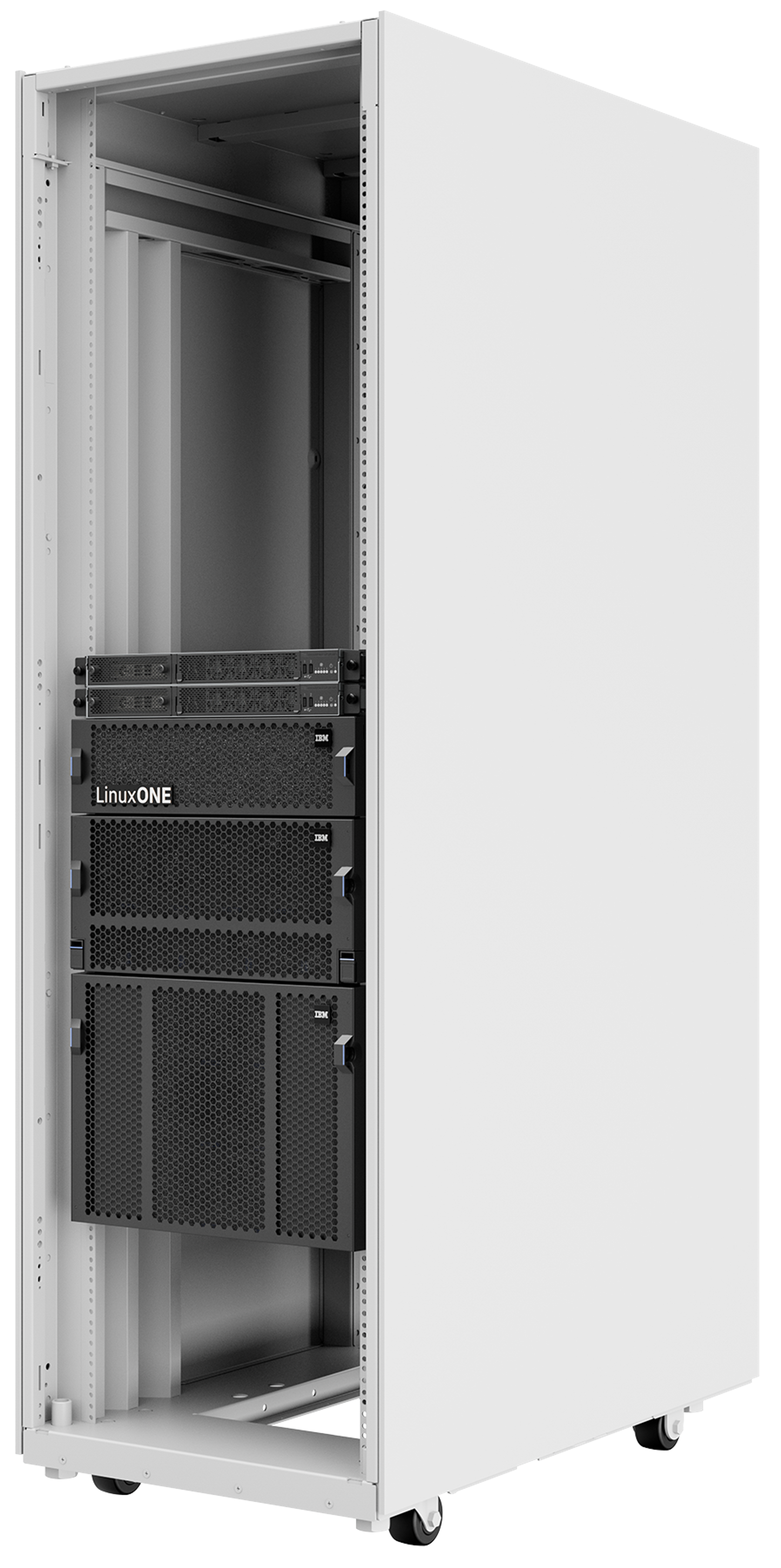
    IBM today made its most aggressive move yet in its quest to make mainframes running Linux more affordable, launching an entry-level platform starting at $135,000.

    The IBM LinuxONE 4 Express is a pre-configured rack system that is based on the same 5.2Ghz IBM Telum processor that IBM uses in its Z16 series of mainframes.

    In addition, the platform supports IBM Secure Execution, which is designed to thwart any attempt to decrypt data in the future using quantum computers.

    IBM claims organizations that move Linux workloads from x86 servers to an IBM LinuxONE 4 Express can save over 52% on their total cost of ownership over five years.

    The overall goal is to make it simpler for organizations to consolidate workloads that otherwise would need to be deployed across a distributed computing environment, she added. That approach ensures higher levels of availability for workloads that are increasingly processing massive amounts of data using two levels of physical and two levels of virtual cache in a way that consumes less energy, noted Tina Tarquinio, vice president of product Management for IBM Z and LinuxONE.

    The IBM LinuxONE 4 Express also includes an integrated accelerator for running artificial intelligence (AI) inference engines using more than 6 TFLOPs compute capacity per chip.

    IBM expects that as more organizations process sensitive data to drive AI applications, there will be increased interest in deploying applications in more secure on-premises IT environments, said Tarquinio. Mainframes provide a more cost-effective way to achieve that goal at a time when DevOps teams are embracing methodologies such as platform engineering to centralize the management of workloads, she added.

    At the same time, increased reliance on automation is making it simpler for IT teams to rely on multiple types of platforms to optimally process workloads. That capability enables IT teams to make platform decisions that are based on fit-for-purpose best principles more easily, noted Tarquinio.

    It’s not clear how many organizations will now be able to afford a mainframe when the initial cost of an x86 server is still much lower. But in the face of ongoing economic uncertainty, it seems more organizations are willing to consider all their options. The issue is that adding additional X86 servers is often viewed as the path of least resistance to increasing compute capacity.

    Naturally, each IT team will need to decide what path forward makes the most sense for them, but as workloads continue to become more data-intensive, it’s clear that infrastructure requirements are changing. The more data that needs to be processed, the more challenging it becomes to maintain service level agreements that are based on maintaining specific levels of application performance, noted Tarquinio.

    The challenge now is determining where best to run those workloads across an increasingly hybrid cloud computing environment that continues to offer more options as IT platforms evolve and expand.

  • Five Great DevOps Job Opportunities

    Five Great DevOps Job Opportunities

    devopsy.kinsta.cloud is now providing a weekly DevOps jobs report through which opportunities for DevOps professionals will be highlighted to better serve our audience.

    Our goal in these challenging economic times is to make it easier for DevOps professionals to advance their careers.

    Of course, the pool of available DevOps talent is still relatively constrained, so when one DevOps professional takes on a new role it tends to create an opportunity for others.

    The five job postings shared this week are selected based on the company looking to hire, the vertical industry segment and, naturally, the pay scale being offered.

    We’re also committed to providing additional insights into the state of the DevOps job market. In the meantime, for your consideration:

    Dice.com

    Travelers
    Hartford, Connecticut
    DevOps Tech Lead
    $133,500 to $220,300

    Indeed.com

    Lawrence Berkeley National Laboratory
    San Francisco, California
    Identity and Access Management DevOps Engineer
    $126,900 to $214,140

    SimplyHired.com

    Workday
    Pleasanton, California
    Software Development Engineer
    $112,500 to $204,000

    LinkedIn

    IBM
    Denver, Colorado
    DevOps Engineer
    $110,100 to $161,100

    CareerBuilder.com

    Cognizant Technology Solutions
    Oakdale, New Jersey
    DevOps Manager – Technology Modernization
    $95,500 to $212,600