Category: Continuous Delivery

Continuous delivery is a software engineering discipline that allows organizations to consistently develop and release quality software at a rapid pace. It is achieved by automating the software development lifecycle, enabling tasks such as development, testing and release to occur concurrently and continuously.

  • Three Strategies for Reducing MTTD and MTTR as Outage Costs Spiral

    Three Strategies for Reducing MTTD and MTTR as Outage Costs Spiral

    According to a New Relic survey of IT professionals, the median annual cost of IT outages has reached an astronomical $7.75 million. Over one-third of the 1,700 respondents said critical business application outages now cost more than $500,000 per hour. In a business environment where most interactions with customers, suppliers and business partners are conducted digitally, downtime has become a problem and an existential threat.

    Most IT organizations carefully monitor two key metrics — mean time to detection (MTTD) and mean time to resolution (MTTR) — to track their success in identifying and remediating critical systems issues. The figures represent, respectively, the average time it takes administrators to identify that a problem has occurred and to remediate the underlying issues. They serve as a benchmark for understanding the organization’s level of awareness of the status of its systems and the speed with which problems can be diagnosed and acted upon.

    There are many ways to improve performance against these metrics, but three stand out as the most effective, as evidenced by New Relic and the survey results.

    Monitor Everything

    The less you know about a problem, the longer it takes to diagnose and fix. The New Relic survey measured 17 different observability categories, such as network monitoring, alerts, log management, browser monitoring and distributed tracing. Across the board, about two-thirds of the companies that used even one of those monitoring tools reported reduced MTTR, with many saying resolution times had fallen by more than 25%.

    One-third of respondents whose organizations implemented full-stack observability—which is the ability to see everything in the tech stack that could affect the customer experience—reported the fewest outages, fastest MTTD and MTTR, lowest outage costs and highest median annual return on investment compared to all respondents. For example, those who have full-stack observability experience a median outage cost that is 37% less than those without.

    As the complexity of enterprise technology stacks increases, so does the difficulty of pinpointing the root cause of an outage. Any monitoring is better than no monitoring at all, and the more visibility you have into applications and infrastructure the faster you can identify and resolve incidents. Strive for full-stack observability around integrated observability data and a comprehensive dashboard.

    Have an Incident Management Action Plan

    The worst time to figure out how to resolve a problem is when you’re in the midst of a crisis. Organizations with mature observability practices also have extensive and documented response plans.

    Your incident plan will be unique to your organization. Small companies and startups tend to have ad hoc response strategies based on the skills within the organization. Large enterprises may use a more formal methodology like IT service management that defines strict procedures and protocols. Companies that have embraced modern DevOps and Lean principles often use a hybrid approach that depends heavily on teamwork and collaborative problem-solving. All of these approaches can work if the team fully understands the chosen strategy.

    Document your IT architecture, identifying known vulnerabilities and outlining procedures for responding to the most common types of incidents. Plans should cover obvious disruptions like fires and power outages, but you should also think about “unicorn” scenarios such as a rogue query that ties up a database server or a communication outage at a key supplier. Mature observability teams devote a portion of their resources to constantly testing new and unpredictable scenarios and use chaos engineering to randomly inject problems in a controlled manner to see if systems respond as expected.

    As you develop incident response procedures, document the processes in runbooks, which tell responders exactly what to do when a specific problem occurs. This not only creates a database of organizational knowledge about response strategies but also helps with onboarding new employees and covers for skills gaps that occur when team members are unavailable or leave the company.

    Fix for the Future

    Technical debt is a long-term obligation that is created when a short-term – and incomplete – solution is applied. You should aim to minimize it in your observability operation.

    When a problem occurs, the temptation is to fix it as quickly as possible. Human nature is to move on to the next task without taking the time to go back and understand why a problem occurred. “Quick and dirty” fixes are an invitation to larger problems in the future. Your observability plan should include a forensics stage that documents root causes and the fixes that were applied. Even if it isn’t convenient to implement a long-term solution immediately, the documentation serves as a guide for implementing a permanent fix down the road.

    Building a resilient IT architecture is a marathon, not a sprint. The more rigor you apply to identifying and resolving problems when they happen, the better prepared you will be to prevent their reoccurrence and the more informed your team will be about the resources they manage. Reducing your MTTD and MTTR will not only improve the bottom line of your business, it will ensure that your customers have an amazing digital experience.

  • Observability: The Central Watchtower Your All-Seeing IT Needs

    Observability: The Central Watchtower Your All-Seeing IT Needs

    If there’s something you need to keep secure, it’s natural to want to keep it sealed away under lock and key. However, even keeping something in a vault, far from prying eyes and ill intent, may not be enough to offer peace of mind. After all, how can you have the peace of mind of knowing it’s safe if you don’t regularly check to ensure it hasn’t bolted, been burgled or broken down?

    Now, multiply the volume and value of things being monitored tenfold — and you get a sense of the daily inefficiencies and anxieties IT professionals battle.

    Instead of jewels, these teams safeguard, manage and maintain something far more valuable: The data that underpins everything from business transactions to system performance to threat detection to service delivery and beyond. To make matters more complicated, today’s digital ecosystems are more complicated, distributed and disparate than ever before.

    Databases are critical to managing a successful IT department — and it’s time to discard the widespread industry’s perception of them as an unknowable black box. To be sure, databases represent the most difficult component of the IT ecosystems to observe, tune, manage and scale. But the database isn’t a Magic 8 ball in terms of its internal processes; We no longer have to shake the mystery toy and accept one of the six answers it’s designed to spit out.

    The fact of the matter is that database specialists and IT teams need a clear view of database performance telemetry if they want any hope of maintaining the health, stability and scalability of their services.

    Observability Tools

    This is where observability tools can play a transformative role. Taking its cues from the all-seeing panopticon watchtower, observability eliminates the dark corners of the database dungeon by providing a comprehensive view across the full cloud-native, on-premises and hybrid technology stacks.

    The word panopticon derives from the Greek word panoptes, or “all-seeing.” The panopticon model features a central, lighted guard tower at the center of a circular room — allowing 360-degree lines of sight that allow the guards to observe every surrounding cell from a single, centralized vantage point.

    English philosopher Jeremy Bentham had no way of foreseeing the challenges of today’s database professionals when he first conceived of the panopticon in the 1700s. The concept would lay the blueprint for a prison system designed around one core concept: Enabling the minimum number of guards to effectively monitor the maximum number of inmates. Bentham’s system also works as a strategy for ensuring the health and performance of your organization’s critical databases.

    The panopticon was designed so that every cell could be monitored from one central point — ensuring not only better and more straightforward security but preserving resources in saved time, manpower and effort expended. Think of your ITOps, database, DataOps and DevOps teams as the wardens of your IT performance. Traditional monitoring can be likened to patrolling a traditional prison: Rows of cells facing out into a hallway that is patrolled on a schedule or used to spot and address misbehavior as it’s noticed.

    How can they be sure they’re focusing their efforts in the right place? Or trust that Cell Block A won’t stage a breakout while they’re breaking up an argument in Cell Block B?

    In short: They can’t. Odds are, the team is either running from outage to outage in an everlasting firefighting mode or relying on random spot checks for something as vital as the health of our IT systems.

    Observability, as opposed to monitoring, puts teams into that central panopticon watchtower, allowing them to not just see everything, but to see it within the context of the bigger picture. This comprehensive visibility and always-on observation enable IT teams to identify critical issues as they occur, even those caused by complex dependencies between the database, operating system, storage subsystem and network.

    Database Performance Issues

    Furthermore, database performance issues are a starting gun for costly bottlenecks or serious outages that can handcuff your company’s ability to compete or grow. Without complete and precise database monitoring and observability, IT operations struggle to accurately determine an application’s root cause of performance issues. This increases the risk of downtime, data loss and poor customer experiences.

    Discovering the root cause of performance issues is quite literally a system-critical undertaking, whether you’re simply running your enterprise, scaling your operations or deploying new code. Observability also offers teams the rare opportunity to get ahead of performance issues since you can see performance anomalies in advance of a service disruption rather than relying on real-time remediation.

    With traditional methods, DevOps and IT teams must manually analyze the data presented to them, correlate it to the problem, and locate the error before they can finally begin addressing it. In contrast, observability collects data to provide information on what’s not performing as expected and why. This allows teams to take a proactive approach to solving downtime and bottlenecks and proactively preventing them.

    In the software world, that translates directly to more time spent where it matters: Developing new business value within your applications and infrastructures, fueling innovation and exceeding customer expectations.

    Given how complicated the modern database has — and continues to — become, arming your enterprise with the right observability solutions can provide a boost to efficiency and performance and pardon your teams from a sentence to time-consuming, mundane and error-prone work.

  • Bitrise Tightens Mobile DevOps Integration With AWS Cloud Services

    Bitrise Tightens Mobile DevOps Integration With AWS Cloud Services

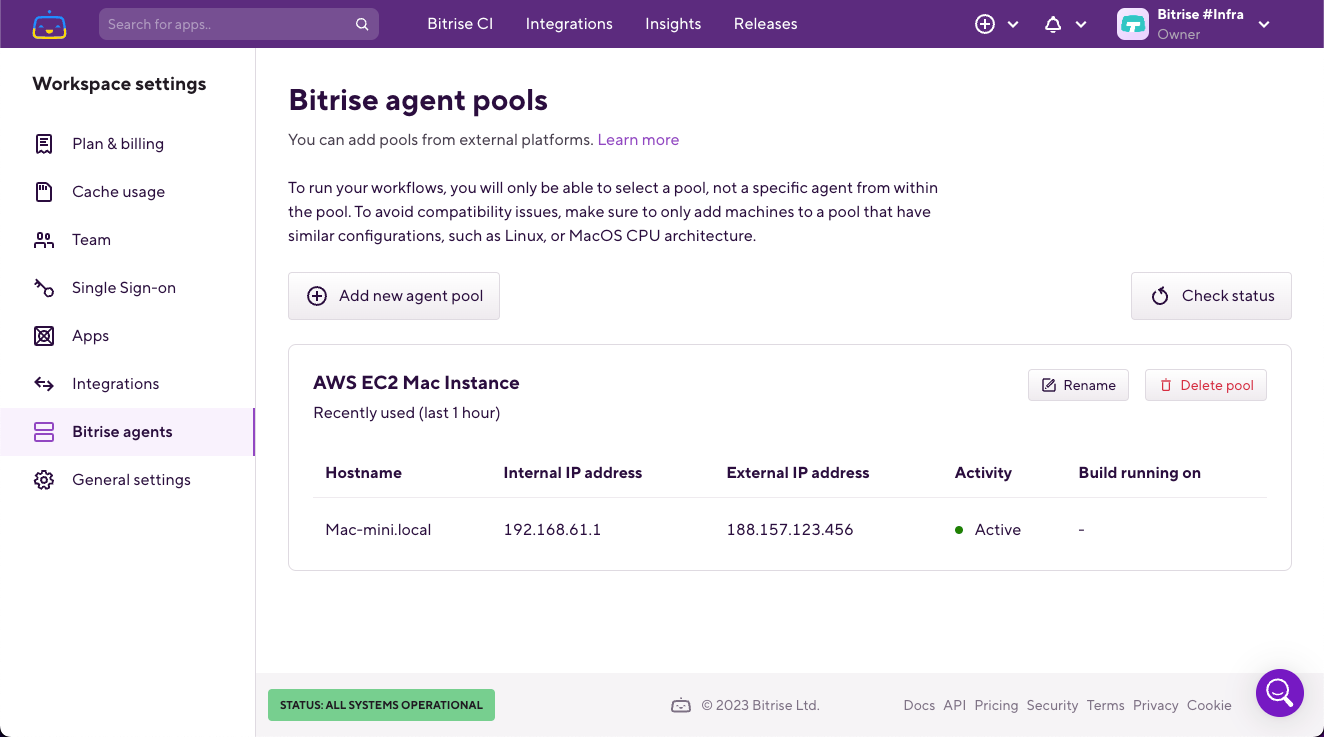
    Bitrise this week will tighten integration with its DevOps platform for building and deploying mobile applications and the application development services provided by Amazon Web Services (AWS) cloud.

    Announced at the AWS re:Invent 2023 conference, the goal is to provide easier access to automated building, testing and release management capabilities provided by AWS as part of an effort to increase overall efficiency.

    Bitrise CEO Barnabas Birmacher said those capabilities will streamline workflows for a Bitrise Mobile DevOps platform that has been specifically designed for building and deploying mobile applications that typically need to be updated frequently.

    Based on a continuous integration/continuous delivery (CI/CD) platform developed by Bitrise that can be deployed in an AWS cloud computing environment, the integrations will make it simpler to build and run mobile applications at scale, noted Birmacher.

    The goal is to reduce the total cost of building mobile applications while at the same time improving developer productivity for mobile applications that have to be thoroughly tested before being made accessible via an application store, he added.

    It’s not clear how many organizations will prefer to have a dedicated CI/CD platform for building and deploying mobile applications versus using the same CI/CD platform they might already be relying on to build and deploy other applications. Bitrise claims to have more than 6,000 customers, including Reddit, WISE, Equinox and Philips Hue.

    As the percentage of mobile applications that make up an organization’s portfolio continues to increase, the pace at which those applications need to be updated lends itself better to a CI/CD platform optimized for those types of applications, said Birmacher.
    In fact, a recent survey conducted by Bitrise found 62% of respondents have been adversely impacted by manual processes that slowed the rate at which mobile applications were deployed and updated. The survey also found (44%) of respondents reported their release approval process is mostly or entirely manual, with only 9% having fully automated application releases.

    The survey also found that nearly two-thirds of organizations (66%) have deployed applications that can’t be opened in two seconds or less, which is widely considered the accepted level of performance required for mobile applications. In addition, three-quarters of organizations (75%) required more than two days to address bug fixes.

    Many mobile apps have become increasingly mission-critical thanks to digital business transformation initiatives. Consequently, the amount of focus on them within most organizations is high; any issues that arise are likely to be noticed at the highest echelons of an organization. That level of attention can easily put pressure on DevOps teams, mainly because the general expectation among end users is that mobile applications will be regularly updated with new functionality. However, if release processes are largely manual, regularly improving the user experience can become problematic.

    Each IT organization will need to decide for itself how best to go about building and deploying mobile applications, but the one thing that is certain is adjustments to DevOps workflows will need to be made as a lot more of these applications are continuously built, deployed and updated.

  • LaunchDarkly Previews Generative AI Testing Tool for Feature Management

    LaunchDarkly Previews Generative AI Testing Tool for Feature Management

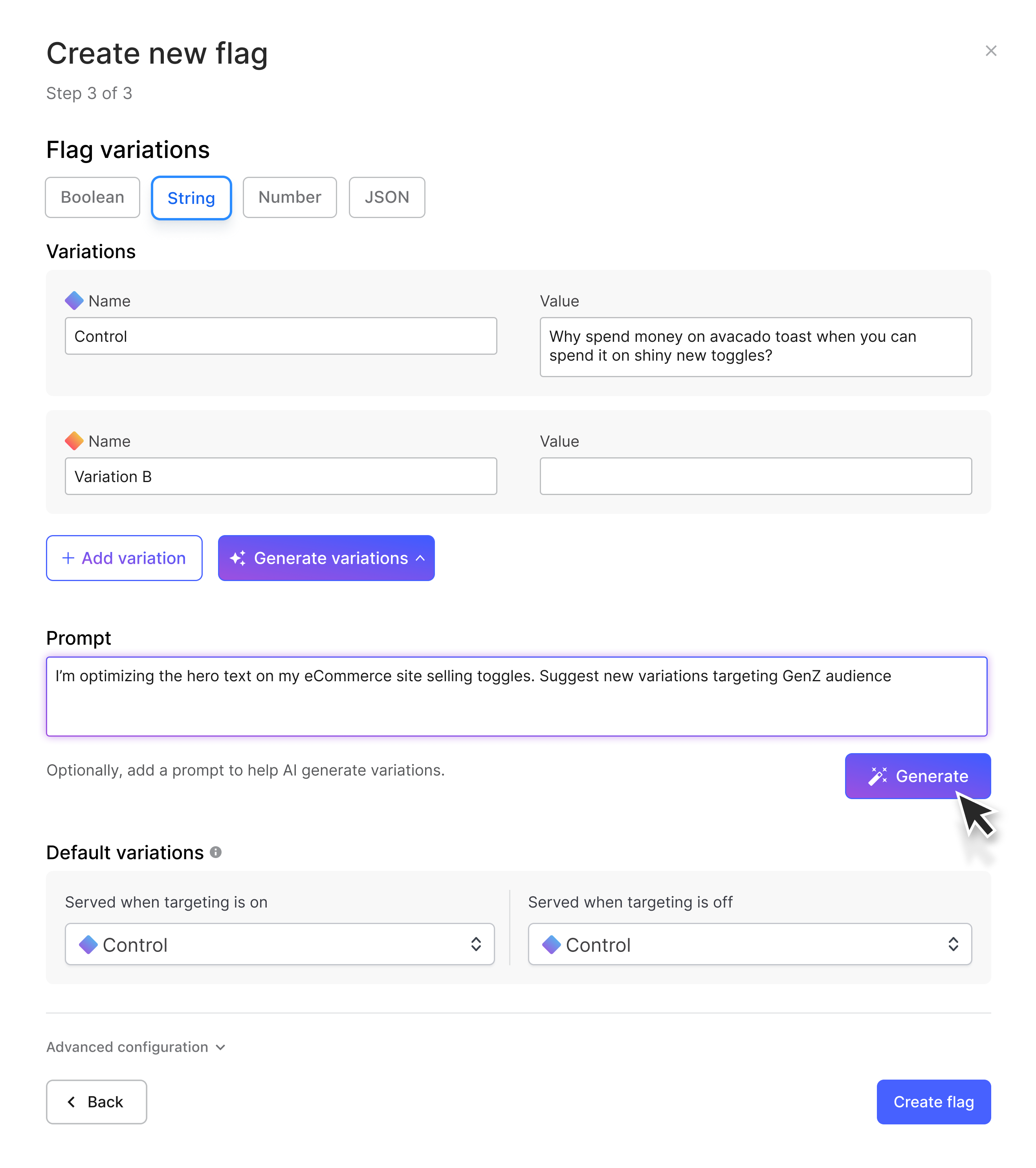
    At the AWS re:Invent 2023 conference, LaunchDarkly today previewed an ability to leverage generative artificial intelligence (AI) capabilities to create experiments for its feature management platform.

    Based on the Bedrock foundational large language models (LLMs) made available via AWS, this extension to the company’s Product Experimentation platform promises to make it simpler to use historical data to create a wider range of offerings that might be made available within an application.

    LaunchDarkly is making a case for a SaaS platform that can be used to centrally manage features across multiple workflows and platforms.

    Robert Neal, director of engineering for LaunchDarkly, said the company is now extending its testing capabilities using a managed Bedrock service provided by AWS that will enable leveraging generative AI to define a testing hypothesis more easily. That should also make it possible to involve more stakeholders in an iterative testing process within the context of a set of well-defined guardrails, he added.

    As more organizations start to deliver different tiers of digital services at varying price points, there is a clear need to be able to restrict access to those digital services. Application development teams have been employing feature management since the 1970s to isolate the development of various components into a branch that can be worked on and tested without impacting the primary build the application is based on.

    Feature management enables development teams to experiment with adding new capabilities in a way that doesn’t disrupt the application. When a project is completed, that branch is then usually merged into the primary build or can be deployed as a microservice that might be invoked via an application programming interface (API) by other modules with the application or another external application.

    At the core of that capability are what are known as feature flags, also known as feature toggles or feature switches, that make it possible to dynamically turn services on or off based on who is accessing them. Rather than being limited to the application development process, those feature flags are now being employed in production environments to enable the continuous delivery of multiple types of digital services to various classes of users of an application. A feature flag management platform enables an organization to keep track of all the flags being employed to keep the overall application environment consistent.

    It’s still early days in terms of understanding the extent to which generative AI can be applied to DevOps workflows, but it’s clear many of the manual processes that conspire to slow down the pace at which applications are built and deployed are going to be either reduced or outright eliminated. Each DevOps team will naturally need to determine for itself to what degree DevOps workflows can be automated using AI, but the overall pace at which applications can be built and deployed is going to clearly accelerate. The challenge now will be finding ways to keep pace with a rate of application development that is about to exponentially increase.

  • Nobl9 Allies With Microsoft to Simplify SLO Creation

    Nobl9 Allies With Microsoft to Simplify SLO Creation

    Nobl9 this week revealed it has integrated its reliability center platform for managing service level objectives (SLOs) as code with the Microsoft Azure Monitor service to make it simpler to both create and track service levels.

    The Nobl9 Reliability Center provides access to dashboards for a single source of truth about the state of reliability in an application environment based on the metrics collected from the SLOs that have been defined.

    Nobl9 Chief Growth Officer Kit Merker said the integration with Microsoft Azure Monitor is the first in a series that will ultimately make it easier to define SLOs using historical data collected by third-party tools.

    The Nobl9 Reliability Center is already integrated with more than 50 DevOps, observability and incident management tools through which it collects metrics, events, logs, traces, alerts to track incidents, releases, rollbacks, runbooks and other documentation.

    Those integrations will ultimately make it simpler for IT teams to create SLOs using historical data that today are still challenging to define from scratch, noted Merker. In fact, the data tracked by Nobl9 can be used to automate remediations via those integrations, he noted.

    As more microservices-based applications are built and deployed, it’s becoming more challenging to maintain SLOs across applications that have many more dependencies than legacy monolithic applications. Each feature and application programming interface (API) added over time conspires to adversely impact performance. It‘s not so much that any given service will outright fail as much as it is determining where degradations are occurring that result in SLOs not being met.

    Ultimately, each IT team needs to provide some sort of objective benchmark that assesses their overall effectiveness at delivering application services by making it simpler to track whether SLOs are achieved and maintained. Not every service needs to necessarily meet a stringent requirement. Instead, IT teams need to have confidence in the fact that, on average, certain levels of performance are being consistently maintained.

    That’s crucial because as more organizations depend on software to deliver digital services, any disruption is likely to have a direct impact on profit and revenue. As such, the reliability of application environments has become a major concern in an era where IT teams are now trying to manage distinct services rather than individual applications.

    The challenge and the opportunity now is to find a way to proactively reduce that stress by programmatically managing SLOs as code rather than having to overprovision infrastructure resources to ensure maximum availability at the highest cost possible. At a time when more organizations are encountering economic headwinds, that’s no longer a luxury they can afford.

    Each organization will need to determine for themselves how aggressively they need to manage SLOs. Of course, SLOs as a concept have been around for decades, but with the rise of digital services that span multiple organizations, the level of reliability DevOps teams are expected to provide is now being written into business contracts. Not surprisingly, the overall level of associated stress DevOps teams are experiencing has correspondingly increased.

  • BMC Mainframe Survey Results Show a Platform on the Rise

    BMC Mainframe Survey Results Show a Platform on the Rise

    What if I told you that the oldest active computing platform is also one of the most innovative, seen as a platform for growth and new workloads, not just by seasoned professionals, but by a new generation of stewards, too? The 2023 BMC Mainframe Survey shows just that. In addition to an overwhelmingly positive perception and growth mindset regarding the mainframe, the survey reveals that the majority of those who are most enthusiastic about its future are relative newcomers to the platform.

    Now in its 18th edition, the annual BMC Mainframe Survey gauges the opinions of more than 800 executive and technical professionals on a range of topics, from overall perception of the platform to top priorities, common practices and greatest challenges.

    This year’s results show that 94% of respondents have a positive perception of the mainframe, with 62% citing it as a platform to grow and attract new workloads. This tracks the 62% who report adopting DevOps practices on the platform. It’s no surprise, then, that two of the top five priorities cited by respondents are efforts to enhance automation and modernize applications. Organizations around the world recognize that the mainframe can be a leader in innovation, powering their digital transformations.

    Modern Management Approaches

    This innovation goes beyond the software and services developed for the mainframe to include those used to manage the platform. It’s reported that 35% of respondents listed the implementation of cloud technologies as one of their top four priorities for the coming year, with 41% saying they are considering cloud-based storage and backup. With the growing volume of mainframe data and the emergence of new regulations and standards governing data security and recovery, organizations are turning to cloud-based data management to reduce costs and improve recovery options.

    Year over year, the number of survey respondents reporting the use of AIOps hasn’t changed considerably, but those reporting its cross-platform use on both mainframe and non-mainframe systems has jumped 7% from 2021.

    Organizations are recognizing the need to take advantage of the greatest business values of AIOps — cited in the survey as improved uptime and the ability to detect problems quickly, understand trends and respond proactively — as part of a holistic approach to enterprise IT operations management.

    With increased cross-platform use, significant benefits and a decrease in the number of respondents reporting implementation challenges like cost, complexity and the need for specialized skillsets, BMC sees AIOps as an area ripe for significant growth in the coming year.

    Investment Pays Dividends

    Improving the availability, quality and efficiency of the mainframe, of course, requires investment. In our report on the results of the 2023 BMC Mainframe Survey, we compare the responses of maximizers (those planning to increase investment in the platform) with those of minimizers (those planning to decrease investment levels). The results are eye-opening.

    Maximizers have invested in future-proofing their workforce in a variety of ways, and the data bears that out; 81% have ten or fewer years of experience on the platform. The new generation of stewards sees the mainframe not as a legacy platform, but one of continued growth and innovation, worthy of the investment required not just to keep it modern, but to place it at the forefront of digital transformation.

    Another key difference between maximizers and minimizers relates to security, which was cited as the top overall priority of survey respondents for the fourth consecutive year. Maximizers are more likely than minimizers to have a dedicated resource to investigate security events and to have dedicated ransomware recovery capabilities in place. It should come as no surprise, then, that maximizers were 20% more likely than minimizers to report that their mainframe security controls for ransomware are extremely effective.

    These results show that the differences between maximizers and minimizers go beyond outlook, producing tangible effects on outcomes. The maximizers increasing their investment in the mainframe report fewer challenges with staffing and skills shortages and a stronger stance against increasingly sophisticated cyberthreats. The minimizers decreasing their investment in the platform not only have greater difficulty in maintaining a skilled workforce, which increases the risk of falling behind competitively, but it also puts their organizations at serious risk of potentially catastrophic security breaches.

    A Bright Future

    In short, the results of the 2023 BMC Mainframe Survey reflect a positive outlook for the platform’s future. By investing in their workforces and the tools required to advance and protect the platform while adopting modern techniques and practices, organizations can reduce risk and promote innovation that delights their customers.