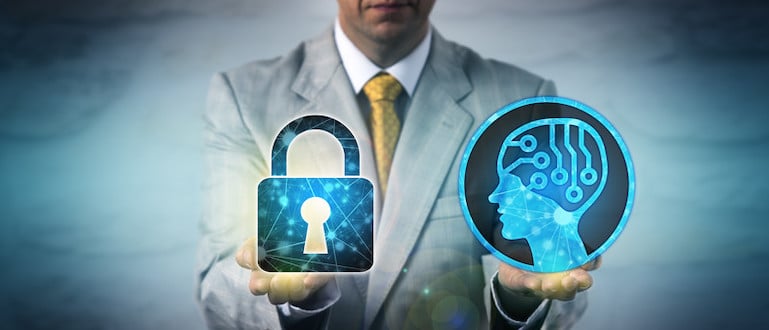
Imagine you are building a house on a busy road where the chances of threats like getting robbed are higher, even when you are laying the foundation, building walls, installing doors and installing the locks, somebody is accompanying you along the building process. Someone who is constantly looking out for cracks, testing whether the locks are secure enough and preventing anything from being left open. This somebody isn’t a human. It is artificial intelligence, your eminent co-builder in the quest to build secure, resilient systems. The integration of AI within DevOps is about making people more prominent. It is about assisting developers in creating smarter, safer and more efficient systems. Let’s explore how AI is reshaping secure DevOps, and what this means for the future of software development.
Catching Bugs Before They Hatch – AI Across the DevOps Lifecycle
Software development used to be linear, which means writing code, testing it, deploying it and crossing your fingers. DevOps replaced this linear model with continuous integration and continuous delivery (CI/CD) systems, where updates are pushed out constantly, sometimes multiple times a day. This requires a lot of speed to make updates and a lot of opportunity for risk.
That’s when AI enters the picture. Today’s AI-powered tools scan for vulnerabilities at every step, from writing the first line of the code to the final deployment. These scanners are learners, too. They detect patterns, recognize behaviours from past security incidents and flag errors that human eyes might miss.
The Department of Defense’s SEI (Software Engineering Institute) has recently published studies on AI-augmented DevSecOps strategies, especially in mission-critical environments. Their findings show that AI security embedded in pipelines significantly improves threat modelling and vulnerability detection, reducing the turnaround time for secure deployments.
Maintaining DevOps Velocity Without Sacrificing Security
DevOps is about speed, but this speed can lead to mistakes. If a rushed update introduces a new vulnerability, the consequences can be severe. AI tools integrated into CI/CD pipelines solve this by running continuous scans and offering real-time feedback. Developers are immediately alerted when they use deprecated packages, expose APIs, or misconfigure authentication.
Real-time feedback is not just theoretical. According to the Forrester Wave report 2025, security is an important part of DevOps. It is found that AI is blooming, but it is not well integrated. Many DevOps platforms need to satisfy developers and operations people in integrating AI for secure DevOps. The real-time analysis by AI helps developers fix problems when they’re easiest to fix right away, rather than weeks later when the code has been deployed and the risk is also higher. It is a shift from reactive to proactive security, and it saves both time and peace of mind.
Learning from the Past to Predict the Future
The strength of AI lies in its memory. By digesting massive repositories of historical vulnerabilities, attack patterns, and code commits, it can anticipate problems even before they arise.
For coders, that’s more than warnings. That’s a smart suggestion. If the code pattern looks like one that caused a breach previously, even in an entirely different firm, AI can mark it. It could suggest an alternative method or even replace the vulnerable snippet with a new one. This is about checking a box and creating a partnership between human ingenuity and machine accuracy. Developers continue to write code, make choices, and create innovation, but now they have a partner, one that’s learned from millions of data points and can steer them around known problems.
Smarter, Faster Security Testing
Traditional security testing has always been tedious. Manual penetration testing or rule-based scanners were often too slow and rigid to keep up with agile development. AI has changed that. AI-driven fuzzing tools and automated scanners don’t follow scripts; they explore them. They probe code, analyse app responses in real-time, and adapt like human attackers. Each test makes them smarter, faster and more precise.
This has real-world backing. Google’s AI team at the 2025 RSA Conference revealed the growing importance of artificial intelligence in alleviating complex security threats, fostering efficiency, and shaping the future of organizational resilience.
The Future of Secure DevOps
What’s next? A world where secure DevOps is an AI-integrated DevOps. AI won’t be an add-on to DevOps; it’ll be embedded into every line of code, every push, every build. It will auto-correct, auto-patch and in some cases, self-heal. Future AI agents will review every commit like a team lead, recommend more secure alternatives, and initiate rollbacks for high-risk changes, all without slowing developers down. This isn’t to replace human developers, it’s to elevate them. They’ll spend less time firefighting and more time building.
Reliable, Traceable and Accountable: AI-Driven DevOps Culture
The real transformation is cultural. AI-integrated DevOps means greater visibility, accountability and traceability. Security becomes a shared responsibility of every developer, tester, and engineer, which is supported by AI systems that enhance awareness and resilience.
Ultimately, software is written by humans, for humans. And when those humans are supported by intelligent systems that help them make better decisions, the result is safer, faster and more reliable software.
AI is no longer just a tool. It’s a teammate, one that works tirelessly, learns constantly, and strengthens every part of the development journey. Secure DevOps isn’t a dream. With AI, it’s already here, lighting the way, one line of safe code at a time.