Category: AI

  • IBM: DevOps, AI to Drive Digital Business Transformation

    IBM: DevOps, AI to Drive Digital Business Transformation

    Conventional wisdom holds that one of the biggest challenges organizations face today is a chronic shortage of application developers. But as artificial intelligence (AI) advances, the process of writing code will become more automated. But rather than there being not enough developers to write all the code necessary, the shortage will be in software engineers who can develop innovative systems.

    Bob Lord, chief digital officer for the Digital Business Group at IBM, says a glimpse of the future of application development is already being provided today. Instead of writing low-level code, most developers today simply combine modules to create new applications. Anytime new functionality is required, another module gets dropped into the application. The number of developers writing the low-level code needed to create those reusable modules is relatively few, says Lord.

    Over time, however, AI models will learn how to write that code. People will add value by providing the engineering expertise needed to combine modules to create an innovative application, Lord says. Naturally, most of the processes employed to deploy that software also will be automated. But IT operations teams will be needed to continuously train the AI systems being used to deploy that software. This is in much the same way that we need human pilots to fly a plane whenever something new or different occurs, despite the existence of autopilot technology.

    In general, Lord says, IT organizations would be well-advised to focus on three things:

    • They need to decide what architecture strategy is going to be employed to accelerate DevOps integration.
    • They need to develop a data strategy that drives digital business transformation.
    • They need to layer a cognitive computing strategy that employs advanced algorithms to maximize the business value of the data they’ve accumulated.

    While some organizations approach these issues in isolation, Lord says the reality is they’re all closely connected. Organizations are investing in DevOps not just to reduce costs—DevOps is about attaining a level of IT agility capable of driving digital business transformations. In fact, Lord believes the way IT organizations are measured will change: Rather than being rated on traditional IT metrics, they will be measured on how effective they were in attaining business goals—especially when to comes to velocity at which applications are rolled out and updated.

    In the meantime, Lord says, developers are starting to exercise more influence over the technologies organizations are employing to achieve those goals. Because of that issue, IBM is making an effort to get closer to the developer community. But as application development advances, many of those developers will be software engineers rather than people who write code, while IT operations teams will become teachers who train intelligent systems how to respond to the needs of deployed code.

    — Mike Vizard

  • The Time Is Now for an IT Operations Revolution

    The Time Is Now for an IT Operations Revolution

    There’s a level of frustration starting to build inside IT operations teams that’s about to boil over. Lucas Carlson, vice president of strategy for Automic, a unit of CA Technologies that provides an IT automation platform, says developers are bullying IT operations teams by programmatically invoking application programming interfaces (APIs) exposed by public cloud service providers. As the number of application workloads running in those clouds increases, IT operations professionals are losing control.

    To ensure their continued relevance, IT operations teams need to leverage automation to inject levels of agility into local data center environments, he says. That would make it much less likely developers would feel the need to programmatically invoke IT infrastructure resources.

    Carlson says achieving that level of agility will require IT operations teams to rely more on machine- and deep-learning algorithms to automate low-level tasks. Instead of thinking in terms of managing silos of compute, storage and networking resources, Carlson contends IT operations professionals need to reinvent themselves.

    The artificial intelligence (AI) models based on advanced algorithms must be trained continuously. IT operation professionals could become the trainers of those AI models. In fact, Carlson says IT operations teams are approaching a critical moment in history: They can either wait for AI models to eventually replace them or they can leverage them to take back control of IT infrastructure.

    However, developers tend to make decisions based on what they prefer versus what’s best for the organization. Before too long, multiple duplicate operations management frameworks are in place. Rather than incur all those management headaches and associated technical debt, Carlson says organizations need a single framework that can more adroitly accommodate the multiple roles within the DevOps team. It’s already long past the time when IT teams should have modernized their operations, he says.

    The relationship between developers and IT operations teams has always been contentious. The more belligerent members of the developer community are even making a case for “NoOps.” In that context, all the IT dollars spent on operations are moved into developing applications because the management of IT infrastructure is completely automated. Given the amount of legacy infrastructure that isn’t likely changing anytime soon, achieving that level of automation inside the enterprise won’t happen for a while. But there’s no doubt that IT operations needs to get more agile. Because of that issue, investment in software-defined data center (SDDC) technologies is growing rapidly.

    Instead of resisting that trend, Carlson says teams need to demand that internal IT operations be brought into the 21st century. It’s true that SDDCs infused with AI models will automate most of the lower-level tasks associated with DevOps. But those members of that IT operations teams who become the masters of building and training those AI models will be among the most highly sought-after individuals in IT.

    — Mike Vizard

  • Site Reliability Engineering: How to Make the Operations Side of DevOps Actually Work

    Site Reliability Engineering: How to Make the Operations Side of DevOps Actually Work

    The DevOps movement often has been accused of focusing too much on the first half (Development) and not enough on the second half (Operations). Certainly there has been more attention paid to deployment of payloads than to operating running systems, leading to the dismissal of the handover between Dev and Ops as “throwing it over the wall.”.

    Lately, we have seen the emergence of a new focus on the stability and reliability of the systems that are the targets of those deployments, with the creation of the new practice of site reliability engineering (SRE). This has been a welcome addition to the IT toolbox, but it can still seem to put all the onus on Ops teams to catch whatever comes over the wall.

    The Problem with Site Reliability Engineering = IT Infrastructure

    In SRE, the IT infrastructure is expected to be highly automatic and self-healing in the face of any events. Here is the problem: That approach works well for foreseeable events, but less well for the unforeseen ones. Because of that factor, it works well in environments that run few types of individual workload types, but do so at very large scale. If you’re thinking that sounds like Google and Facebook, you’d be right.

    What this amounts to is massive engineering of the infrastructure to withstand known or foreseeable problems. However, typical enterprise IT environments are not like that. A large bank might have thousands of applications, each of which must accommodate changes on a pace that is dictated from outside the IT environment. Applying assumptions from one environment to the other is asking for trouble.

    To illustrate this, let’s look at an example from outside IT. Recently was the anniversary of the sinking of the Titanic, on April 15, 1912. The RMS Titanic itself embodies the principles of SRE, engineered to prevent or survive all manner of emergencies. The ship was equipped with state-of-the-art everything to transport its passengers in comfort and safety across the Atlantic.

    As we all know, that plan did not quite work out. A combination of unexpected changes in the environment (more icebergs than normal), business imperatives to maintain speed and mishandled warnings about the ice from other ships led the Titanic to disaster.

    While the consequences of an IT failure are rarely quite as dramatic as the sinking of an ocean liner, many of the same factors apply. IT administrators may believe that in the worst case their backups and disaster recovery plans will be sufficient to handle any problems, but these plans are designed around known and foreseeable problems. Unexpected circumstances can easily lead to cascading failures, which is why it is critical to be ready for the unexpected when it—inevitably— occurs.

    The Problem with Traditional IT Ops = Static Models

    The key flaw in IT Ops is reliance on static models of the world. These models come in many shapes – the CMDB is the “model” that many think of first, but static rulesets are also a model. The most dangerous models, though, are the ones that are invisible: namely, the filters that are put in place to determine which alerts and events are even worth considering.

    This is the flaw that ultimately sank the Titanic: The crew were unable to correctly priorities events and react to them in time to avoid failure. It is also the flaw that causes countless much more minor issues every day in data centers everywhere: the filesystem that filled up with logs, taking down the database that the critical business application relied on—and the filter that had not forwarded that alert because it usually was harmless. Or the loss of one leg of the redundant network link, which was ignored because the other leg was still up, so there was still a link—until that one failed too, and an entire site went dark.

    The key factor is that the filters were not wrong to suppress those alerts. By definition, informational or warning alerts are not the same as major or critical ones, and most of the time they can be safely ignored, to be dealt with later.

    Every now and then, though, a pattern of those alerts, if understood correctly, can identify a future problem in the making. These developing issues could be nipped in the bud, if only Ops teams had enough hours in the day to look at them and review them. But, of course, they don’t—every Ops team I have ever met is drowning in issues, and behind those there is a long and lengthening to-do list.

    What Can DevOps Do to Make Operations Better

    New approaches are emerging to make the principles behind SRE more widely accessible and applicable. In particular, more dynamic noise reduction and correlation is now possible, to sift those important alerts from the constant background noise and put them together into a picture of what is really happening. The key factor is to be able to do this in real-time and without a human having to plan out laboriously what are all the possible scenarios that they might need to know about in the future.

    Gartner has called this new approach Algorithmic IT Operations, or AIOps. The idea is to bring together all possible sources of events, whether those are alerts from the compute or network infrastructure, transaction slowdowns reported by an APM tool, automated deployments being run from a CI/CD toolchain, or anything else the might conceivably be relevant. All of this information then can be sifted by algorithms to understand what is actually important to Ops and brought to the attention of the right specialists who can work on the issues and get them solved fast. Part of that process is also the integration with systems of record (which generally means IT service management), and with automation and orchestration tools that can accelerate remediation activities.

    This is how we can get the Ops side of DevOps to where they need to be to be able to accommodate the ever-accelerating pace of change—whether from Dev teams wanting to run ever more frequent deployments, or from business users needing help with their own goals—or from the next unexpected issue to come down the line.

    — Dominic Wellington

  • Applying AI to Root-cause Analysis Webinar

    RECORDING

    SLIDES

    [slideshare id=75243643&doc=webinarloomai1125-170420191116]

  • 8 TED talks on Superintelligence Business Leaders Must See

    8 TED talks on Superintelligence Business Leaders Must See

    [nextpage title=”Introduction” ]

    There’s a lot of discussion today about not so much if artificial intelligence will dramatically change the way humans work and provide economic value, but when, how quickly and to what degree AI will change our relation to work. In this post we’ve collected eight of the best TED talks we could find when it comes to increasingly intelligent machines and how they will impact business and the nature of work.

    [/nextpage]

    [nextpage title=”The Wonderful and Terrifying Implications of Computers That Can Learn” ]


    The Wonderful and Terrifying Implications of Computers That Can Learn

    We increasingly hear about it: Some machine has beaten a human at something that was previously unheard of—chess, Jeopardy and, most recently, Go. In this talk, technologist Jeremy Howard shares new developments in the fascinating field of deep learning. This is happening quickly, and business leaders need to prepare for the day when computers are on par with humans in certain cognitive domains.

    [/nextpage]

    [nextpage title=”What Happens When Our Computers Get Smarter Than We Are?” ]


    What Happens When Our Computers Get Smarter Than We Are?

    In this talk, Swedish philosopher Nick Bostrom explains how artificial intelligence is getting smarter rapidly and soon may be as smart as people. Bostrom believes thinking machines will be man’s final invention. I’m hoping they end up on our side.

    [/nextpage]

    [nextpage title=”Are Droids Taking Our Jobs?” ]


    Are Droids Taking Our Jobs?

    Andrew McAfee is one of my favorite reads on this topic, and if you haven’t read “Race Against the Machine: How the Digital Revolution is Accelerating Innovation, Driving Productivity, and Irreversibly Transforming Employment and the Economy,” you need to close your web browser and go do that right now. Well, maybe watch this TED talk, first. It details how robots and algorithms are getting good at building cars, writing articles, translating—jobs that once required a human. Did he say article writing? What will I do for work? In this talk, McAfee, citing labor data, takes a look at what could be in store for us.

    [/nextpage]

    [nextpage title=”The World’s First AI Legal Assistant” ]


    The World’s First AI Legal Assistant

    Anyone who doesn’t like lawyers never faced a prosecutor or lawsuit. Those that have know legal advocacy can be quite the hit on the bank. What happens when the scales of justice are digital? In this talk, lawyer Andrew Arruda partnered with a computer scientist to create the world’s first artificially intelligent legal assistant, Ross. Arruda hopes Ross will make legal help more affordable for us.

    [/nextpage]

    [nextpage title=”The Jobs We’ll Lose to Machines — and the Ones We Won’t” ]


    The Jobs We’ll Lose to Machines — and the Ones We Won’t

    In this talk, entrepreneur Goldbloom tries to tackle the age-old question: What jobs will the machines take from the labor pool and what jobs will be left for us humans to fight over?

    [/nextpage]

    [nextpage title=”Get Ready for Hybrid Thinking” ]


    Get Ready for Hybrid Thinking

    Futurist Ray Kurzweil says we need to get ready for the next big exponential in brain power—the computer. In other words, don’t hate the machine, become the machine.
    [/nextpage]

    [nextpage title=”How AI Can Bring On a Second Industrial Revolution” ]


    How AI Can Bring On a Second Industrial Revolution

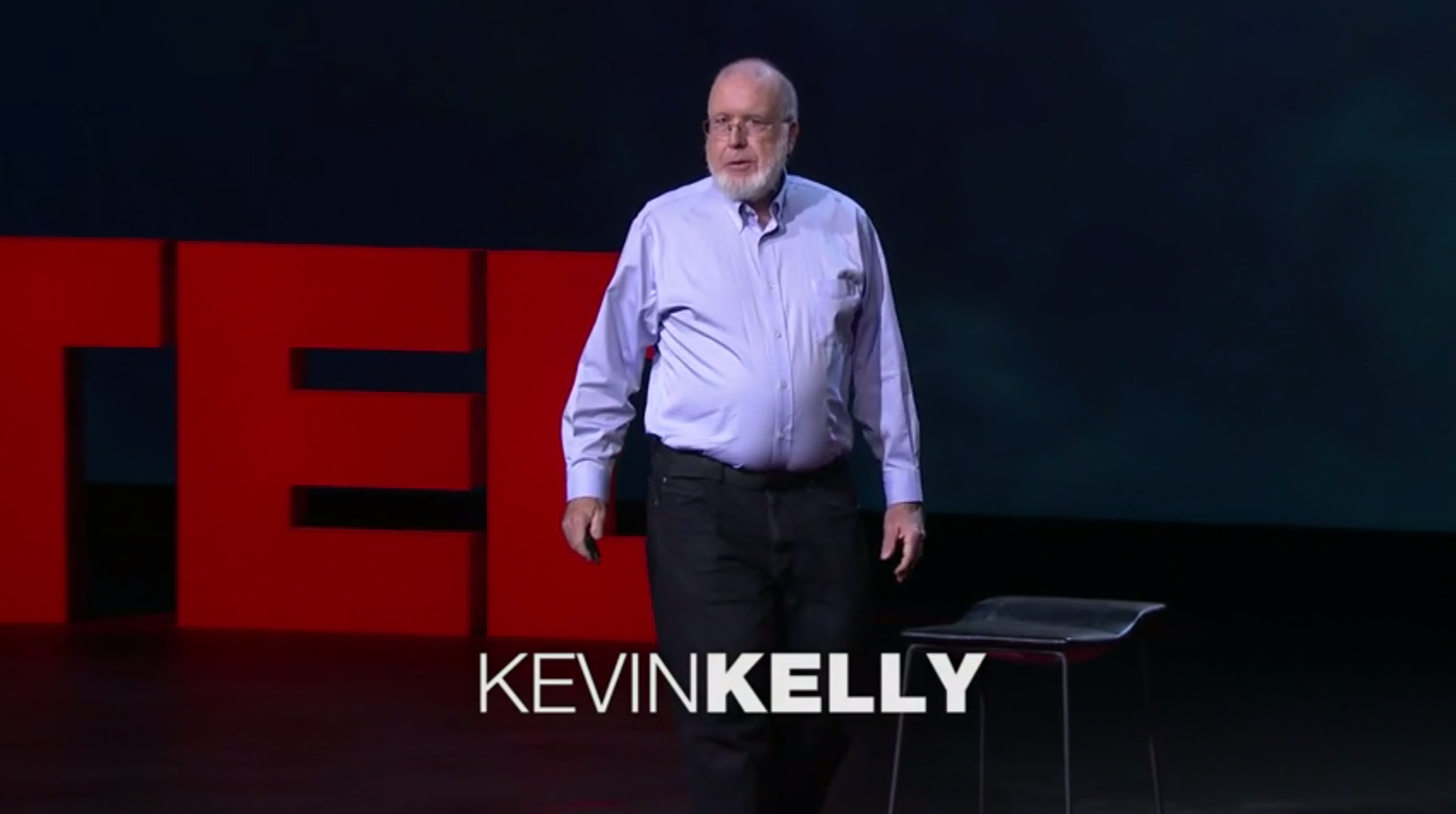
    Digital sherpa Kevin Kelly says technology is driven by patterns that are surprising but also predictable. That is, while the exact path taken isn’t predictable, where we eventually end up is. And in the decades ahead our machines are going to get smarter and smarter, and this will change the world in very big ways.

    [/nextpage]

    [nextpage title=”Can We Build AI Without Losing Control Over It?” ]


    Can We Build AI Without Losing Control Over It?

    We should all be scared, very scared, of superintelligent AI. In this talk, neuroscientist and philosopher Sam Harris explains why. And one of the reasons could be that we end up making superintellient machines that decide we will make very nice pets (at best) or treat us like an insect infestation (at worst).

    [/nextpage]

    — George V. Hulme

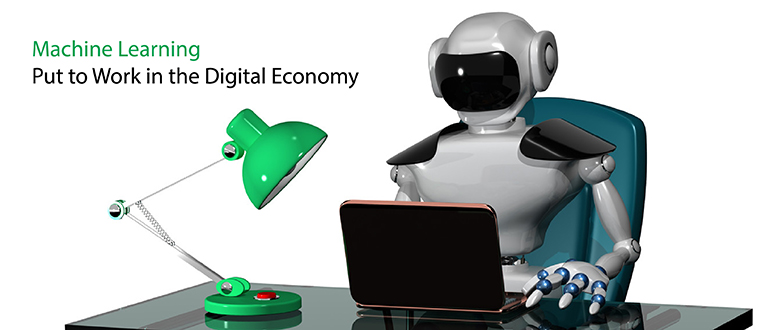
  • Machine Learning Put to Work in the Digital Economy

    Machine Learning Put to Work in the Digital Economy

    IBM’s Watson already has a new retail job lined up to get a head start saving for its holiday spending this season. (Hey, even artificial intelligences appreciate buying gifts.) And Macy’s is hoping its customers appreciate its “Macy’s On Call” pilot, which combines Satisfi’s communications platform and IBM Watson cognitive technology for machine learning. Macy’s On Call creates an in-store companion on mobile devices that aims to help improve the service of customers. The pilot will be in 10 stores across the United States.

    According to the retailer, the Macy’s On Call app will be accessed via a mobile web browser. Customers can ask the app questions in natural language, such as where certain brands are located, and get customized answers. Customers also can learn about specific in-store services available at each test location, including personal shoppers, pickup counters or the location of restrooms. Macy’s hopes the app will also help them learn more about the services and features that shoppers want.

    Since each Macy’s store is different, and consumers increasingly prefer mobile platforms, the system will evolve as it learns more about each store’s customers. “At Macy’s, we remain focused on identifying, testing and supporting new ideas and approaches that will help elevate service to our customers through technology. With an eye toward innovation, we are moving fast to test and scale up pilot programs that help enhance their experience with us,” said Peter Sachse, Macy’s chief growth officer, in this statement.

    “This program, in partnership with Satisfi and leveraging the power of IBM Watson, will help us explore new ways to engage one-on-one with customers in-store, providing them another level of service right at their fingertips,” Sachse added.

    “Bringing Watson into a retail store setting presents an opportunity to engage with the consumer on a variety of levels,” said David Kenny, general manager of IBM Watson. “This particular use case takes Watson beyond helping consumers evaluate purchasing decisions, and influences another, equally important aspect of the in-store experience,” Kenny said.

    The first phase of Macy’s On Call recently launched and is expected to run through late fall. Of course, Macy’s has the potential to learn an extraordinary amount about its customers’ preferences through this program—preferences that otherwise wouldn’t have been so easy to learn without the aid of the Satisfi platform or Watson’s machine learning. Macy’s also may learn how to more rapidly improve its stores, manage inventory most effectively, and more quickly learn what is and isn’t working in its retail environments. That is, of course, if it can make Macy’s On Call engaging enough for customers to want to try, as well as provide enough value for them to want to use over time.

    Macy’s wasn’t the only one recently to make a significant machine learning announcement and the innovative use of technology. Google said it is using software from its DeepMind subsidiary to significantly cut the costs to power its data centers. According to DeepMind co-founder Demis Hassabis, two years ago Google began applying machine learning  to operate its data center more efficiently. And over the past few months, DeepMind researchers began working with Google’s data center team to significantly improve the system’s utility. “Using a system of neural networks trained on different operating scenarios and parameters within our data centers, we created a more efficient and adaptive framework to understand data center dynamics and optimize efficiency,” the Google team wrote in this blog.

    According to Google, the team cut power usage in their data centers by several percentage points, which translates into a 15 percent improvement in power usage efficiency. These are exactly the types emerging technology applications CIOs and chief digital officers need to focus on if they are going to succeed, as we covered in our post, “Digital Transformation Strains Traditional IT.”

    According to the McKinsey report, “Digital America: A Tale of the Haves and Have-Mores,” the United States is digitizing so rapidly that most are scrambling to adapt. The race to keep up with technology and put it to the most effective business use is producing digital “haves” and “have-mores”—and the large, persistent gap between them is becoming a decisive factor in competition across the economy, the report said.

    According to the report, “Digitization is happening unevenly, and users with advanced digital capabilities are capturing disproportionate benefits. The companies leading the charge are winning the battle for market share and growth; some are reshaping entire industries to their own advantage. But many businesses are struggling to evolve quickly enough. Workers in the most digitized industries enjoy wage growth that is twice the national average, while the majority of U.S. workers face stagnant incomes and uncertain prospects.”

    Clearly, organizations such as Macy’s and Google making moves want to ensure that in the year ahead they want to be the digital “have mores.” Businesses that aren’t making their own similar moves to employ machine learning to cut costs, improve customer experiences, or find other ways to advance the business may not find themselves the “haves” but the “have nots.”

  • Top 10 Emerging Technologies Enterprises Should Know

    Top 10 Emerging Technologies Enterprises Should Know

    The momentum behind the adoption of new technologies underway is no less than astounding.

    Those enterprises that not only adopt, but learn to master, emerging technologies will be the clear winners in the years ahead as they learn their customers’ needs better, rapidly develop new and successful products and services, optimize their use of business technology, improve supply chains, increase margins and stay a few steps ahead of the competition.

    Recently the World Economic Forum released its annual list of technologies it thinks are ready to “break through” this year, which generally means start witnessing wider adoption. Some of the breakthrough technologies this year include very powerful batteries, what is deemed “socially aware” artificial intelligence (AI) and improved solar panel technology.

    According to a statement released by the World Economic Forum, the Top 10 2016 Emerging Technologies list, compiled by the Forum’s Meta-Council on Emerging Technologies and published in collaboration with Scientific American, reveals the technological advances the group believes could improve lives, transform industries and safeguard the planet. The list also serves as an opportunity to discuss the any human, societal, economic and environmental risks the technologies may pose prior to widespread adoption.

    “Horizon scanning for emerging technologies is crucial to staying abreast of developments that can radically transform our world, enabling timely expert analysis in preparation for these disruptors. The global community needs to come together and agree on common principles if our society is to reap the benefits and hedge the risks of these technologies,” said Dr. Bernard Meyerson, chief innovation officer at IBM and chair of the Meta-Council on Emerging Technologies.

    Some important criteria in technology selection was the council members’ belief that 2016 would prove to be a deployment tipping point of each technology. That should be of interest to CIOs and technology leaders, too. And it means it’s time for tech leaders to start figuring whether and how implementation may or may not make sense.

    The top 10 technologies to make this year’s list are:

    1. Nanosensors and the Internet of Nanothings – With the Internet of Things expected to comprise 30 billion connected devices by 2020, one of the most exciting areas of focus today is now on nanosensors capable of circulating in the human body or being embedded in construction materials. Once connected, this Internet of Nanothings could have a huge impact on the future of medicine, architecture, agriculture and drug manufacture.
    1. Next Generation Batteries – One of the greatest obstacles holding renewable energy back is matching supply with demand, but recent advances in energy storage using sodium, aluminum and zinc-based batteries make mini-grids feasible that can provide clean, reliable, around-the-clock energy sources to entire villages.
    1. The Blockchain – Much already has been made of the distributed electronic ledger behind the online currency Bitcoin. With related venture investment exceeding $1 billion in 2015 alone, the economic and social impact of blockchain’s potential to fundamentally change the way markets and governments work is only now emerging.
    1. 2D Materials – Graphene may be the best-known, single-atom layer material, but it is by no means the only one. Plummeting production costs mean that such 2D materials are emerging in a wide range of applications, from air and water filters to new generations of wearables and batteries.
    1. Autonomous Vehicles – Self-driving cars may not yet be fully legal in most geographies, but their potential for saving lives, cutting pollution, boosting economies and improving quality of life for the elderly and other segments of society has led to rapid deployment of key technology forerunners along the way to full autonomy.
    1. Organs on chips – Miniature models of human organs—the size of a memory stick—could revolutionize medical research and drug discovery by allowing researchers to see biological mechanism behaviors in ways never before possible.
    1. Perovskite Solar Cells – This new photovoltaic material offers three improvements over the classic silicon solar cell: it is easier to make, can be used virtually anywhere and, to date, keeps on generating power more efficiently.
    1. Open AI Ecosystem – Shared advances in natural language processing and social awareness algorithms, coupled with an unprecedented availability of data, will soon allow smart digital assistants help with a vast range of tasks, from keeping track of one’s finances and health to advising on wardrobe choice.
    1. Optogenetics – The use of light and color to record the activity of neurons in the brain has been around for some time, but recent developments mean light can now be delivered deeper into brain tissue, something that could lead to better treatment for people with brain disorders.
    1. Systems Metabolic Engineering – Advances in synthetic biology, systems biology and evolutionary engineering mean that the list of building block chemicals that can be manufactured better and more cheaply by using plants rather than fossil fuels is growing every year.
  • Machine Learning, AI Driving DevOps Evolution

    Automation is the fuel that drives DevOps. Automating routine, repeatable tasks is one of the defining characteristics of DevOps culture. As artificial intelligence (AI) and machine learning improve, the scope and complexity of the tasks that can be automated increases, which raises the bar for all of DevOps. The humans behind the DevOps will be freed from even more mundane tasks and able to focus on more innovative and creative endeavors.

    It makes sense, if you think about it. The trend from physical services in an on-premise data center, to virtualization, to cloud services, to DevOps has been a steady march of raising the bar for automation. The more applications and entire infrastructures can be developed, deployed, monitored and managed programmatically and through automation, the more efficiently and effectively an organization can function.

    As tasks are offloaded to automation, humans can address other challenges. That focus inevitably leads to identifying other new tasks that can be automated. AI and machine learning represent a quantum leap in this evolution, however—with AI and machine learning, the automation can begin to identify and improve itself. When the automation can identify bottlenecks and inefficiencies and automatically adapt to overcome those obstacles, human input and interaction could become almost obsolete.

    In a recent interview, Christian Beedgen, CTO of Sumo Logic, shared some thoughts about the impact of machine learning on DevOps. “Machines will enable greater productivity among teams and businesses through the advances that machine learning and automation can offer,” he said. “A necessary component to augment human contributions, machine learning will finally give humans the power to review millions of bits of data.”

    Automating routine tasks is crucial, but there’s another factor that plays into the role that AI and machine learning have with the future of DevOps. The reality is that there are some things humans simply can’t do as well or as fast as machines—especially at scale.

    Steve Burton stressed in a blog post that humans are capable of observing, digesting and interpreting only so much information at one time. Some feel like the Holy Grail solution is some sort of application performance management (APM) dashboard that can aggregate and correlate real-time data so human IT personnel can monitor metrics and identify issues manually. “This all sounds good in theory, except it’s completely unmanageable in reality when your applications have thousands of components, billions of metrics and hundreds of changes every day,” he wrote. “Humans can no longer cope with this complexity, they now need machines to do the leg work, process this Big Data and provide operational insight into what the f**k is going on.”

    Beedgen agrees. He suggested, “Increasingly, businesses will adopt machine learning technology for its usefulness in augmenting human understanding of complex interaction and large data sets by uncovering the unknown unknowns.”

    On some level this all sounds a bit scary. It seems as though the more we succeed at DevOps and the more DevOps evolves, the less humans are even a necessary part of the equation. Conceivably you could be so good at DevOps that you DevOps your way right out of a job or inadvertently launch SkyNet—or both.

    That scenario is simultaneously feasible and far-fetched. I suggest that you don’t fear that future or look at it as machines stealing your job or taking over humanity. Embrace the future of DevOps driven by AI and machine learning and find the silver lining. Seek out the new frontiers and horizons, because there always will be tasks that the machines simply can’t do without us—and that is where innovation happens.

  • The Big Question

    The Big Question


    TEST


    Here are some other ROELBOB’s you might like

    RoelBob150x120


    A Unit Testing Dillema 

    The Pink Slip

    Another Pink Slip


    Hot off the Press – Other great devopsy.kinsta.cloud content

    HotPress

    DevOpsSec: 1 in 16 Chances

    CIOs Must Fight for Relevance in Face of Tech Storms

    — ROELBOB

  • Avik Partner’s Grok APM Uses Machine Learning to Find Anomalies Early On

    Avik Partner’s Grok APM Uses Machine Learning to Find Anomalies Early On

    Machine Intelligence-Driven Anomaly Detection

    Machine learning—the science of getting computers to take thoughtful action without explicit programming—is the basis of Machine Intelligence-Driven Anomaly Detection, which is the core capability in Avik Partner’s Grok APM product, according to Casey Kindiger, veteran enterprise software solutions provider, IT automation expert, and founder of Avik Partners.

    “Thoughtful action means using the type of faculties that a human being would use to make a decision and to take an action,” says Kindiger, who has more than a decade of experience in designing and developing process automation solutions for companies such as JP Morgan Chase, T-Mobile, and Allstate Insurance. Grok learns from your dev and ops environments and takes thoughtful action to detect anomalies, all in the service of Application Performance Management.

    Grok works by analyzing real-time performance data from apps and infrastructure, looking for behavioral bumps in an otherwise smoothly-paved DevOps highway of deployed services and underlying infrastructure.

    Grok’s Pre-Event Inferences

    “Grok uses common statistical techniques to learn a pattern over a selected period of time in order to build a dynamic threshold of the continuously changing underlying patterns,” says Kindiger. In this way, Grok can establish a sort of dynamic baseline from very noisy patterns, which is something that would typically take a number of person hours of involved statistical and predictive analytics to accomplish.

    Grok’s machine intelligence leverages the ability to make inferences based on this dynamic baseline information like a human being would in order to reason out a logical conclusion. Grok does this to detect the slightest of anomalies based on the difference between what reasonably should have happened and what actually did happen. Using this approach, Grok detects subtle patterns of significance in streaming data despite the fact that the data has patterns that are continuously in flux.

    But rather than detect when something has gone wrong at a point in time, which is not scalable or sustainable, Grok looks for minute patterns that appear well in advance of any issue that you would normally consider looking at with traditional APM mechanisms, explains Kindiger. Rather than send alerts based on threshold-based exceptions, Grok makes a prediction on what the next data point or the next series of data points will be and then looks at deviations from those predictions, considering whether to flag those as anomalies, according to Kindiger.

    Currently, Grok is particularly tuned to analyze streaming data and is, according to Kindiger, data-point agnostic. “We don’t need to teach the system what the context of a particular data point is. The system learns the context of the data over time and the subtle nuances of the pattern that produces over time, and creates the model based on that,” says Kindiger.

    Watch Out for That Initial Two Week Delay

    If Grok does everything that Avik Partners’ Kindiger hypes that it will, DevOps teams will soon be able to catch and act on infrastructure issues before they grow big enough for end-users to notice.

    But Grok does have one wrinkle in its APM armor: it takes time for it to really learn a new customer system and get good at detection. Let’s assume that Grok’s machine learning causes it to get better at detecting anomalies in a given set of infrastructure over time. That means that there’s a point, at the beginning, given a brand new customer when Grok only starts to learn. At that point, Grok isn’t very good at knowing what’s anomalous compared to what’s normal for that infrastructure because Grok has no foundation for that particular system.

    “Grok will take some time to learn the nuances of when to escalate an issue. We’ve learned from experimentation that it gets pretty good after ingesting two weeks’ worth of data,” says Kindiger. Because Avik Partners initially targeted AWS, it has taken two weeks of CloudWatch data and fed that to Grok to provide it with some backdrop so that when Grok goes live, it won’t be learning this environment entirely anew.