Author: Veronica Haggar

  • Not All Heroes Wear Capes: Celebrating the Tech Community

    Not All Heroes Wear Capes: Celebrating the Tech Community

    During these crazy times, I can’t help but wonder, how would I even survive being on lockdown for so long if it wasn’t for technology? It is the one thing that has kept most of us sane while stuck inside during this crisis.

    Apps like Instacart and Zoom have been a hit during the pandemic. Why leave the house to go grocery shopping and risk exposure to the virus when you can get your groceries delivered at your doorstep? And thanks to video conferencing services like Zoom, you can have face-to-face meetings with your boss and colleagues, or socialize with your friends and family during happy hour.

    Of course, it doesn’t stop there. Tech companies, such as Google and Facebook, have done a great job in providing information on COVID-19 from trusted sources, tips on how to take care of yourself and ways to deal with staying home.

    Let’s not forget all the entertaining dance moves we have learned from apps like TikTok, and all the nights we’ve spent binge watching our favorite shows on Netflix. According to Netflix’s quarterly earnings report, the streaming service gained more than 15 million subscribers between January and March.

    Technology has helped businesses to carry on working and it has helped all of us to stay strong during these hard and uncertain times.

    To celebrate the tech community, MediaOps is hosting the first-ever TechStrong Con, a virtual event that brings together some of the most prestigious industry leaders from companies including Microsoft, JFrog, Red Hat, IBM, GitLab and many more for 12 hours of immersive learning and networking.

    Taking place on June 4, starting at 9 a.m. EDT, the event will feature a wide range of tech-related topics, from hardware and applications to processes and business of tech. The sessions are divided into three tracks: Emerging Technologies, Security/DevSecOps and Digital Transformation.

    Become a part of the event, get downloadable resources and interact with tech leaders and other attendees. Registrants will also be able to participate in TechStrong raffles for a chance to win one of the following prizes:

    • An Xbox One X 1TB Console – Star Wars Jedi: Fallen Order Bundle
    • One set of Bose 700 Noise Cancelling Wireless Bluetooth Headphones 
    • One pair of Apple AirPods Pro
    • 10 Amazon gift cards (valued at $50 each)

    Strengthen your skills, improve your best practices, empower your teams and become stronger than yesterday. Together we are strong, together we are TechStrong!

  • VMware Carbon Black Developer Day 2020: Bringing DevSecOps to the Fore

    VMware Carbon Black Developer Day 2020: Bringing DevSecOps to the Fore

    Developer Day is a VMware Carbon Black’s virtual event that connects intermediate to advanced security developers with Carbon Black experts to learn advanced API and integration techniques. The event takes place Tuesday, May 12, starting at 11 a.m. EST.

    Developer Day, which occurs the day before VMware Carbon Black’s Connect 2020 virtual conference, focuses on automating workflows by integrating the security stack. Attendees will hear from the VMware Carbon Black developer relations team, as well as their partners who have implemented the product APIs.

    Here’s what attendees can expect at this year’s Developer Day:

    • How to build an open source toolkit to enable security operations using Carbon Black’s complete platform API.
    • How to use Red Canary’s suite of tools to enable a variety of security operations.
    • Demos of the latest capabilities.
    • How to get started with Carbon Black Cloud Event Forwarder.
    • Explore the Binary Analysis SDK, the newest addition to the developer toolbox at Carbon Black Cloud.
    • A demo of a bidirectional integration between VMware Carbon Black EDR and Lastline Defender.
    • Discover what’s coming in the Carbon Black Developer Network.

    Participants will have a chance to be entered into a raffle to win Developer Day swag and other prizes. For more information and to register, visit the Developer Day website.

    Hear more about Developer Day as Scott Lundgren, CTO of VMware Carbon Black, discusses what’s in store during the four-hour event with MediaOps Managing Editor Charlene O’Hanlon.

  • CloudBees Connect Virtual Summit: Defining the Future of Software Development

    CloudBees Connect Virtual Summit: Defining the Future of Software Development

    CloudBees Connect Virtual Summit will bring together a global community of developers, CloudBees and Jenkins users, DevOps luminaries and continuous delivery experts for two full days of immersive learning, presented in a virtual reality environment. The event is scheduled to take place on May 19 at 11 a.m. EDT for North America, and on May 20 at 11 a.m. CET for the European audience.

    At CloudBees Connect, you will learn about the emerging trends and technologies shaping the future of software, including one of the most innovative trends in technology: continuous delivery. Continuous delivery allows you to deliver software faster and with lower risk, while preserving quality and reliability.

    Industry leaders will share their knowledge and expertise on CI/CD tools and best practices. You will learn how to successfully create a fully operational CD pipeline using containers, Kubernetes and Jenkins X; and how to automate security and privacy testing in your Jenkins CI/CD pipeline for continuous security.

    The event will consist of a series of workshops designed to provide great value to the attendees. Here are a few things you will learn by attending these workshops:

    • How your COBOL source code can be branched/merged/deployed using GitHub, CloudBees and Compuware tooling.
    • Best practices for continuously integrating code using CloudBees Core.
    • How to build and test applications using Jenkins Pipelines and Sauce Labs.
    • Solutions for the five most common Jenkins issues.
    • The role of feature flags in reducing risks associated with deployments.

    The workshops will feature a lineup of DevOps and continuous delivery leaders, including:

    • Oscar Medina, developer advocate at CloudBees
    • Viktor Farcic, Jenkins X product manager, principal software delivery strategist and developer advocate at CloudBees
    • Josh Grant, solution architect at Sauce Labs
    • Robert Kelley, director of delivery engineering at IHG
    • Stuart Ashby, DevOps specialist at Compuware
    • Alex Taylor, DevOps engineer at insightsoftware

    Discover what’s next from the CloudBees and Jenkins community, connect with industry experts and fellow developers, and get the skills and hands-on training you need in order to successfully deliver software.

    To check out the agenda, the full lineup of speakers and to register (for free), visit the CloudBees Connect website.

  • Kubernetes and Service Mesh With StackRox

    Kubernetes and Service Mesh With StackRox

    DevOps and Kubernetes enable organizations to “go with security,” adding security to the code instead of on top of it. In other words, security is built-in rather than bolted on.

    This is one of the aspects of security in the DevOps world with a Kubernetes system that Ali Golshan, co-founder and CTO of StackRox, explained during this exclusive interview with Alan Shimel, Media Ops CEO and editor in chief. The other aspect is security has become continuous instead of snapshots, which provides “a lot more visibility into various stages, various deployments, as well as running environments,” he said.

    During the interview, he explored containers, orchestrations, Kubernetes and service mesh.

    “Leveraging this cloud-native infrastructure, Kube and service mesh the right way reduces your dependency on third-party tools, allows you to hand off things you typically handed off to vendors and does that inside your infrastructure, which makes it actually more secure and highly scalable,” said Golshan. “You can automate that and reduce your lock-in and your sort of dependency.”

    Check out the interview below to learn more about the best and emerging practices in Kubernetes, service mesh and the security feedback loop.

    — Veronica Haggar

  • The New Era of Kubernetes, With StackRox

    The New Era of Kubernetes, With StackRox

    Orchestrators are becoming the operating systems of cloud for the future. Which one do you think has become the dominant one? Ali Golshan, co-founder and CTO of StackRox, placed his bet on Kubernetes right from the start.

    StackRox is a Kubernetes-native security platform that helps DevOps and security teams operationalize security, providing richer context, native enforcement and continuous hardening.

    During this interview with MediaOps founder and editor in chief Alan Shimel, Ali discusses the adoption of Kubernetes and its prevalence today. More companies are realizing they can’t use traditional security. The tooling has to be native to the infrastructure they’re using, it must integrate into the build and the deployment. And Kubernetes is the best solution available, he said.

    Check out the interview below to learn more about microservices, containers and Kubernetes.

    — Veronica Haggar

  • Splunk to Acquire Cloud Monitoring Leader SignalFx

    Splunk to Redefine APM Category with Any Data at Any Scale to Help Organizations Navigate Cloud Journey; Establishes Splunk as a Leader in Observability

    SAN FRANCISCO – August 21, 2019 – Splunk Inc. (NASDAQ: SPLK), delivering actions and outcomes from the world of data, today announced a definitive agreement to acquire SignalFx, a SaaS leader in real-time monitoring and metrics for cloud infrastructure, microservices and applications. Splunk is already a leader in ITOM and an AIOps pioneer and, upon close, will be a leader in observability and APM for organizations at every stage of their cloud journey, from cloud-native apps to homegrown on-premises applications. This breadth of innovation will help customers deliver cost savings, increased revenue and an improved customer experience, and firmly places Splunk as the vendor most qualified to deliver these outcomes across the entire suite of enterprise applications at any scale.

    Under the terms of the agreement, Splunk will acquire SignalFx for a total purchase price of approximately $1.05 billion, subject to adjustment, to be paid approximately 60% in cash and 40% in Splunk common stock. The acquisition is expected to close in the second half of fiscal 2020, subject to customary closing conditions and regulatory reviews.

    “Data fuels the modern business, and the acquisition of SignalFx squarely puts Splunk in position as a leader in monitoring and observability at massive scale,” said Doug Merritt, President and CEO, Splunk. “SignalFx will support our continued commitment to giving customers one platform that can monitor the entire enterprise application lifecycle. We are also incredibly impressed by the SignalFx team and leadership, whose expertise and professionalism are a strong addition to the Splunk family.”

    “By joining Splunk, we will create a powerful monitoring platform – one ready to support CIOs whether they have fully embraced cloud or have existing applications in the data center,” said Karthik Rau, Founder and CEO, SignalFx. “As the world continues to move towards complex, cloud-first architectures, Splunk and SignalFx is the new approach needed to monitor and observe cloud-native infrastructure and applications in real time, whether via logs, metrics or tracing. The SignalFx team is thrilled to join Splunk to help CIOs capitalize upon the modern application portfolio.”

    Real-Time Monitoring of Any Data at Any Scale

    Business is evolving at a speed that requires new approaches for software development, deployment and monitoring. Cloud-native technologies such as microservices, containers, orchestrated environments like Docker and Kubernetes, and serverless functions are fueling business outcomes not anticipated just a few years ago as data volumes continue to grow exponentially.  At the same time, they introduce unique challenges to IT professionals and developers tasked with ensuring high availability and seamless operations. This is partly why IDC, “continues to expect that SaaS-based solutions (in APM) will grow at triple the rate of on-premises solutions over the next five years…”*

    The combination of Splunk and SignalFx will give IT and developers a data platform that allows them to monitor and observe data in real time, no matter the infrastructure or data volume, helping them cut costs, boost revenue and improve the customer experience. This enables organizations to work across their entire data landscape, not just silos in the data center or cloud-native environments.

    According to Gartner, “by 2022, more than 75% of global organizations will be running containerized applications in production, which is a significant increase from fewer than 30% today.”** Customers will be able to use Splunk and SignalFx technology to deploy applications in the cloud, on-premises, or in hybrid environments and get real-time observability and response across all of these systems with a single interconnected platform.

    Splunk will answer questions about the SignalFx acquisition during the company’s fiscal second quarter 2020 conference call today at 1:30 p.m. PT (4:30 p.m. ET). Interested parties may access the call by dialing (866) 501-1535 in the U.S. or (216) 672-5582 from international locations.

    Business Outlook

    “The strength of our balance sheet allows us to pay the majority of purchase price consideration with cash on hand. Total equity consideration plus initial SignalFx employee retention incentives will result in less than three percent total dilution from this transaction,” said Jason Child, chief financial officer, Splunk. “Post-closing, we expect to absorb the acquired operational expenses of SignalFx within our existing plan.  At this time, we are reaffirming our full year non-GAAP operating margin target,” he continued.

    Safe Harbor Statement

    This press release contains forward-looking statements that involve risks and uncertainties, including statements regarding the timing of the consummation of the acquisition, the expected benefits of the acquisition of SignalFx, the impact of the acquisition on Splunk’s products and services, the capabilities of SignalFx’s products and services, expected dilution to Splunk stockholders and the expected impact on our non-GAAP operating margin. There are a significant number of factors that could cause actual results to differ materially from statements made in this press release, including: difficulties encountered in closing and integrating the merged business, including regulatory review,  technologies, personnel and operations; costs related to the acquisition; market acceptance of the acquisition and resulting products and services; Splunk’s inability to realize value from its significant investments in its business, including product and service innovations; and general market, political, economic and business conditions.

    Additional information on potential factors that could affect Splunk’s financial results is included in the company’s Quarterly Report on Form 10-Q for the quarter ended April 30, 2019, which is on file with the U.S. Securities and Exchange Commission and Splunk’s other filings with the SEC. Splunk does not assume any obligation to update the forward-looking statements provided to reflect events that occur or circumstances that exist after the date on which they were made.

    *IDC, Worldwide Application Performance Management Software Forecast, 2019-2023.

    **Gartner, Inc., Best Practices for Running Containers and Kubernetes in Production, Arun Chandrasekaran, 25 February 2019.

    About Splunk Inc.

    Splunk Inc. (NASDAQ: SPLK) helps organizations ask questions, get answers, take actions and achieve business outcomes from their data. Organizations use market-leading Splunk solutions with machine learning to monitor, investigate and act on all forms of business, IT, security, and Internet of Things data. Join millions of passionate users and try Splunk for free today.

    Splunk, Splunk>, Listen to Your Data, The Engine for Machine Data, Splunk Cloud, Splunk Light and SPL are trademarks and registered trademarks of Splunk Inc. in the United States and other countries. All other brand names, product names, or trademarks belong to their respective owners. © 2019 Splunk Inc. All rights reserved.

    — Veronica Haggar

  • The Linux Foundation Announces New Open Hardware Technologies and Collaboration

    OpenPOWER to become Linux Foundation project to advance development of data-driven architectures required for hybrid cloud environments and increasingly intensive workloads.

    San Diego, CA – August 21, 2019 – The Linux Foundation, the nonprofit organization enabling mass innovation through open source, today announced the OpenPOWER Foundation will become a project hosted at The Linux Foundation, operating within The Linux Foundation’s open governance principles. The project includes IBM’s open POWER Instruction Set Architecture (ISA) and contributed Source Design Implementations required to support data-driven hardware for intensive workloads like Artificial Intelligence (AI).

    OpenPOWER is the open steward for the Power Architecture and has the support of 350 members, including IBM, Google, Inspur Power Systems, Yadro, Hitachi, Wistron, Mellanox, NVIDIA and Red Hat.

    The governance model within the Linux Foundation gives software developers assurance of compatibility while developing AI and hybrid cloud native applications that take advantage of POWER’s rich feature set and open compute hardware and software ecosystems.

    As the demand rises for more and more compute-intensive workloads like AI and in-memory analytics, commodity systems vendors have struggled to improve performance with the looming predictions of the end of Moore’s Law. Central processing units (CPUs) may no longer handle the rising demands alone, and data-centric systems are built to maximize the flow of data between CPUs and attached devices for specialized workloads. By hosting OpenPOWER at The Linux Foundation, a cross-project, cross-community collaboration, it will accelerate development of hardware and software to support data-centric systems, by making it available to a growing global audience.

    “The OpenPOWER community has been doing critical work to support the increasing demands of enterprises that are using big data for AI and machine learning workloads. The move to bring these efforts together with the worldwide ecosystem of open source developers across projects at The Linux Foundation will unleash a new level of innovation by giving developers everywhere more access to the tools and technologies that will define the next generation of POWER architecture,” said Jim Zemlin, executive director at The Linux Foundation.

    “IBM believes that open collaboration through groups like Linux Foundation is key to delivering value for our clients,” said IBM’s OpenPOWER General Manager Ken King. “With our recent Red Hat acquisition and today’s announcement, IBM becomes the only commercially-available processor vendor and POWER becomes the only architecture that can boast of a completely open system stack, from the foundation of the hardware through the software stack.”

    “The OpenPOWER Foundation was created in 2013 to promote open standards and specifications of systems designed around the IBM POWER architecture,” said Hugh Blemings, executive director, OpenPOWER Foundation. “Since then, hundreds of companies from around the world have contributed to the framework and collaborated with each other to build technology for the benefit of their customers. Collaborating with The Linux Foundation marks the next step in opening up the community further.”

    To find more information on the OpenPOWER Foundation or get involved in the project, please visit The Linux Foundation blog, OpenPOWER blog or IBM blog.

    # # #

    About the Linux Foundation

    The Linux Foundation is the organization of choice for the world’s top developers and companies to build ecosystems that accelerate open technology development and industry adoption. Together with the worldwide open source community, it is solving the hardest technology problems by creating the largest shared technology investment in history. Founded in 2000, The Linux Foundation today provides tools, training and events to scale any open source project, which together deliver an economic impact not achievable by any one company. More information can be found at www.linuxfoundation.org.

    — Veronica Haggar

  • DevOps Institute Opens ‘2020 Upskilling: Enterprise DevOps Skills Report’ Survey

    The second annual survey and resulting report are designed to help companies better understand both the current and future state of DevOps skilling and cross-skilling across the global IT community.

    Boca Raton, FL – August 20, 2019 – DevOps Institute, a global member-based association for advancing the human elements of DevOps, today announced the launch of the 2020 Upskilling: Enterprise DevOps Skills Report community survey. In collaboration with Gold Sponsor CloudBees and Community Sponsor Continuous Delivery (CD) Foundation, the 2020 Upskilling Report will measure trends and progress of DevOps skillset development building upon the 1,600-plus survey responses from the 2019 benchmark report.

    “In 2019 we found that all roles, from leaders to individual contributors, agreed that automation skills, process skills and soft skills are the most important must-have skill categories for a DevOps human,” said Eveline Oehrlich, former vice president and research director at Forrester and now chief research analyst at DevOps Institute. “Top must-have process skills were: familiarity with software development life cycle; understanding of process flow and analysis; Agile; experience with test-driven deployment concepts and methods and system thinking. The top three must-have soft skills included collaboration and cooperation, problem-solving, interpersonal skills and sharing and knowledge transfer. This second survey round will include the same skill categories, but we have added a few more next-level skill questions.”

    Click here to participate in the “2020 Upskilling: Enterprise DevOps Skills Report” survey. From DevOps practitioners and IT leaders to business and HR team members, and service provider team members, every role should have a voice in the survey.

    “The Upskilling Report is meant to help empower and advance human transformation by identifying the skills and knowledge that lead to ideas and learning for DevOps success,” said Jayne Groll, CEO of DevOps Institute. “DevOps Institute looks forward to building on the SKIL Framework (Skill, Knowledge, Ideas, Learning) and the success of the 2019 benchmark report to offer new and updated insights on the trends in DevOps skills sets from a year-over-year perspective.”

    The 2019 Upskilling Report provided a benchmark upon which to measure future patterns and trends by identifying which skills are considered “must-have”, “nice to have” and “not important” across roles, region and perspectives. The 2019 Upskilling Report also demonstrated that the categories of process, automation and soft/human skills are equal in importance.

    The 2020 Upskilling: Enterprise DevOps Skills Report survey is active through December 20, 2019 and the second annual report will be published in early 2020. The new survey builds upon the 2019 report to help IT professionals understand the skills they need to become more T-shaped, by supplementing their depth of specific knowledge with a range of general knowledge. Further, it helps IT professionals understand the specific disciplines that will best fill the top of their “T.”

    To access the 2019 Upskilling: Enterprise DevOps Skills Report, download it here for free.

    “Last year’s Upskilling Report was instrumental in identifying the IT skills that are most needed for successful business transformation,” said Andre Pino, vice president of marketing at CloudBees. “This year’s report is invaluable to the IT community because it provides insight into the status of skills and practices that will ensure the Humans of DevOps advance alongside technology. We are honored to partner with DevOps Institute and sponsor the report for a second year to highlight the human DevOps skills that are critical to Enterprise IT organizations of all sizes.”

    “The DevOps community has a hunger for knowledge and a commitment to continuous learning that is unmatched,” said Tracy Miranda, director of open source community at CloudBees and member of the Governing Board of CD Foundation. “CD Foundation is thrilled to sponsor DevOps Institute’s Upskilling Report and is committed to advancing the state of the industry and particularly the human element. The report is an essential resource for up-and-coming DevOps professionals who want to understand the skills they need in order to play an irreplaceable role in business transformation. This year’s report is especially important because it will be compared to last year’s benchmarks to measure global DevOps skills progress.”

    ###

    About the DevOps Institute
    DevOps Institute is dedicated to advancing the human elements of DevOps success. As a global member-based association, DevOps Institute is the go-to learning hub connecting IT practitioners, education partners, consultants, talent acquisition and business executives to help pave the way to support digital transformation and the New IT.

    We help advance careers and support emerging practices within the DevOps community based on a human-centered SKIL Framework, consisting of Skills, Knowledge, Ideas, and Learning. All of our work, including accreditations, research, events, and continuous learning programs–is focused on providing the “human know-how” to modernize IT and make DevOps succeed.

    — Veronica Haggar

  • IT Revolution Announces New Book, ‘Team Topologies: Organizing Business and Technology Teams for Fast Flow’

    Co-authors Matthew Skelton and Manuel Pais shared secrets of the four successful team patterns and three interaction modes to ensure success for IT organizations.

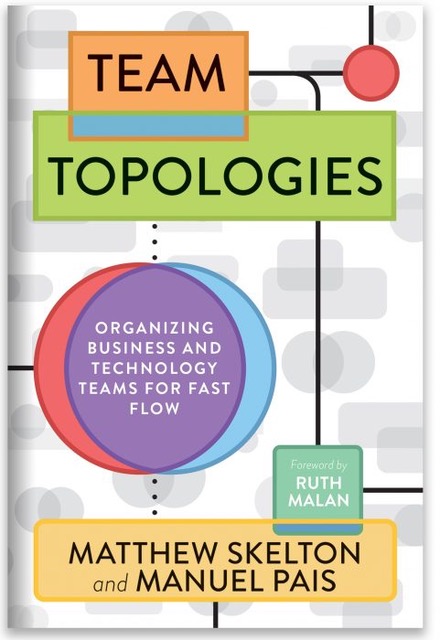
    Portland, Ore. – August 20, 2019 – IT Revolution, the industry leader for advancing DevOps, today announced the availability of its newest book, Team Topologies: Organizing Business and Technology Teams for Fast Flow. Authored by IT Consultants Matthew Skelton and Manuel Pais, Team Topologies provides a practical, step-by-step, adaptive model for organizational design and team interaction based on four fundamental team types and three team interaction patterns. It presents a model that treats teams as the fundamental means of software delivery, where team structures and communication pathways are able to evolve with technological and organizational maturity.

    Paperback, eBook and audio editions of Team Topologies are now available for pre-order.

    “Matthew Skelton and Manuel Pais have written a wonderful and pragmatic book about team structure patterns, describing their characteristics, success factors and their pitfalls,” said Gene Kim, founder of IT Revolution, author of the upcoming book, The Unicorn Project, and co-author of The Phoenix Project, The DevOps Handbook and Accelerate. “Team Topologies is a must-read for anyone building or maintaining software systems, and helps expand our understanding of organizational architecture through a pragmatic guide that enables teams to be more effective at value delivery for the business.”

    “Successful organizations have realized that building and running software systems need awareness of the sociotechnical context: people plus tech,” said Manuel Pais, co-author of Team Topologies. “Our book helps organizations to adopt a sociotechnical approach by considering Conway’s Law, team cognitive load, and team-first software boundaries. These all help to make software delivery more sustainable for the business.”

    “A team-first approach to software systems is essential for success in today’s fast-moving business environment,” said Matthew Skelton, co-author of Team Topologies. “Our book was inspired and informed by our work organizations around the world (US, Europe, China) and many companies struggle to make software delivery effective because team boundaries and behaviors are poorly defined. Our book provides valuable patterns and guidance to help teams succeed at software.”

    To download a book excerpt, listen to an audiobook excerpt or to download the audiobook companion of Team Topologies, click here.

    About the Book

    Effective software teams are essential for any organization to deliver value continuously and sustainably. But how does a leader build the best team organization for specific goals, culture, and needs?

    Team Topologies is a major step forward in organizational design for software, presenting a well-defined way for teams to interact and interrelate that helps make the resulting software architecture clearer and more sustainable, turning inter-team problems into valuable signals for the self-steering organization.

    This book is for anyone who cares about the effectiveness of the delivery and operations of software systems: C-level leaders (including CTOs/CIOs, CEOs, CFOs, and so on,) managers, heads of department, software architects and systems architects involved in building or running software systems who needs to make the delivery and running of those systems more effective.

    Book Review Quotes

    “Team Topologies provides fresh insights on how to anticipate and adapt to market and technology changes. To survive, enterprises need to unlearn existing command and control structures and instead move authority to leaders with the best information to take action and respond. This book will help executives and business leaders focus on the key strategies of high-performance teams to effectively address the needs of today and the evolving landscape of tomorrow.”

    —Barry O’Reilly, founder of ExecCamp, business advisor and author of Unlearn and Lean Enterprise.

    “Matthew Skelton and Manuel Pais say ‘Team Topologies is meant to be a functional book’—and it is. It’s well constructed and signposted, based in sound thinking, and challenges readers to assume, like them, that an organization is a sociotechnical system or ecosystem. From this assumption comes practical suggestions, no prescriptions, and skill in explaining an approach that provides for effective tech/human organization design. For anyone in the tech/organization design field, [Team Topologies is] well worth reading.”

    —Dr. Naomi Stanford, organization design practitioner, teacher and author.

    Additional Resources

    ###

    About IT Revolution
    IT Revolution assembles technology leaders and practitioners through publishing, events, and research. Our goal is to elevate the state of technology work, quantify the economic and human costs associated with suboptimal IT performance, and to improve the lives of technology professionals.

    — Veronica Haggar

  • Resolve Acquires FixStream for $24M USD to Deliver Game-Changing Combination of AIOps and Advanced Automation in a Unified Platform

    Acquisition empowers agile IT operations with the ability to predict, diagnose and automate resolution of complex infrastructure and application issues in seconds.

    Irvine, CA – August 20, 2019 – Resolve Systems®, the leading IT automation and orchestration platform, today announced the acquisition of FixStream, a pioneer in AIOps. The acquisition, expected to close by the end of September, will enable Resolve to offer the most robust IT automation platform available on the market by combining artificial intelligence insights into dynamic, hybrid IT environments with powerful automation capabilities purpose-built for the complexity of modern enterprises.

    The unified platform will handle a wide array of IT operations–from AI-driven infrastructure mapping, operational data correlation and predictive analytics to intelligently automating cross-domain actions based on those findings. This will enable customers to significantly improve infrastructure performance, reduce mean time to resolution (MTTR), increase IT operations efficiency, reduce alarm noise and proactively and intelligently allocate resources for critical business services.

    With 7x revenue growth over the last 24 months, FixStream is one of the fastest-growing AIOps platforms. Their proven solution provides automated dependency mapping that dynamically tracks the changing relationships between applications and underlying infrastructure to aid in quickly diagnosing the root cause of performance issues and outages. It also leverages artificial intelligence and machine learning to analyze and contextualize large volumes of systems data, enabling the solution to detect patterns that predict future issues across the entire IT stack.

    Ultimately, the long-term vision for the combined Resolve and FixStream solution is to aid customers in achieving the long-awaited promise of “self-healing IT.” Combining FixStream’s multi-layer visibility and predictive analytics with Resolve’s cross-domain, service-level automation capabilities will arm customers with an unparalleled ability to automatically predict, prevent and fix issues autonomously. Leveraging dynamic dependency mapping and AI-driven insights to inform, auto-update and trigger intelligent automations, Resolve will be able to deliver a closed-loop system of discovery, analysis, detection, prediction and automation.

    Acquiring FixStream enables Resolve to further tap into the market for AIOps solutions, which is seeing significant growth as IT teams cope with the conundrum of reducing IT costs while managing increasing complexity, including an exponential uptick in data volumes generated by IT infrastructure and applications. Gartner estimates the subsegment of the performance analysis market that includes AIOps, ITIM and other monitoring tools will reach $5.7 billion in revenue worldwide by 2020.*

    “We believe that FixStream’s AIOps and infrastructure mapping capabilities are a perfect marriage with Resolve’s enterprise automation platform, providing game-changing functionality that will enable customers to achieve unprecedented agility, speed and simplicity in IT operations,” said John Ferron, CEO of Resolve. “By combining our powerful, cross-domain automation with insights from FixStream’s artificial intelligence, we’ll be able to help IT teams accelerate their digital transformation journey.”

    “Together, Resolve and FixStream offer IT organizations the complete automation platform they have been looking for. We’ve repeatedly heard the need for a solution that brings together best-in-class AIOps with proven, cross-domain automation capabilities and are thrilled to see this vision become reality,” said Sameer Padhye, CEO and founder of FixStream. “Beyond the synergies that exist within our products, we share the common goal of helping IT organizations address the challenges posed by modern IT infrastructure and improve service delivery.”

    “Our research has shown that IT operations efficiency has become a critical priority for CIOs as their teams’ workloads continue to grow while staffing remains flat due to a shortage of skilled IT workers and shrinking budgets,” said Carl Lehmann, principal analyst at 451 Research. “Combining insights from artificial intelligence with automation technology enables enterprises to overcome these challenges and to manage the growing complexity of today’s hybrid IT environments, while moving closer to the long-term goal of self-healing IT.”

    For more information about how Resolve and FixStream are revolutionizing IT automation, register for their upcoming webcast on Thursday, September 5th, or visit the Resolve website.

    *Gartner, Forecast: Infrastructure Software Markets, Worldwide, 2017-2023, 2Q19 Update, Vanitha Dsilva, et al., 1 July 2019.

    ###

    About Resolve Systems

    Resolve is the number one IT automation and orchestration platform, powering more than a million automations every day from simple, repetitive tasks to insanely complex processes that go well beyond what you imagine is automatable. With more than a decade of automation expertise, Resolve’s platform is purpose-built to enable today’s ITOps, NetOps and SecOps teams to meet the growing demands on IT, achieve unprecedented efficiency and cost metrics, and drastically improve service levels through the power of automation. Resolve is majority owned by Insight Partners, a leading global venture capital and private equity firm investing in high-growth technology and software companies. See why the Fortune 1000, global MSPs, and the largest telcos on the planet trust their automation to Resolve. Learn more at resolve.io.

    About Insight Partners

    Insight Partners is a leading global venture capital and private equity firm investing in high-growth technology and software companies that are driving transformative change in their industries. Founded in 1995, Insight currently has over $20 billion of assets under management and has cumulatively invested in more than 300 companies worldwide. Our mission is to find, fund and work successfully with visionary executives, providing them with practical, hands-on growth expertise to foster long-term success. Across our people and our portfolio, we encourage a culture around a core belief: growth equals opportunity. For more information on Insight and all its investments, visit https://www.insightpartners.com/ or follow us on Twitter @insightpartners.

    — Veronica Haggar