Author: Mike Vizard

  • Split Launches Free Managed Feature-Flag Service

    Split Launches Free Managed Feature-Flag Service

    As part of an effort to attract more DevOps teams, Split is making available a free managed feature-flag service for up to five users within an organization.

    Based on the same commercial managed service Split provides today, company president Trevor Stuart said the free service provides those five users with unlimited feature-flagging and unlimited usage in the hopes that the number of DevOps teams employing feature-flagging will rise to the point where the organization will opt to pay to consume the paid managed service. The free managed service also includes user segmentation capabilities to provide control over how many end users might be exposed to any new feature.

    The paid managed service provides access to additional capabilities such as integrations, access and permissions, team collaboration and full-stack experimentation.

    Stuart noted many DevOps teams are today attempting to incorporate feature-flagging into their processes by implementing one of more than 40 different open source projects. However, many of them quickly discover that building and maintaining a feature-flag platform is a difficult undertaking. Many developers decide that building a feature-flagging platform is a challenge they want to take on because it provides a critical set of DevOps capabilities. But when those developers leave the organization, the DevOps team is suddenly left with a platform no one else in the organization knows how to support, he said.

    Feature flags, also known as feature toggles, provide a means for DevOps teams to test and add new capabilities to their applications without having to take the entire application offline. Feature-flagging also enables phased application rollouts that make it easier for DevOps teams to assess new functionality as it is added. Any problematic update can be turned off with a single click. The downside is they generally result in more branches of applications that need to be managed carefully within the context of a DevOps process. Because of that complexity, vendors such as Split have been making the case for employing platforms that enable DevOps teams to more easily incorporate feature-flagging within a DevOps process.

    Stuart said the ultimate goal is to provide a more controlled approach to experimentation. Instead of randomly testing new features on end users, feature-flagging makes it possible to more easily test features on specific end users, said Stuart.

    It may be a while longer before feature-flagging is adopted more pervasively. But as DevOps teams become increasingly more sophisticated, there’s little doubt feature-flagging won’t become more commonly employed. The simple truth is that uncontrolled application experiments on end users usually are not appreciated. Savvy DevOps teams are finding ways to test application functions in real-world scenarios with minimal disruption to the majority of end users.

    The only real issue now is determining how best to go about implementing feature-flagging at a time when most DevOps teams already are struggling to keep pace with their existing application development and deployment projects.

    — Mike Vizard

  • AppDynamics Applies AIOps to Automate IT

    AppDynamics Applies AIOps to Automate IT

    AppDynamics, a unit of Cisco, today announced it is melding the worlds of AIOps and application performance management (APM) with the launch of Cognition Engine.

    At the same time, AppDynamics is making good on a promise to integrate metrics drawn from Cisco Application Centric Infrastructure (ACI), the software-defined networking (SDN) that Cisco is embedding in all its networking equipment.

    Finally, AppDynamics also announced Serverless Agent for AWS Lambda, which marks the first time the company’s APM platform has been extended to include the ability to capture metrics from every single invocation of a serverless computing framework.

    Matt Chotin, senior director of technology strategy at AppDynamics, said Cognition Engine represents an ambitious effort based on machine learning algorithms and predictive analytics to create a central nervous system for IT spanning applications, infrastructure and the network. The days when applications and infrastructure were managed in isolation are now coming to an end, he said.

    Available at no extra charge to AppDynamics customers, Cognition Engine infuses the Business Transaction data model underpinning the AppDynamics APM services with machine learning algorithms to run diagnostics and automate root-cause analysis in a way that reduces resolution times from minutes to seconds. The machine learning algorithms evolve constantly as data is gathered continuously using streaming analytics to ingest, processes and analyze millions of records per second. The Cognition Engine automatically understands how metrics correlate and instantly knows when there’s been a break in correlation among datasets.

    Cognition Engine also automatically isolates metrics that deviate from normal behavior to identify the top suspects of root cause for any application issue. As an open platform, that information then can be shared with orchestration and automation systems embedded within third-party incident response, intelligent workload placement and cloud cost optimization tools and platforms.

    These types of capabilities are now becoming an absolute requirement because IT in general is becoming too large and dynamic to manage relying on manual processes, said Chotin, adding what’s needed is a shift toward an AIOps mindset that automates the management of routine IT tasks at scale.

    AIOps is, of course, not so much a thing that can be purchased as much as it is a collection of technologies spanning machine learning algorithms, predictive analytics and other technologies that are employed in unison to automate IT operations. It usually takes a while for algorithms to learn a specific IT environment. But once they do, they bring with them the benefits of a more sophisticated approach to managing IT at scale (and they never take a sick day or decide to take another job). Of course, AIOps is not likely to replace the need for IT staff entirely. But roles and functions within IT organizations most certainly will evolve in the months and years ahead.

    In the meantime, organizations will increasingly vet AI models before deploying them in production environments. While AIOps will advance the state of IT as it is known today, the most worrisome thing about any form of current AI technology is being catastrophically wrong at a level of scale that is nearly impossible to recover from.

    — Mike Vizard

  • xMatters Incorporates Stackdriver APM Metrics from Google

    xMatters Incorporates Stackdriver APM Metrics from Google

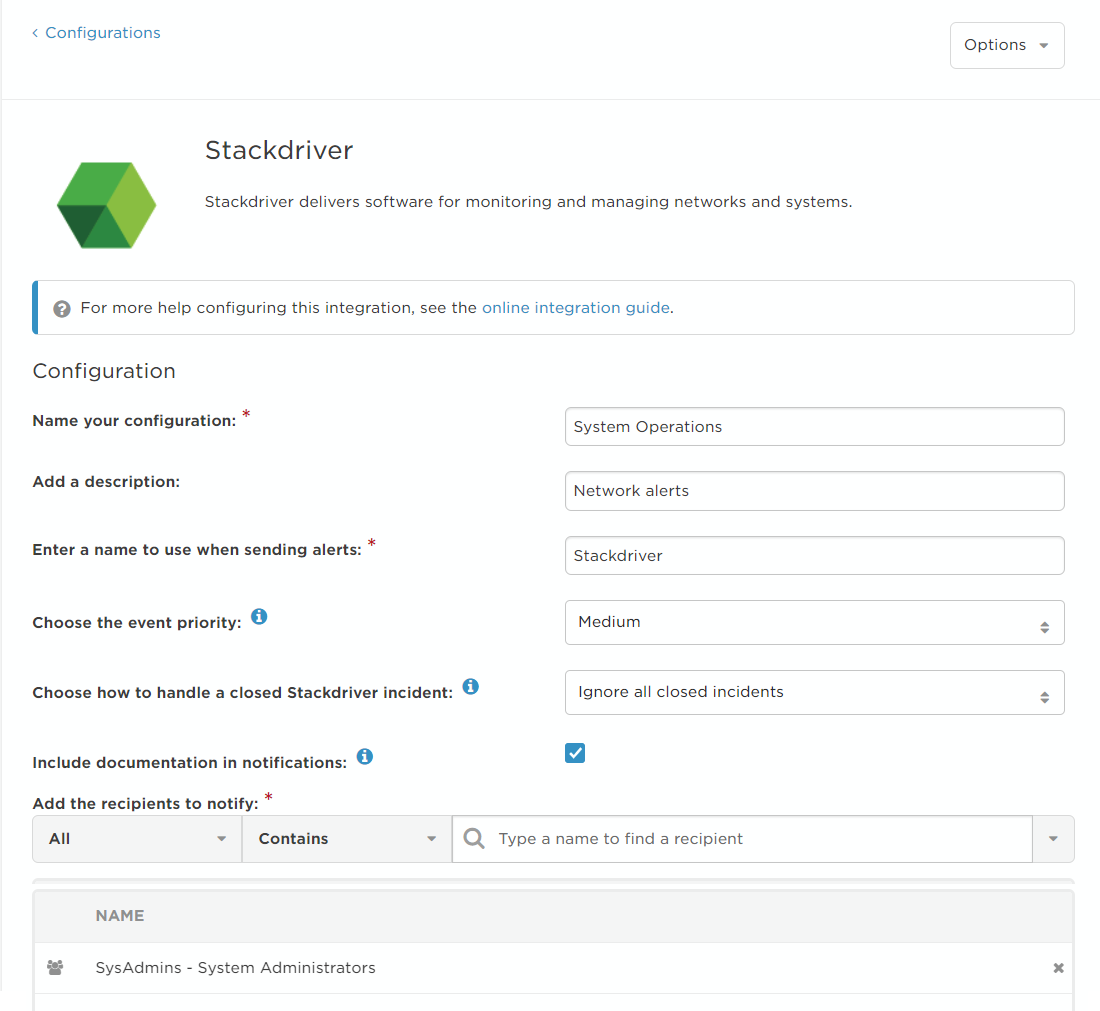
    As a set of application monitoring services on the Google Cloud Platform (GCP) for driving DevOps processes, Stackdriver has been steadily gaining adherents, especially since Google extended the reach of that service into the realm of on-premises systems. Today xMatters, a provider of incident management tools, announced it is integrating alerts and data generated by Stackdriver into its workflow processes.

    Company CTO Abbas Haider Ali said the xMatters incident management software will now automatically relay Stackdriver data to the correct people and systems to help coordinate and resolve incidents faster. Stackdriver insights will be embedded into notifications, collaboration invitations and service management tickets, said Haider Ali.

    The goal, he said, is to provide DevOps teams with more context concerning specific issues directly within the user interface employed to access the incident management platform.

    Google, via Stackdriver, not only provides access to a tool for application performance management (APM), it also effectively embeds best practices for site reliability engineers (SREs) inside the service. While the best practices defined by Google are highly opinionated, they are starting to gain traction as a specific methodology from implementing a DevOps process, said Haider Ali.

    Support for Stackdriver follows the recent release of an update to xMatters that added an Event Flood Control capability to suppress similar requests in close succession as part of an effort to reduce the level of noise generated by a single incident. The company also added an Unlimited Event Visibility feature allows organizations to unlock insights from past incidents to identify a potential root cause of a problem faster.

    Of course, while Google may have invented the SRE concept, it is clear other cloud service providers are coming up with their own flavors and many internal IT operations teams will likely create their own equivalents. But as the SRE concept continues to gain traction, the rate at which DevOps processes are adopted enterprisewide should increase. The challenge most enterprise IT organizations face today is their internal teams are largely made up of administrators rather than engineer that know how to programmatically manage infrastructure as code. Many of those organizations are either hiring former developers to become SREs, or investing in training to up level the skills of their existing IT administrators.

    But as more organizations embrace SRE concepts many of them will be looking to create closed-loop approaches to DevOps that enables them to significantly reduce the amount of time between when an issue or incident is discovered, and it gets assigned within a continuous integration/continuous deployment (CI/CD) environment to be programmatically addressed.

    In the meantime, any gaps that may have existed between DevOps processes and incident management systems are continuing to narrow. Not every organization necessarily has to hire SREs to achieve that goal. But those organizations that can afford to hire and retain SREs should expect they will insist on incorporating incident management with the context of a larger set of sophisticated DevOps processes.

    — Mike Vizard

  • Kong Applies AI to API Management

    Kong Applies AI to API Management

    Kong today announced today two offerings that rely on artificial intelligence (AI) to automate the management of application programming interfaces (APIs).

    The first offering, dubbed Kong Brain, collects data from any existing platform to auto generate documentation, which can then be used to automate the configuration of the Kong Enterprise API management platform.

    The second offering, dubbed Kong Immunity, leverages machine learning algorithms to analyze traffic patterns to first define normal traffic and then train models to automatically detect any anomalies and issue alerts when those anomalies are detected.

    Kong CTO Marco Palladino said Kong Brain is intended to make it easier to manage APIs across a modern IT environment by making it possible to continuously reconfigure APIs as new code is added to any platform connect to Kong Enterprise.

    In addition, Kong Brain makes it simpler to visually map services and their endpoints to provide deeper visibility into API traffic and the health of any given service, said Palladino.

    Kong Immunity, meanwhile, enhances the overall security of the IT environment by identifying potential threats before they proliferate across the API ecosystem, he notes.

    Available under an early access program, Kong Brain and Kong Immunity represent the first steps toward employing AI to layer a central nervous system that automates governance, security ad documentation while increasing the reliability of the overall API ecosystem, Palladino said.

    As microservices specifically and IT in general continue to evolve, the number of dependencies that will exist across the IT environment will far exceed the ability of any IT staff to manage manually. That issue will become especially acute as more organizations embrace applications based on microservices, Palladino said, because each microservice within that application has its own set of APIs that need to be managed. While Kong Enterprise can support both microservices and traditional monolithic applications, Palladino expects the proliferation of microservices across multiple cloud platforms to force the need to adopt API management platforms infused with AI.

    Obviously, the introduction of AI into IT environments will have a profound impact on API management and associated DevOps processes. While developers typically create APIs, responsibility for managing APIs has been shifting to IT operational teams. By adding AI to API management platforms such as Kong Enterprise it should become significantly easier for any enterprise to manage APIs at scale. Of course, AI models don’t work out of the proverbial box. But as the machine learning algorithms that drive those AI models become more familiar with the IT environment, the more automated the management of the APIs distributed across that IT environment becomes.

    What impact AI will have on DevOps processes remains to be seen. But it’s increasingly clear that AI will be applied across the IT operations spectrum. In theory, the more automated IT operations becomes the more resources any organization should be able to shift toward developing more applications, which naturally generates more APIs to be managed. It may take a little more time before most organizations have enough confidence in AI to make that transition. But at this point, it’s not so much a question of whether AI will be applied to IT operations as much as it is to what extent.

    — Mike Vizard

  • Survey Sees Need for More Consistent Approaches to DevOps

    Survey Sees Need for More Consistent Approaches to DevOps

    DevOps is arguably one of the most disruptive forces driving transformation of IT processes in recent memory. But a new survey finds that while IT organizations are making progress, adoption of DevOps processes remains uneven at best.

    A survey of 2,419 IT professionals conducted by OverOps, a provider of code analysis tools, finds that 82 percent of organizations have partially adopted DevOps practices, while only 17 percent of respondents claim to have fully adopted DevOps. Obviously, not every workload requires an organization to embrace DevOps processes to manage it.

    But OverOps CTO Tal Weiss said the survey shows that as organizations increase the rate at which application workloads are being deployed, a fair amount of chaos is starting to reign. According to the results, more than 90 percent of companies deploy code at least once a month, and more than 60 percent release code at least once every two weeks. Nearly 40 percent, however, indicate that moving too quickly is a primary reason errors make it into production.

    Worse yet, more than 50 percent say they rely on customers to tell them about errors in production, even though 60 percent of respondents say they use automated tooling for error notification and to ensure application quality.

    Not surprisingly, IT teams are still spending an inordinate amount of time troubleshooting their environments. More than a quarter of respondents say they still spend at least roughly one full workday per week troubleshooting errors. Another 42 percent of respondents spend 10 percent to 20 percent of their time troubleshooting.

    The good news is that IT is increasingly being viewed as a team sport. A full 67 percent of respondents believe their entire team is to blame when an application breaks or has an error, and 73 percent said both developers and operations are equally accountable for ensuring the overall quality of an application.

    Weiss said more organizations need to implement a more structured approach to DevOps based around the same continuous integration/continuous deployment (CI/CD) platform. Too many organizations today are adopting DevOps processes from the bottom up when it’s become clear that top-down initiatives for driving consistent adoption of best DevOps practices are now required. One of the biggest challenges facing IT leaders, however, is identifying and implementing the metrics that will be employed to identify those best practices, he said.

    Change, of course, comes hard to any IT organization. It may take IT organizations years after acquiring new tools to define their processes. Inertia surrounding existing waterfall and ITIL-based processes can be incredibly high. But as the amount of software that needs to be deployed and updated continues to increase, risk levels associated with deploying applications also are starting to increase. Many organizations are now essentially experimenting on their end customers. How much tolerance customers have for trial-and-error approaches to applications development and deployment remains to be seen. In the meantime, IT organizations would be well-advised to resolve to do DevOps better in 2019.

    — Mike Vizard

  • Red Hat Adds Support for Nested Workflows to Ansible Automation Framework

    Red Hat Adds Support for Nested Workflows to Ansible Automation Framework

    Red Hat today announced it is adding support for nested playbooks created using the open source Ansible automation framework within one another, which, in turn, will make it easier to automate complex IT processes.

    Bill Nottingham, product manager for Ansible, said the goal is to enable DevOps teams to reuse existing Ansible playbooks to kick off a series of nested IT jobs and workflows using version 3.4 of Ansible Tower, the console Red Hat provides for creating and managing Ansible playbooks.

    Version 3.4 of Ansible Tower also now makes it possible to slice an IT job into a series of smaller jobs that can be distributed across a cluster to accelerate execution. That capability makes it possible to scale out the processing of an Ansible playbook, he said.

    Finally, Red Hat also announced that Ansible Tower. 3.4 is now able to run on Red Hat Enterprise Linux in Federal Information Processing Standard (FIPS) compliant mode.

    Nottingham said Red Hat expects the ability to reuse Ansible playbooks within a set of nested processes will encourage IT organizations to create more playbooks now that it’s easier to reuse them as a set of modular components. IT organizations can even make launching jobs dependent on the completion of other jobs using a scheduling mechanism within Ansible Tower, he added.

    Although adoption of IT automation frameworks has been uneven, the last few years has seen IT organizations rely more on them to manage tasks as IT environments become more complex. That level of complexity will only increase as IT organizations deploy more applications that are based on microservices created using containers that need to be updated frequently. IT automation frameworks also go a long way toward making up for what has become a chronic shortage of skilled IT administrators. That capability is especially critical as both the number of applications and the rate at which they are being updated continue to accelerate.

    Most IT administrators have limited programming skills, which is why a declarative approach to IT automation in the form of an Ansible open source project has been gaining significant traction. In fact, thanks to automation, traditional IT metrics such as the number of servers being managed per administrator increasingly are becoming obsolete.

    It may take a little while longer before IT automation frameworks are the rule than the exception. But as the IT community now approaches the end of the second decade of the 21st century, reliance on manual processes that were developed at the end of the last century is no longer viable in this era of distributed workloads. In fact, regardless of where applications are deployed, the expectation in the DevOps era is that existing IT operations teams will be able to manage them without having to hire additional IT administrators.

    — Mike Vizard

  • Feature Flagging Poised for Wider Adoption

    Feature Flagging Poised for Wider Adoption

    Feature flags, also known as feature toggles, provide a means for DevOps teams to test and add new capabilities to their applications without having to take the entire application offline. The downside is they generally result in more branches of applications that need to be carefully managed within the context of a DevOps process.

    A recent survey of 550 software developers and decision-makers conducted by the market research firm Vanson Bourne on behalf of Atlassian and Rollout.io, a provider of a platform for managing feature flags, suggests that IT organizations are getting more comfortable with managing feature flags.

    The survey finds 95 percent of survey respondents said their organizations have implemented, have begun implementing or plan to implement features flags. Those that have implemented feature flags said they add 30 new features on average to each application per year, compared to those that have only begun implementing (21) or plan to implement (18) them. A full 81 percent said use of feature flags will increase over the next 12 months, and 88 percent said modern software development should assume to include feature flagging.

    The primary driver for implementing feature flags are a need to reduce risk (46 percent), increase speed of development (46 percent) and increase speed of deployment (45 percent). Eighty-seven percent of respondents said enabling an on/off or “kill” switch for features also reduces the risk of application downtime for customers.

    A total of 97 percent of respondents said they are under pressure implement new application features faster, and yet 65 percent said it is difficult to accomplish that goal safely. More than 61 percent of respondents said their organization releases new versions or updates for applications once a week or more. However, 72 percent admitted they have lost customers or users due to application development errors.

    Rollout COO Ronit Belson said building out the functions required to manage feature flags doesn’t make much sense when platforms such as Rollout.io are now emerging. The survey finds nearly 90 percent of respondents who have implemented feature flags in-house would consider moving to a third-party supplier for feature flagging management software. A total of 37 percent of respondents said the cost of in-house development is higher and 32 percent said they encountered more complexity than anticipated.

    Belson added most organizations not only fail to appreciate the cost of implementing feature flagging on their own, but also the impact feature flagging has on the culture of the IT department.

    Thanks to the rise of microservices, feature flagging should become more prevalent as monolithic applications give way to a more granular approach to application development that makes it easier to isolate functionality. In fact, the ability to apply feature flagging might be considered one of the primary benefits of the agility inherent to any microservices architecture, especially it if relies on containers that can be easily ripped and replaced. The challenge organizations will face is implementing the DevOps processes required to embrace feature flagging at scale.

    — Mike Vizard

  • CloudBees: 2019 to Be Year of DevOps Metrics

    CloudBees: 2019 to Be Year of DevOps Metrics

    While DevOps has come a long way in terms of understanding and adoption, 2019 is going to be marked by a concerted effort to applying metrics to DevOps processes. Applying those metrics will not only substantiate the value of adopting DevOps, they also will provide the impetus many organizations need to close a variety of DevOps gaps that have emerged in recent years.

    For example, a recent survey of 1,076 IT professionals conducted by CloudBees, provider of the open source Jenkins continuous integration/continuous development platform, suggests that while a lot of advances have been made in terms of developers embracing continuous integration, there remains a lot of work to be done before organizations fully embrace continuous development. The survey finds 67 percent of respondents say they are practicing DevOps, but only 50 percent have implemented continuous deployment.

    Brian Dawson, DevOps evangelist for CloudBees, said one of the major reasons that gap exists is that getting developers to embrace continuous integration is an easier challenge than getting disparate developer and IT operations teams to jointly embrace continuous development.

    Closing that gap will require more organizations to measure precisely the benefits they are achieving by making the transition to DevOps, sometimes referred to as value stream management, said Dawson. Once those metrics are collected, he said, it should become easier to drive DevOps processes deeper into most organizations.

    The challenge, however, is that most organizations are not especially disciplined when it comes to monitoring metrics. In fact, according to the CloudBees survey, 34 percent of respondents admit they don’t gather any metrics from their DevOps pipelines.

    In the meantime, Dawson noted the rise of containers and Kubernetes soon may force more widespread adoption of DevOps, as microservices based on containers are frequently updated. Kubernetes may soon provide a common set of definitions from which developers and IT operations teams can create a unified set of processes. A full 79 percent of respondents report they are using Docker and 47 percent employ Kubernetes. Additionally, 38 percent of survey respondents are using containers in both development and test activities, compared to 33 percent using containers from development all the way through to production. CloudBees is trying to drive adoption of Jenkins X, a CI/CD platform that is based on a microservices architecture enabled by containers and Kubernetes.

    Of course, the DevOps gap is hardly limited to definitions. The CloudBees survey also exposes communications gaps that need to be bridged in 2019. For instance, according to the survey, C-level executives and developers have a generally lower opinion than IT operations teams and senior managers concerning the degrees to which DevOps practices are being adopted.

    Dawson said greater focus on DevOps metrics will go a long way to closing DevOps gaps that are becoming more apparent with each passing day. DevOps is relatively easy to subscribe to as a philosophy. It’s only when organizations begin to implement CI/CD systems in a way that can be measured objectively does the commitment to that philosophy get tested.

    — Mike Vizard

  • Anaxi Delivers Project Management App for DevOps

    Anaxi Delivers Project Management App for DevOps

    Anaxi, a provider of project management software designed specifically for DevOps teams, has made its web application generally available. The web application complements an existing iPhone application, while an Android version of the company’s project management application is still under development.

    Company CEO says Marc Verstaen said that as DevOps has evolved around multiple repositories, IT organizations are finding it challenging to keep track of code from projects they are using within what applications. Anaxi is designed to not only make it simpler to navigate repositories, but also apply analytics to track individual developer productivity and team performance. Project managers now can, for example, analyze efforts in terms of code added and removed, refactoring and code churn on a weekly basis.

    Armed with that intelligence, IT operations teams will be better able to prioritize development plans based on the dependencies that exist between the various components that make up an application, said Verstaen. The number of those dependencies is only expected to increase as organizations increasingly shift away from building monolithic applications in favor of more complex microservices architectures that promise to make the overall business more agile.

    The fundamental project management issue with repositories such as GitHub is that there is no way to categorize all the project labels that get entered as text. That makes it difficult to monitor and track all the tasks associated with a specific label or even simply browse from one task to the next, Verstaen said. Via Anaxi, project managers can edit their issues and pull requests, which are then synchronized back to their GitHub and Jira projects.

    It’s not clear to what degree the lack of sophisticated project management tools has hindered adoption of DevOps in the enterprise. Legacy approaches to application development provide project managers with a rich portfolio of applications that may serve to bias them toward one style of application development over another. But given the pressure organizations are now under to become more agile, project managers need to evolve alongside the rest of IT organization.

    Before too long many organizations may also find themselves trying to manage projects spanning multiple repositories. It’s not uncommon for development teams to favor one repository over another. Standardizing on one repository would be preferred, but not every project manager has the political capital inside their organization required to force such a decision. Many projects also now span multiple companies, each with their own repositories, that project managers may find themselves forced to navigate.

    At the same time, business leaders are making it clear they want more visibility into the pace at which applications are being developed whenever those applications are expected to generate revenue or improve the overall customer experience. In fact, project managers who can ensure projects are delivered consistently on time and within scope are invariably considered among the most valued of employees.

    — Mike Vizard

  • Atlassian Brings Postmortem Analysis to DevOps

    Atlassian Brings Postmortem Analysis to DevOps

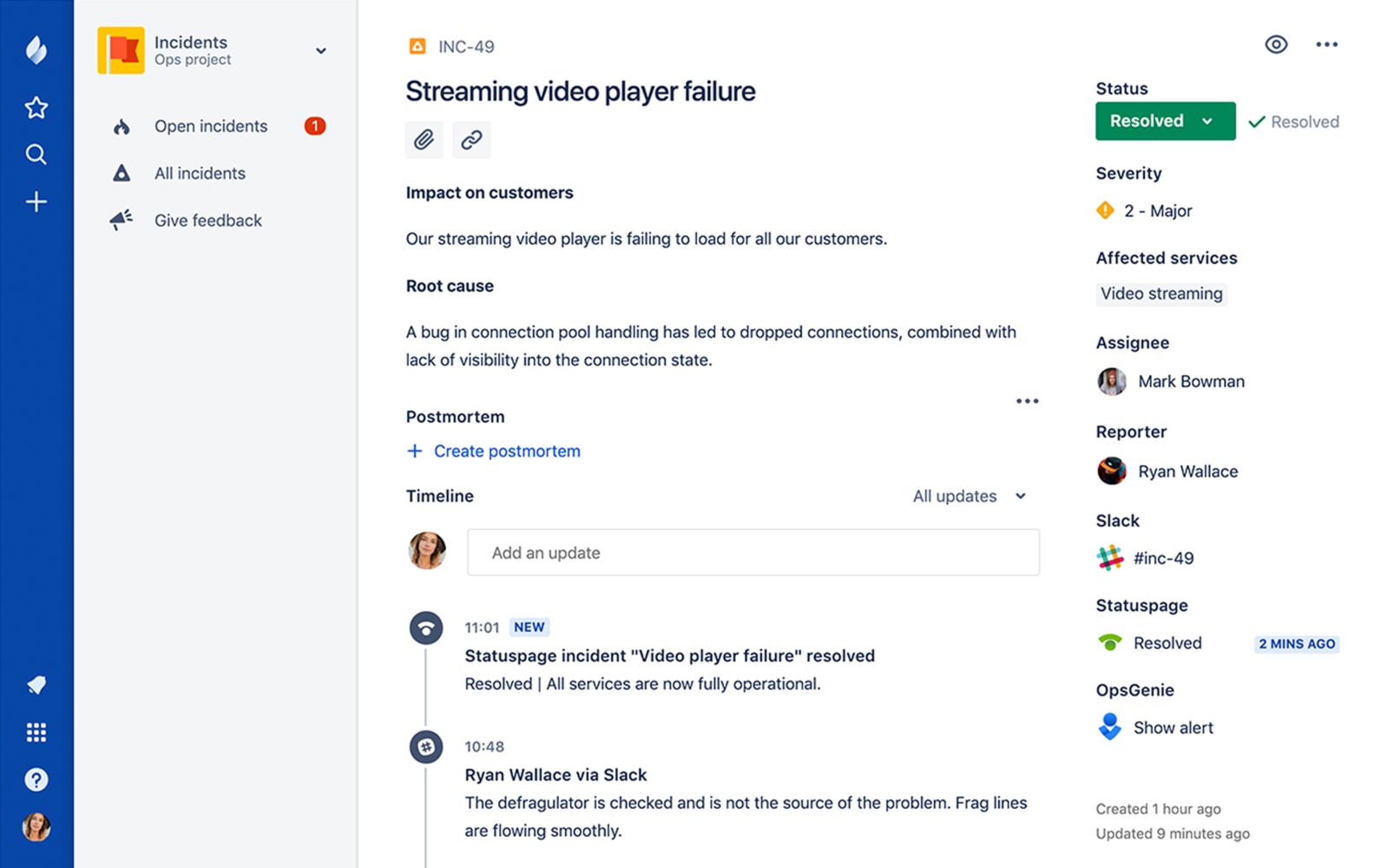
    Atlassian has added a postmortem capability to JiraOps, which gathers a list of all the key events from any IT incident in chronological order to make it easier to analyze what happened, identify root causes and raise issues directly within the JiraOps platform to ensure subsequent actions are taken.

    At the same time, Atlassian is extending the Automation Actions, a set of automated scripts and playbooks made available in Opsgenie to include support for Amazon Web Services (AWS) Systems Manager and Generic REST Endpoint. Those capabilities extend the ability of DevOps teams to launch automated tasks from within an Opsgenie console or mobile applications. Opsgenie is a notification application that Atlassian gained via an acquisition announced the same day the company launched JiraOps.

    Atlassian is also sharing incident management data it has collected throughout the year. Collectively, its customers have recorded more than 190,000 incidents and scheduled maintenance events. Updates to those events were made more than 564,000 times, which in turn fueled the delivery of more than 130 million email and text messages to end users.

    Unfortunately, the Atlassian report also finds only 3 percent of incident reports include any kind of postmortem analysis—an issue the company is trying to address via the latest update to JiraOps.

    Danny Olinsky, head of product marketing for incident management at Atlassian, said that as organizations make the shift from primarily deploying application on-premises to the cloud, many of them are starting to more fully embrace best DevOps practices. One of the central tenets of DevOps is ruthlessly automating as many processes as possible, including incident management. By integrating incident management and DevOps processes, the amount of downtime experienced by any application over the course of its life cycle can be reduced substantially, he said.

    The biggest challenge many IT organizations now face is melding DevOps practices and incident management process, which frequently evolve in isolation from one another. Those processes, however, are being unified as more organizations digitally transform business processes that need to always available. Any incident that might lead to application downtime now has potential revenue implications that go well beyond adversely impacting employee productivity. In fact, clear, precise communications involving any IT incident is now an expectation in the DevOps era, said Olinsky.

    The degree to which organizations will be automating incident management naturally will differ. But at a time when mean time to resolution is being more aggressively measured than ever, many IT professionals have an incentive to automate as many processes as possible. Murphy’s Law also dictates that incidents will manifest themselves at the most inconvenient time, so being able to automate a process from a mobile device can eliminate the need to make a trip to the office in the dead of night.

    It may be a while before IT organizations are able to fully automate every response to an IT incident. But as process that can be automated are identified, the lower the probability a truly catastrophic event capable of paralyzing the entire organization becomes.

    — Mike Vizard