Author: Mike Vizard

  • Compuware Advances DevOps on Mainframes

    Compuware Advances DevOps on Mainframes

    Compuware has updated its Topaz for Total Test suite to enable organizations applying best DevOps practices to the development of mainframe applications to combine unit, functional, integration and regression testing within a single test scenario.

    In addition, Compuware is making it easier to test multiple applications simultaneously. The latest update to Topaz for Total Test adds the ability to not only orchestrate a sequence of steps, but also design tests to measure how programs interact with each other and various data sets.

    Also added is the ability to automate several testing functions, including the ability to launch functional tests within a browser and execute unit, functional and integration tests without having to manually create their own Job Control Language (JCL). According to Compuware, testers now can design test cases upfront based on program specifications before developing a program. What’s more, Topaz for Total Test has been integrated with the DevOps pipeline management platform developed by XebiaLabs.

    Finally, Compuware announced that the Topaz 3270 Emulator now makes it possible complete one-off “green screen” tasks without leaving Topaz. Initiating a CICS transaction or accessing REXX utilities through the Emulator within Topaz, for example, makes it simple for developers to quickly resume Eclipse-based tasks without having to exit its testing environment or toggle between tools.

    Compuware CEO Chris O’Malley said the pace at which IT teams in mainframe environments have been adopting DevOps practices has accelerated considerably in the past year. Not only are applications being developed and deployed faster, the quality of those applications has increased because DevOps tools provided by Compuware make it easier to both visualize a complex application development process and then test those applications as they are being developed. Given the often mission-critical nature of mainframe applications, it’s crucial that any increase in development velocity doesn’t have a negative impact on application quality, he noted.

    DevOps has become a greater imperative in mainframe environments, O’Malley added, as organizations look to leverage investments in existing mainframe applications rather than try replicating functionality that already exists on a mainframe in a distributed computing environment. That approach helps to reduce sharply the amount of technical debt an organization needs to service when they duplicate functionality across two or more platforms. Mainframe teams that historically have relied on waterfall developments process have been challenged by keeping pace with the rate of change. As applications that are deployed on a distributed system look to invoke a mainframe application function, organizations that have deployed those applications need to keep pace with a much faster rate of development, especially when it comes to application programing interfaces (APIs).

    It may take a while longer for DevOps practices on mainframes to become adopted widely. But as the rate of innovation continues to increase, thanks to the rise of various digital business transformation initiatives, it’s apparent that mainframe application development will need to become more agile. The challenge at this point is not so much the availability of DevOps tools for the mainframe, but rather training the teams that build and deploy those applications on when and how to implement DevOps practices.

    — Mike Vizard

  • Adobe Strategy Revolves Around DevOps

    Adobe Strategy Revolves Around DevOps

    At the Adobe Summit 2019 conference this week, Adobe detailed that its Adobe Experience Cloud customer experience ecosystem is reliant on a set of best DevOps processes that is wrapped around a modern microservices architecture and layered on top of big data platform deployed on the Azure cloud.

    Adobe last year acquired Magento, provider of an e-commerce platform, and Marketo, provider of a marketing automation platform. Since then, Adobe has been working to integrate those offerings with its existing marketing application to create the Adobe Experience Cloud.

    Anjul Bhambhri, vice president of platform engineering for Adobe, said this set of software-as-a-service (SaaS) applications are being integrated around a shared common data model that is layered on a microservices-based architecture of containers running on Kubernetes clusters. On top of that, Adobe is layering a series of machine learning algorithms, dubbed Sensei, to embed artificial intelligence (AI) across the entire portfolio, he said.

    As that work progresses, Adobe plans to allow customers and partners to leverage the data stored in the Adobe Experience Cloud to train their own AI models using data curated by Adobe, Bhambhri noted. That data model, known as the Experience Data Model (XDM), is also being shared with partners including Microsoft and SAP, which last year committed to an ambitious initiative to build a common data model in collaboration with Adobe. XDM makes use of open source Kafka messaging software to integrate the various data pipelines that are required to integrate these applications at scale in near real-time, Bhambhri said.

    Those efforts complement an existing initiative under which Adobe is exposing open application programming interfaces (APIs) to encourage developers to build applications that extend Adobe Experience Cloud.

    Rather than building their own customer data platforms, organizations can drive their digital business initiatives using a big data platform managed by Adobe on their behalf. Many organizations have been building their own platforms to achieve that goal with mixed success, first deploying a data warehouse on top of a big data platform and then working to integrate various applications to provide a richer digital customer experience. Bhambri noted Adobe is pouring considerable resources to obviate the need for organizations to acquire, deploy and manage their own IT infrastructure to achieve that goal.

    IT leaders must decide whether they want to reduce the time, money and effort required to build these custom platforms in favor of using a managed service from Adobe—which, arguably, would enable them to pour more resources into developing applications that, as a result, would come to market faster.

    In the meantime, it’s clear the need to embrace digital business transformation will drive more organizations to embrace DevOps processes. The question now is to what degree they need to define their own set of best DevOps processes versus simply lifting the DevOps best practices that organizations such as Adobe have already proven.

    — Mike Vizard

  • Perfecto Applies AI to Writing Test Scripts

    Perfecto Applies AI to Writing Test Scripts

    Artificial intelligence (AI) is starting to be applied to the writing and update test scripts. Perfecto has unfurled Perfecto Codeless, which employs machine learning algorithms to automate writing of test scripts in a way that allows them to not only run continuously, but also adjust to changes made to the application.

    Eran Kinsbruner, chief evangelist for Perfecto, a unit of Perforce, said writing test scripts is still largely a manual process, which means as the number of applications being developed continues to escalate, the testing process becomes highly constrained.

    To address that issue, Perfecto has created a codeless approach delivered via a cloud service as part of the company’s Smart Automation platform. If any code within an application gets deleted, moved or changed, the changes will automatically be reflected in the test script. That capability eliminates the need for DevOps teams to wait for a developer to update the test script.

    Exactly who in an organization is writing those test scripts varies: Kinsbruner noted that many developers now prefer to write their own test scripts during the development process before their code is reviewed by a peer. That approach eliminates many of the more routine errors, enabling more time to be spent on optimizing code. Other organizations employ dedicated testers who spend most of their time writing test scripts. But many of those organizations are finding that testers cannot keep pace with the current rate at which applications are being developed in the DevOps era.

    There’s no doubt machine learning algorithms are about to play a much bigger role in application testing and DevOps at large. AI is not going to replace DevOps teams anytime soon, but many mundane functions such as the writing of test scripts can be automated using machine learning algorithms. Arguably, testing is one of the areas that lends itself most to emerging AI-based platforms and services. After all, if testing becomes a bottleneck, the chances that applications with issues are deployed in a production environment increase substantially. Many of those issues can be fixed easily, but many times at the risk of annoying end users who increasingly are unforgiving when it comes to application experiences. It’s not uncommon for users to discontinue using a mobile app if the first experience isn’t immediately gratifying.

    Of course, many DevOps teams already view machine learning algorithms with a certain amount of skepticism. But the rise machine learning algorithms within DevOps is now all but inevitable. IT leaders, however, should realize it may take a while for those algorithms to learn the environment. The return on investment for any AI project is not likely to be immediate because a significant amount of time needs to be invested in training the algorithms. The good news is, those algorithms never take a day off and suddenly don’t resign one day to take a better-paying job elsewhere.

    — Mike Vizard

  • Blameless Launches DevOps Platform Based on SRE Principles

    Blameless Launches DevOps Platform Based on SRE Principles

    Blameless has emerged from stealth to launch a platform for managing DevOps based on the site reliability engineering (SRE) best practices defined by Google.

    Fresh off raising an additional $20 million in funding, the Blameless platform provides across-the-board visibility into the complex network of application programming interfaces (APIs) and applications distributed across an organization, said CEO Ashar Rizqi. Specific modules within the Blameless platform address incident resolution, reliability insights dashboards, postmortems, service level objectives (SLOs) and automatic error budget calculation.

    Blameless takes its name from an SRE principle that no one should be held at fault when complex systems fail. Rather, the assumption should be that inherent complexity of the IT environment is at fault. While DevOps is more of a philosophy surrounding the management of DevOps, SRE is emerging a more prescriptive instance of implementing DevOps that Google is now promoting. The goal is to make sure that whatever the issue, the right people to address it are brought together at the right time, said Rizqi.

    The Blameless platform was created by Lyon Wong, who now serves as the COO of Blameless. Previously, Wong was a partner at Lightspeed Venture Partners, founder of S28 Capital and a product manager for Microsoft Windows. Rizqi is a former head of core platform at MuleSoft and SRE manager at Box.

    Rizqi noted that while most organizations are trying to embrace DevOps principles, they often lack the tools needed to build the workflow processes required. All too often, organizations rely on little more than a Wiki document to manage their response to an incident. The Blameless platform is designed to provide access to an integrated set of tools for managing everything from the incident itself to the impact that event had on the business, he said.

    It’s still too early to say with any certainty how widely SRE practices will be adopted. This far, most organizations that have adopted DevOps have tended to prefer to define a set of processes that are customized to their environment. But there are just as many, if not more, organizations that have found it daunting to get started. Platforms such as Blameless represent an opportunity for those organizations to embrace DevOps using a more prescriptive approach.

    Of course, a big part of the reason that DevOps has been embraced unevenly by various departments within the enterprise is the lack of a consistent approach to implementing DevOps at scale. Teams that have embraced DevOps with enterprises have tended to create their own individual processes using a wide variety of tools. Many of those organizations have also found it challenging to get IT operations teams to embrace those processes because they require an approach that can be implemented consistently across multiple projects at scale. SRE provides IT operations teams with a framework that Google has already proven works at scale.

    Regardless of the path chosen, the one thing that is for certain is more agile approaches to managing IT operations will be required to keep pace with the rate at which applications are now being developed and deployed.

    — Mike Vizard

  • SolarWinds Adds Ability to Profile Live Code to APM Platform

    SolarWinds Adds Ability to Profile Live Code to APM Platform

    SolarWinds is advancing its campaign to become a leading provider of DevOps tools by adding the ability to profile live code to SolarWinds AppOptics application performance monitoring (APM) platform.

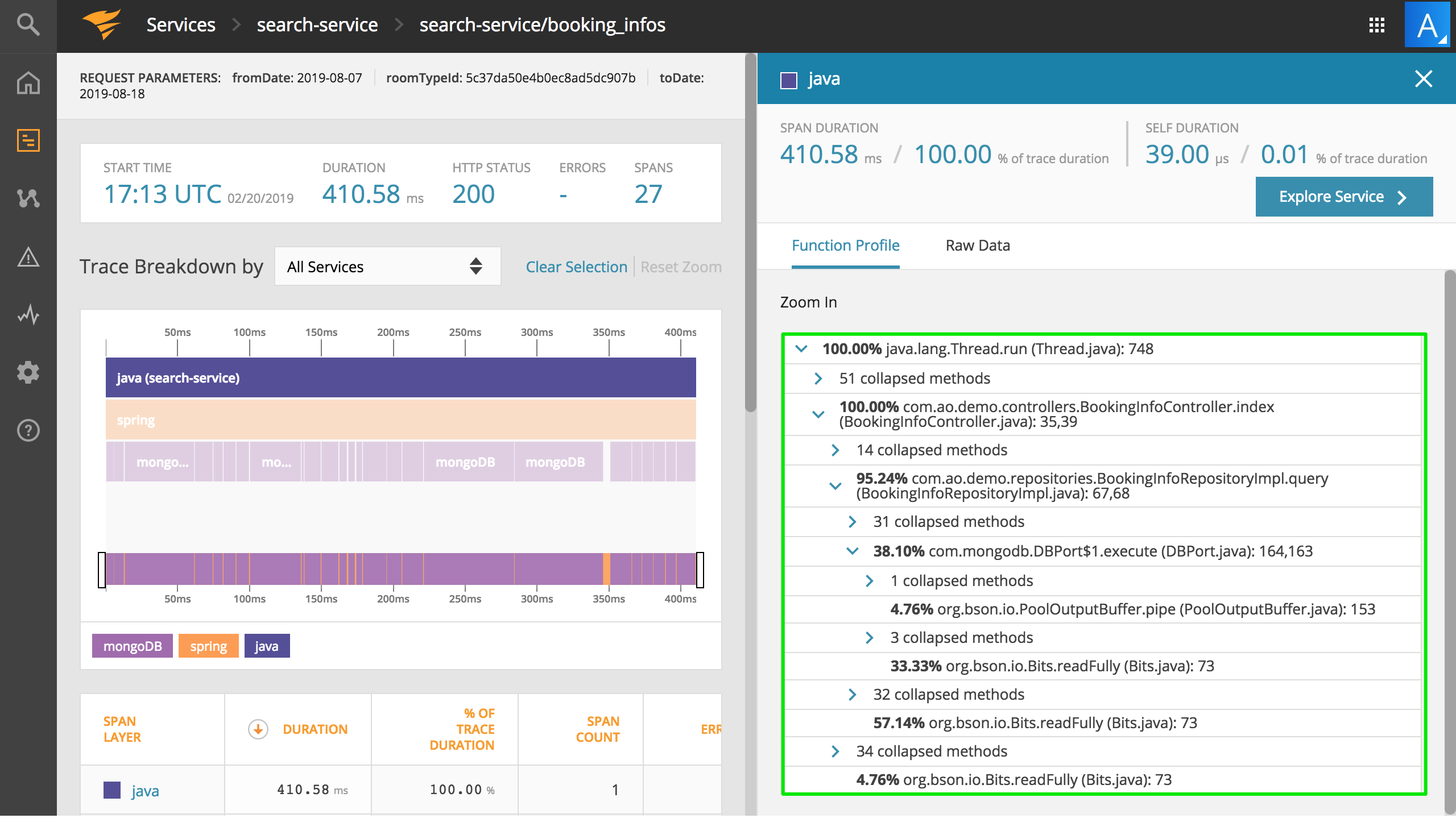
    Keith Kuchler, vice president of engineering for SolarWinds, said live code profiling provides a breakdown of the most frequently called functions and methods in a transaction, including class, method, filename and line number. That capability makes it possible for DevOps teams to identify what line of code might be causing a performance issue without requiring any changes to the code itself, he said.

    According to Kuchler, the ability to profile live code extends a distributed tracing capability that SolarWinds previously incorporated into SolarWinds AppOptics. Collectively, the two offerings show how committed SolarWinds is to providing DevOps teams with access to advanced capabilities at a fraction of the cost of rival APM platforms delivered as a software-as-a-service (SaaS) application, said Kuchler. Pricing for SolarWinds AppOptics starts at $7.50 per month. SolarWinds AppOptics is part of what SolarWinds describes as a DevOps Toolkit that also includes Pingdom, a website performance monitoring tool, Papertrail, a log management service, and Loggly, a log analytics service.

    The ability to profile live code supports applications written in Java and PHP, with support for additional programming languages forthcoming, said Kuchler. The goal is to reduce the amount of time DevOps teams need to spend guessing where the source of any issue might be after an application is deployed or updated, he added.

    As the rate at which applications continue to be deployed and updated, DevOps teams need to be able to pinpoint issues at the code level to enable developers to address that issue as soon as possible. Sharing a bunch of generic alerts typically doesn’t provide a developer with enough actionable intelligence to solve the problem. Not surprisingly, a recent survey of over 300 developers conducted by SolarWinds finds that most of them spend a lot more time troubleshooting existing applications versus writing new code. All that time spent troubleshooting code winds up having an adverse impact on the ability to make the transition to DevOps.

    In general, SolarWinds is trying to expand the total APM market by making its tools available as a service that organizations of any size can invoke. Historically, reliance on APM tools has been limited to mission-critical applications mainly due to cost. But over time, the number of applications deemed to be mission-critical has increased. In addition, because of the all interdependencies between applications, the potential impact a single line of code can have across the enterprise IT environment can be substantial. As a result, the need for an affordable approach to APM has become more acute.

    Naturally, it will be interesting to see how much pressure there is on APM pricing over the course of the coming year. Competition between providers of APM platforms is already fierce. The challenge will be finding a provider of an APM platform that not only provides all the capabilities required, but also has deep enough pockets to be around for the long haul.

    — Mike Vizard

  • VMware Advances Hybrid Cloud Ambitions

    VMware Advances Hybrid Cloud Ambitions

    VMware today advanced its hybrid cloud strategy by making a series of updates to existing offerings, including the CloudHealth by VMware software-as-a-service (SaaS) application for managing and optimizing cloud applications, which VMware acquired last summer.

    In addition, VMware Cloud on AWS is now available in data centers operated by Amazon Web Services in Canada, Paris and Singapore, the company noted. VMware also announced that the latest version of VMware Cloud Foundation—which provides and automatically updates all the VMware compute, storage and networking software required to build a cloud—has been optimized to deploy VMware Horizon virtual desktop infrastructure (VDI) software, and will available on Dell EMC VxRail hyperconverged infrastructure in April.

    New capabilities being added to CloudHealth by VMware include enhanced multi-cloud reporting, multidimensional reporting and workspaces reporting.

    The CloudHealth platform also is now integrated with the Wavefront by VMware cloud analytics and monitoring platform, enabling users of CloudHealth to employ Wavefront metrics to rightsize and optimize applications running on multiple cloud applications as part of their DevOps practices.

    A future update to the CloudHealth platform will add enhanced amortization as well as support for convertible Reserved Instance (RI) exchanger automation, container cluster visibility and cross-family rightsizing for Amazon EC2, according to the company.

    Finally, VMware announced it is making available version 9.7 of VMware vCloud Director to cloud service providers. This offering provides a single pane of glass through which multiple VMware environments can be managed regardless of whether they are deployed on-premises or in the cloud. The latest version of VMware vCloud Director adds support for version 3.0 of VMware Cloud Availability, which unifies onboarding, migration and disaster recovery services between multi-tenant clouds. VMware vCloud Director is only available to cloud service providers, but Ajay Patel, senior vice president and general manager for the cloud provider software business unit for VMware, said VMware and its cloud service provider partners plan to make available a software-defined data center (SDDC)-as-a-service offering through which they will manage deployments of VMware from the edge to the cloud on behalf of IT organizations.

    VMware also revealed there are now more than 60 partners building or delivering managed service offerings for VMware Cloud on AWS, and more than 280 partners have achieved the VMware Cloud on AWS Solution Competency. VMware also now has 35 VMware Cloud Provider Program partners that have achieved Cloud Verified status, which is required to be eligible to deliver the forthcoming SDDC-as-a-service offering. Patel also revealed the number of organizations running instances of VMware on public clouds now exceeds 1,000, in the wake of the launch of VMware Cloud on AWS last year.

    Patel said the shift to hybrid clouds is more about transforming IT operational models than it is about deploying workloads at new physical locations. The challenge many IT organizations will need to come to terms with going forward is deciding what portions of that IT operational model they want to run themselves versus opting to rely on VMware and its partners.

    — Mike Vizard

  • Atlassian Adds Business Planning App by Acquiring AgileCraft

    Atlassian Adds Business Planning App by Acquiring AgileCraft

    Atlassian announced it is acquiring AgileCraft to give business leaders visibility into strategic projects in a way that is closely mapped to IT projects being driven by DevOps processes.

    The value of the deal, expected to close next month, is estimated to be $166 million.

    Many DevOps teams already make extensive use of the Jira project management software developed by Atlassian. AgileCraft emerged in 2013 as a provider of a collaboration application aimed at business users to keep track of the various strategic IT initiatives that are largely dependent on DevOps processes.

    Atlassian and AgileCraft previously established a technology alliance to facilitate that goal. Atlassian president Jay Simons said the acquisition represents an opportunity for Atlassian to extend its reach into the realm of business users who increasingly are trying to keep track of complex digital business transformation initiatives that are dependent on multiple IT projects. Many of those digital business initiatives tend to quickly fall behind schedule because the dependencies between various IT initiatives are not clear to all the key business stakeholders, he said.

    In addition, Simons said many businesses now are trying to apply the agile methodologies pioneered by DevOps teams more broadly within the IT organization. To achieve that goal, business users need a project management application that has been optimized to enable them to keep track of multiple inter-related DevOps projects, he noted.

    Most organizations are not yet anywhere near the point where the IT organization is completing IT projects faster than the business can absorb. But as agile methodologies and best DevOps practices become more widely employed, there may come a day when IT organizations will complete IT initiatives faster than most business will be able to adapt. In fact, it’s not uncommon for organizations that have embraced DevOps to deliver multiple updates to applications a week. AgileCraft planning software will make it easier for business users to appreciate all the business implications associated with each of those updates. The irony is, the constant debate over the inability to align IT with the business usually comes down to the inability of IT organizations to keep pace with the demands of the business. It soon may turn out the business is no longer capable of absorbing the rate at which new applications are being rolled out.

    In the meantime, applications such as AgileCraft should make it easier for IT leaders to have better-informed conversations with business leaders concerning where limited resources need to be applied and when. Business leaders will be able to see for themselves now what impact any given set of missed deadlines is likely to have on any strategic initiative. In fact, there may come a day when business leaders proactively make more resources available to achieve a specific goal without requiring IT leaders to attend a meeting to explain in excruciating detail how every delay adversely impacts the grand scheme of the business. Instead, business leaders will be able to see for themselves exactly where additional resources are needed to achieve a specific business goal.

    — Mike Vizard

  • Chef Achieves Multiple Compliance Mandates

    Chef Achieves Multiple Compliance Mandates

    Chef today announced it will make it easier for organizations that adopt its IT automation framework to stay compliant with mandates such as the Federal Information Processing Standards (FIPS), Secure Technical Implementation Guidelines (STIG) and the Center for Internet Security (CIS) certification.

    John Snow, senior software development engineer and federal content lead for solutions engineering at Chef, said it’s incumbent on the provider of an IT platform or application to make sure their offerings comply with widely required mandates. FIPS compliance, for example, not only applies to federal agencies, but also any organizations that interacts with those agencies.

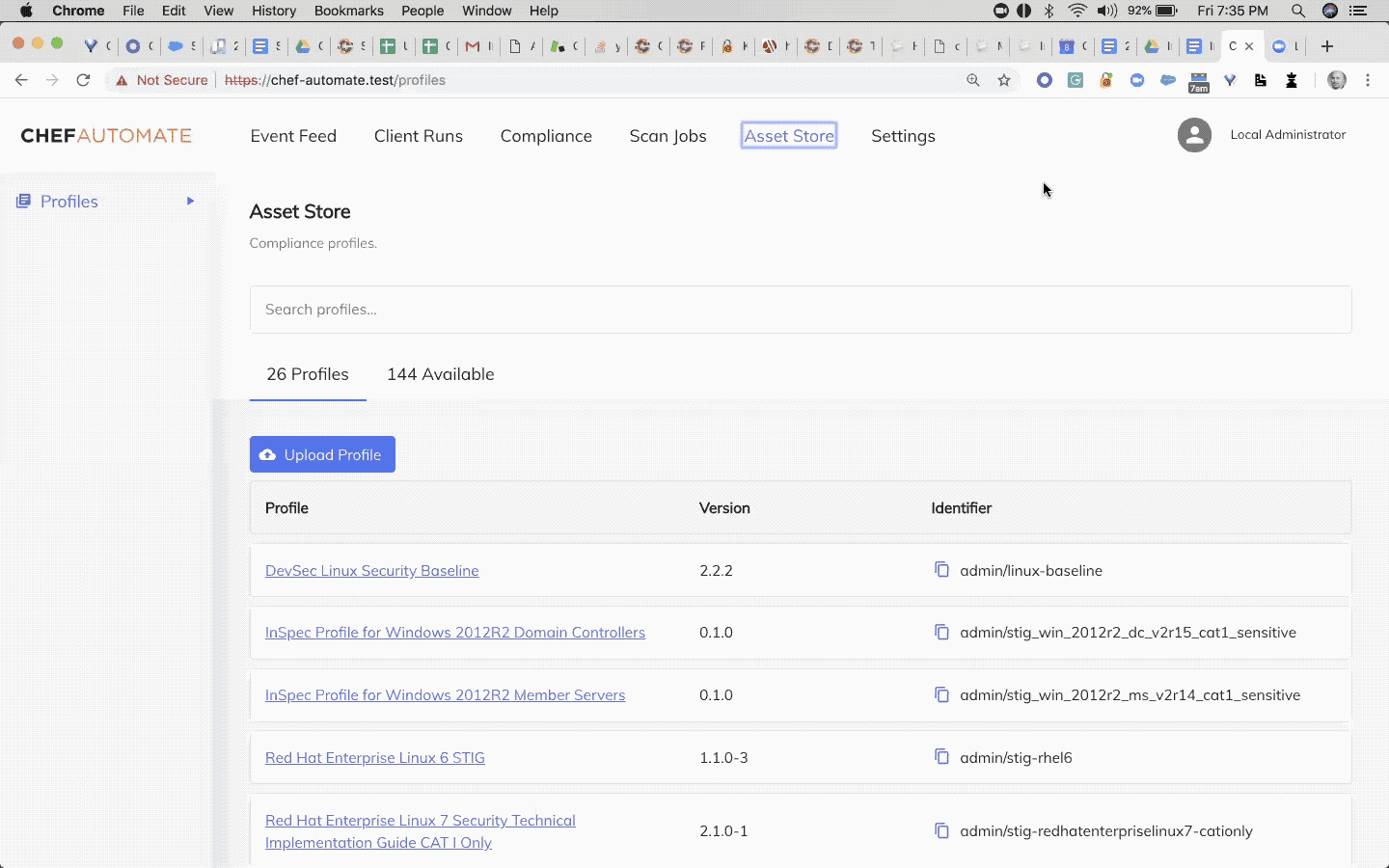
    Specifically, Chef said it has achieved FIPS compliance along with providing an implementation of STIG profiles for RHEL 7 and Windows Server 2016 in Chef InSpec and achieving a (CIS) certification for Amazon Web Services (AWS) Foundations Benchmarks Level 1 and 2 in Chef Automate. Chef claimed it is the first vendor to achieve CIS certification across AWS, Microsoft Azure and Google Cloud Platform.

    Snow said Chef was able to achieve that goal in part because of the time and effort it put into developing a parser that enabled the company to approach compliance as a programmable extension of its development process. That translation process is required because most compliance mandates are written for auditors by auditors, not by IT operations teams. Chef will also leverage that capability to ensure its platforms remain current with any future updates to the compliance mandates its supports, said Snow.

    Chef has been making a case for treating compliance as code for several years now. Any given compliance mandate typically consists of a set of controls that need to first be put in place and then tested and validated. Rather than trying to achieve that goal relying on manual processes that don’t scale, Chef contends achieving compliance should become a natural extension of best-in-class DevOps processes.

    It’s not clear yet to what degree compliance may become integrated within DevOps. But recent advances in DevSecOps suggest it’s only a matter of time before responsibility for implementing compliance controls “shifts left” along with security control. Compliance teams may define what controls will need to be put in place. But responsibility for implementing those controls as part of any quality assurance process is moving toward DevOps teams. Developers, however, will take on that responsibility only when a means to programmatically implement those controls is readily available.

    The long-term economic implications of that shift may prove to be profound. Organizations of all sizes incur massive costs both implementing compliance controls and having them audited by a third party. As the compliance process becomes more automated, not only does it become easier to implement controls at scale, but the documentation required to pass an audit is generated automatically. Given that most auditors charge per hour for their services, the savings derived from limiting the time and effort associated with preparing for and then passing an audit could be substantial. The challenge and opportunity is educating the DevOps team on not just how much money might be saved for the company, but also how much of that money might be reinvested in advancing DevOps adoption.

    — Mike Vizard

  • F5 Networks Acquires NGINX to Meld NetOps with DevOps

    F5 Networks Acquires NGINX to Meld NetOps with DevOps

    As part of an effort to better align DevOps and network operations (NetOps), F5 Networks plans to acquire NGINX, a provider of widely employed open source loading balancing software.

    The two companies revealed in a call with financial analysts that the primary goal of the $760 million deal is to meld the two companies’ combined expertise to develop application delivery controllers (ADCs) that are optimized for modern applications based on microservices.

    F5 Networks CEO François Locoh-Donou said F5 Network plans to continue operating NGINX as an independent brand in addition to maintaining support for the NGINX open source community. NGINX CEO Gus Robertson will become general manager of the NGINX business unit. NGINX founders Igor Sysoev and Maxim Konovalov also plan to stay on.

    Locoh-Donou also disclosed that while NGINX software is employed today at more than 375 million sites, the company only generated $26 million in revenue in 2018, mostly by providing commercial support to enterprise customers. F5 Networks will move to combine investments both companies have been making in containers to deliver a next-generation ADC optimized for microservices-based applications spanning multi-cloud computing environments, he said.

    As part of that strategy, however, both companies will need to come to terms with Envoy, an open source load balancing project led by the Cloud Native Computing Foundation (CNCF). Envoy is already providing the foundation for multiple service mesh projects that make load balancing a feature of a higher-level mechanism for managing services running on a Kubernetes cluster. Obviously, F5 Networks hopes to fulfill an opportunity to manage multiple instances of service meshes running on multiple Kubernetes clusters that.

    In fact, Locoh-Donou cited industry research that forecasts by 2022 there will be more than 198 million workloads running on some form of a microservices-based architecture. In contrast, 44 million workloads are expected to be running on legacy platforms.

    Locoh-Donou said F5 Networks also expects to leverage NGINX to expand its presence in application programming interface (API) management and associated web application services, which he noted collectively represent multibillion-dollar market opportunities.

    The decision to acquire NGINX reflects the inevitable melding of NetOps and DevOps, he added, noting that inconsistent approaches to managing application service across emerging microservices-based environments are a recipe for creating unstable IT environments.

    While it’s still a little too early to determine to what degree NetOps will be subsumed into DevOps processes, Locoh-Donou said F5 Networks plans to advance adoption of NGINX software by educating its core base of NetOps administrators on how microservices applications are deployed across extended networks and the rigors of the DevOps processes required to manage them.

    Both F5 Network and NGINX made a name for themselves by interconnecting IT environments made up largely of virtual machines. While virtual machines are not going away anytime soon, so-called cloud-native applications built using containers running on Kubernetes clusters require a different approach to delivering infrastructure services. The challenge facing the combined company is finding a way to deliver those services in a way DevOps teams want to consume.

    — Mike Vizard

  • The Linux Foundation Launches Continuous Delivery Foundation

    The Linux Foundation Launches Continuous Delivery Foundation

    The Linux Foundation announced it will provide the home base for a vendor-neutral Continuous Delivery Foundation (CDF) committed to making it easier to build and reuse DevOps pipelines across multiple continuous integration/continuous delivery (CI/CD) platforms.

    The first projects to be hosted under the auspices of CDF, which was launched at the Open Source Leadership Summit conference, includes Jenkins, the open source CI/CD system, and Jenkins X, an open source CI/CD solution on Kubernetes. Both were developed by CloudBees. Netflix and Google, meanwhile, are contributing Spinnaker, an open source multi-cloud CD solution, and Google is also adding Tekton, an open source project and specification for creating CI/CD components.

    Additional projects are expected to join CDF once a Technical Oversight Committee (TOC) is formally named.

    Founding members of the CDF include Alauda, Alibaba, Anchore, Armory, Autodesk, Capital One, CircleCI, CloudBees, DeployHub, GitLab, Google, Huawei, JFrog, Netflix, Puppet, Red Hat, SAP and Snyk.

    Chris Aniszczyk, vice president of developer relations for The Linux Foundation, said that while a lot of progress has been made over the years regarding adoption of CI, the challenges associated with mastering CD have proven more vexing. To address that issue, the CDF will evangelize CI/CD and DevOps methodologies, define and document best practices, provide guidelines and create training materials to better enable organizations to implement CI/CD best practices.

    Kim Lewandowski, a product manager for Google Cloud, said making it possible for organizations to reuse DevOps pipelines is a high priority. Building pipelines is a significant challenge for most DevOps teams; as such, they need to be able to reuse those pipelines across as many CI/CD platforms as possible.

    Kohsuke Kawaguchi, creator of Jenkins and CTO at CloudBees, noted the creation of interoperability standards between CI/CD platforms will go a long way toward achieving that goal.

    It’s not clear yet just how widely the CDF will be supported by the entire DevOps community. While CloudBees provides one of the most widely employed CI/CD platforms, other offerings have started gaining traction, especially among enterprise IT organizations that tend to not have a lot of internal DevOps expertise.

    On the plus side, the CDF should help spur adoption of DevOps best practices even further. Adoption of DevOps processes within most enterprise organizations tends to be uneven at best. One team may be employing DevOps extensively, while the rest of the organization continues to rely on less agile legacy processes.

    The CDF also should play a significant role in enabling organizations to embrace microservices-based applications built using containers. While Jenkins is the most widely relied-on CI/CD platform today, it is built on what is now considered in many quarters to be a legacy Java Virtual Machine (JVM) platform. In contrast, Jenkins X Background an open source CI/CD platform for building and deploying modern cloud-native applications on Kubernetes. The Linux Foundation also plays host the Cloud Native Computing Foundation (CNCF), which oversees the development of Kubernetes.

    It still may take years for IT organizations to fully make the transition to DevOps and cloud-native applications. But in the months ahead, it’s clear the CDF intends to function as a force multiplier in enabling organizations to achieve that goal.

    — Mike Vizard