Author: Mike Vizard

  • LogicMonitor Embraces AIOps

    LogicMonitor Embraces AIOps

    LogicMonitor today announced the general availability of LM Intelligence, an extension of its monitoring platform that leverages machine learning algorithms to identify potential issues that are indicative of a major impending outage.

    Sarah Terry, manager of product management for LogicMonitor, said rather than acquiring a separate AIOps platform, it makes more sense to employ machine learning algorithms within the context of a tool that DevOps teams already are using to monitor their IT environment. Monitoring platforms collect the massive amount of data required to train those algorithms, but a separate AIOps platform has to find a way to collect that data, noted Terry.

    The LM Intelligence module created by LogicMonitor provides a root cause analysis (RCA) capability that automatically discovers infrastructure topology in both cloud and on-premises IT environments. Once an issue is discovered, LM Intelligence will aggregate all the alerts being generated into a single notification that pertains to the root cause of any potential issue. That capability will substantially reduce the amount of alert fatigue that today results in IT teams often disregarding what could be a critical alert that would have averted a system failure, said Terry.

    DevOps teams can also employ LM Intelligence to define expected performance ranges for IT resources based on historical trends. Any anomaly outside those ranges will generate a notification.

    As IT environments become more complex, thanks in part to the rise of multi-cloud computing and microservices-based applications based on containers, it won’t be feasible for the average IT team to identify all the relevant events that might be impacting that IT environment without help. There are simply too many parameters that need to be tracked. Tools such as LM Intelligence don’t replace the need for IT operations expertise as much as they augment the capabilities and expertise of the teams trying to manage complex IT environments, where there are large numbers of dependencies between systems. In effect, Terry said, tools such as LM Intelligence will enable DevOps teams to identify the signal in all the noise being generated within an IT environment.

    As IT management tools continue to evolve, DevOps teams should expect to see reliance on machine learning algorithms to become more pervasive. Rather than being a standalone platform, AIOps is quickly morphing into a feature that will become a capability embedded across a wide range of tools.

    Of course, each DevOps team will need to decide to what degree they want to trust any form of AI. However, the longer algorithms collect and analyze data, the more accurate they tend to become. That doesn’t mean DevOps teams should automate processes based on the recommendations of an AI engine; there are likely to be parameters that an AI engine may not have accounted for that could have an adverse impact. However, having the equivalent of a digital assistant that provides timely advice may soon prove indispensable.
    — Mike Vizard

  • AWS Applies Machine Learning to Optimize Cloud Deployments

    AWS Applies Machine Learning to Optimize Cloud Deployments

    Amazon Web Services (AWS) this week at its re:Invent 2019 conference unfurled two tools based on machine learning algorithms to optimize cloud application deployments.

    Amazon CodeGuru is a service available as a preview, through which the cloud service provider will inspect application code using machine learning algorithms to profile the code and then identify bottlenecks and what part of that code is the most expensive to run on the AWS cloud.

    AWS Compute Optimizer, meanwhile, identifies optimal Amazon EC2 instance types, including those that are a part of Auto Scaling groups, for specific types of workloads. It analyzes the configuration and resource utilization of a workload, including historical metrics, to identify dozens of characteristics to recommend optimal AWS compute resources. AWS Compute Optimizer is accessed via the AWS Management Console. Rather than rely on humans to optimize cloud platforms, AWS is making a case for reducing the time and effort required to determine which of dozens of instance types will deliver the highest performance at the lowest cost possible.

    Amazon CloudGuru can pull code from either GitHub or CodeCommit repositories, with support for other repositories planned. It requires developers to insert agent software developed by AWS into their code. Once a pull request is made, Amazon CodeGuru will automatically start evaluating the code using trained artificial intelligence (AI) models that AWS developed using data gathered from thousands of different open source software projects by AWS and its parent company.

    Once the analysis is completed, Amazon CodeGuru will generate a “flame graph” showing, for example, latency issues and CPU utilization rates alongside human-readable recommendations to surface specific issues and recommended remediations that include example code and links to relevant documentation for any line of code. Amazon CodeGuru can observe application runtimes and profile application code every five minutes.

    AWS CEO Andy Jassy told conference attendees that Amazon is already employing Amazon CodeGuru across 80,000 applications, which has resulted in increases in infrastructure utilization rates that have reached 325% in some cases.

    While machine learning algorithms have a clear role to play in terms of enabling DevOps teams to build and deploy more efficient code, it’s not clear to what degree DevOps teams will want to give AWS that level of access to what are often highly proprietary applications. Many DevOps teams may prefer to employ machine learning algorithms within the context of a continuous integration/continuous deployment (CI/CD) environment to drive code to multiple cloud computing platforms. Whatever the approach pursued, it’s clear machine learning algorithms are about to play a much larger role in DevOps. In fact, Jassy this week made it clear AWS will be applying machine learning algorithms broadly to enhance everything from enterprise search to identifying potential fraud.

    What is less clear is how best DevOps practices will need to evolve to account for machine learning algorithms. Many of the processes that make up a DevOps toolchain are increasingly being automated. That doesn’t eliminate the need for the toolchain, but it will sharply reduce the amount of time and effort required to build and optimally deploy applications.

    — Mike Vizard

  • Logz.io Adds Monitoring Service Based on ELK and Grafana

    Logz.io Adds Monitoring Service Based on ELK and Grafana

    Logz.io today at the AWS re:Invent 2019 conference launched Cloud Observability Platform, a monitoring and security cloud service based on ELK—open source Elasticsearch, a search engine; Logstash, a data processing pipeline; and Kibana, a set of visualization tools—and Grafana, an analytics and monitoring platform.

    Company CEO Tomer Levy said it’s become apparent that developers have a strong preference for open source tools for managing cloud-native applications. As such, the adoption of ELK has increased substantially. With the increasing maturity of Grafana, it’s also becoming clear that organizations want to meld the open source analytics and monitoring tool with previous investments in ELK tools, he said.

    However, not many IT organizations have a lot of ELK and Grafana expertise. To fill that gap, Logz.io is launching a managed cloud service based on Logz.io Log Management, an instance of ELK that the company has enhanced with machine learning algorithms and data analytics capabilities to enable DevOps teams to discover and resolve issues faster.

    That core platform is being extended via Logz.io Infrastructure Monitoring, a beta release of a monitoring platform based on Grafana, and a security information and event management (SIEM) platform dubbed Cloud SIEM, based on an ELK stack that includes built-in threat detection tools.

    In addition, Levy said Logz.io plans to add support for Jaeger, an open source distributed tracing tool being developed under the auspices of the Cloud Native Computing Foundation (CNCF).

    Levy said it’s apparent to all that observability is a core tenet of DevOps, which he said is why there are already a half-million developers making use of ELK software. The challenge organizations are finding is that monitoring modern IT environments based on cloud-native applications is cumbersome and time-consuming. Logz.io is addressing that issue by providing an enterprise-grade instance of an open source monitoring platform that comes with hundreds of built-in connectors, which enables DevOps teams to employ a monitoring platform without having to be worried about becoming locked in to a specific vendor because they can switch over to open source code anytime they like, Levy noted.

    Developers tend to favor open source tools because they don’t have to wait on purchasing approval to employ them. However, enterprise IT organizations tend to favor platforms that are supported by a commercial vendor. Logz.io is trying to address that issue by providing support for an open source platform that will make enterprise IT organizations comfortable enough to give up relying on a proprietary monitoring platform. Thus far, Logz.io has more than 700 customers, which the company expects to expand now that it has an instance of its platform that can be consumed as a cloud service.

    It’s too early to say to what degree an open source platform might usurp proprietary platforms in the enterprise. Change tends to come slowly to enterprise IT organizations. However, as organizations embrace next-generation applications based on microservices and containers, enterprise IT organizations are clearly evaluating their monitoring platform options going forward.

    — Mike Vizard

  • HPE Adds Control Plane to Greenlake Managed Service

    HPE Adds Control Plane to Greenlake Managed Service

    Hewlett-Packard Enterprise (HPE) announced today it has added a cloud platform to its managed Greenlake service, through which DevOps teams will be able to manage deployments of applications alongside HPE.

    Scott Yow, vice president and general manager for GreenLake Hybrid Cloud Software at HPE, said HPE Greenlake Central provides a control plane that makes it possible for DevOps teams to write, release and deploy code quickly, without having to manage the IT infrastructure directly in an on-premises IT environment.

    Instead, DevOps teams will have access to an array of tools and services from HPE and partners through a marketplace to create a workbench through which they can design and create applications using best DevOps practices, said Yow. For example, HPE will make it possible for DevOps teams to leverage Terraform tools from HashiCorp to enable DevOps teams to manage infrastructure as code.

    Announced at the HPE Discover More Munich event, GreenLake Central is in trial with general availability scheduled for the end of the first quarter of 2020. The goal is to make it possible for DevOps teams to access distributed IT infrastructure in an on-premises IT environment that is managed in much the same way cloud platforms are accessed, said Yow. HPE will provide the expertise required to consistently manage underlying IT infrastructure, while DevOps teams employ Greenlake Central to manage the application environment.

    The Greenlake service also surfaces a dashboard through which IT teams can leverage more than 1,000 controls to meet almost any compliance mandates. Reports generated via that console substantially reduce the time and effort required to audit the IT environment as well.

    HPE is essentially making available a “co-pilot” approach to managing IT infrastructure that enables DevOps teams to focus more of their efforts on managing applications. HPE also published the results of a survey of 1,000 IT decision-makers that finds 86% of respondents agree that “as-a-service” approaches to managing IT are now inevitable and 75% expect their organization to move toward full adoption of such models in less than five years.

    Today the Greenlake service is designed around a series of virtual machine options spanning offerings from HPE, Nutanix and VMware. However, HPE plans to add support next year for a recently launched HPE Container Platform that can be deployed on top of virtual machines or bare-metal servers. IT organizations also should expect HPE to extend the Greenlake control plane to public clouds to advance hybrid cloud computing to ensure IT organizations maintain ownership of the control plane to manage those environments, Yow said.

    Greenlake is at the forefront of an HPE initiative to transition all its offerings into a set of managed services. That “as-a-service” approach has already gained traction with more than 740 customers worldwide, including 160 new customer wins this year. By 2022, HPE has promised to make its entire portfolio available as a service.

    HPE is not the only provider of IT infrastructure leveraging managed services to provide DevOps teams with access to a more flexible IT environment. Historically, these types of managed services were provided by third-party IT services providers. In the age of the cloud, HPE is betting more organizations will prefer to have their IT infrastructure managed by the vendor that built it in the first place. Of course, as part of that transition, HPE is making a case for standardizing on its infrastructure.

    It’s too early to say how the marriage of DevOps and managed services will play out in on-premises IT environments. The one thing that is clear, however, is that DevOps teams increasingly need to manage the IT infrastructure on which their applications are deployed only if they really feel the need to do so.

    — Mike Vizard

  • Accenture Cloud Simulation Platform Advances DevOps

    Accenture Cloud Simulation Platform Advances DevOps

    Accenture has launched a cloud simulation service through which DevOps teams can better determine which workloads will run best on different cloud computing environments.

    Kishore Durg, growth and strategy lead for cloud at Accenture Technology Services, said myNAV is a cloud service created by Accenture that leverages machine learning algorithms and other forms of artificial intelligence (AI) to leverage a knowledge base Accenture developed during its decade-plus working on cloud projects. DevOps teams can leverage that expertise without requiring Accenture personnel onsite to account for deployment variables such as technology infrastructure, types of application workloads, data, operational models and even business outcomes before committing to a specific cloud computing platform, he said.

    DevOps teams can also employ myNAV to engage in canary testing of application workloads, Durg added.

    DevOps teams employing myNAV are guided through a three-step process that starts with scanning and assessing the existing infrastructure, application and data landscape to recommend the most appropriate cloud architecture. An AI engine developed by Accenture then accesses a knowledge base curated by Accenture to come up with a recommended enterprise architecture. Finally, simulation and testing tools are applied to make sure the IT environment will scale as required.


    At the end of the process the DevOps team is presented with a bill of materials that resembles the bill of materials that might be presented when building a house, said Durg.

    Despite commodity pricing models, not all cloud computing platforms are created equal. Various attributes of application workloads lend themselves better to different attributes of cloud computing platforms. It’s not uncommon for IT organizations to find themselves rolling back applications from a cloud platform after encountering performance issues or discovering that cost of running a specific type of application on a cloud exceeded their available budget.

    Durg said 3-D visualization tools make it a lot easier to determine which cloud platform to employ and derive the maximum value from that investment by ensuring the cloud environment chosen is optimized for that application workload. Accenture research suggests that as many as two-thirds of organizations are not getting the maximum value from their cloud investments, he noted, and most of those issues stem from the cloud platform being poorly configured, added Durg.

    Whether by accident or deliberate, most IT organizations are employing multiple clouds to build and deploy applications, but their cloud platform selection process is often haphazard. Developers often default to the cloud platform that is easiest for them to access, which could create cloud platform lock-in. Cloud simulation platforms make it easier for the entire IT team to better appreciate the trade-offs in selecting one cloud platform over another.

    Of course, most IT teams would like to unify the management of multiple clouds under a single console through which they can more easily play one service provider off against another using a hybrid cloud computing model. Until that day arrives, however, most IT organizations will find it advantageous to know as much as possible about any cloud platform before making a decision they may come to regret.

    — Mike Vizard

  • Raytheon Leans on Red Hat to Advance DevSecOps

    Raytheon Leans on Red Hat to Advance DevSecOps

    Raytheon Company is partnering with Red Hat to drive the adoption of DevSecOps workflows and processes it developed around the OpenShift application development and deployment platform.

    Jon Check, senior director for cyber protection solutions for Raytheon Intelligence, Information and Services, said Raytheon has developed a set of DevSecOps practices for organizations building applications deployed in highly secure environments, involving government contracts.

    Raytheon and these customers have been challenged by a chronic shortage of IT professionals with the appropriate level of clearance to work on these classified projects. To overcome that issue, Check said Raytheon developed what it describes as a “code low, deploy high” approach to DevSecOps. Developers who lack security clearances can still build applications; however, those applications can only be deployed by IT professionals having the appropriate security clearance.

    In addition, Check said Raytheon has developed integrations between its DevSecOps framework and various IT tools based on the ITIL framework, which so many IT operations teams depend on to foster collaboration across the application development and deployment process. For example, he said, whenever code gets checked into a repository, an alert can be sent to an IT service management application from ServiceNow.

    That approach enables organizations to build applications quickly without compromising the integrity of the deployment platform, Check noted. Now Raytheon is working with Red Hat to drive adoption of its approach to DevOps to organizations beyond the core vertical industry and government sectors it serves.

    Check said Raytheon chose to work with Red Hat because organizations are now building applications employing microservices based on containers that they want to be able to deploy on any cloud computing environment. Those environments include edge computing platforms to process data in near real-time closer to the point where data is collected.

    In addition, Check noted Red Hat OpenShift is built on Red Hat Enterprise Linux (RHEL), the first operating system to achieve Common Criteria certification with Linux Container Framework Support. Red Hat also assumes responsibility for curating the underlying open source operating system and application deployment platform.

    In general, Check noted that while there’s a lot of interest in deploying code faster these days, the deployment of insecure applications is counterproductive. Organizations too often find themselves rolling back application deployments to deal with one cybersecurity issue or another. By separating application development and deployment, Raytheon is making the case for a DevSecOps approach that enables more secure application code to be deployed faster, he said.

    Each organization will have to determine what rate of application deployment is fast enough for them. The more sensitive the application is, the more an organization is likely to want to be more deliberate when it comes time to deploy and update an application. However, the need to be deliberate doesn’t necessarily mean organizations should continue to rely on legacy approaches to application development and deployment based on waterfall methodologies.

    — Mike Vizard

  • NetFoundry Network Overlay Advances DevSecOps

    NetFoundry Network Overlay Advances DevSecOps

    NetFoundry, at the recent KubeCon + CloudNativeCon 2019 conference, announced the general availability of a developer platform designed to make it easier for organizations to bake a zero trust networking framework within their applications.

    Company CEO Galeal Zino said NetFoundry has created a network fabric overlay to manage and secure communications between endpoints and applications. Developers now can embed a programmable zero trust networking framework within their applications using a NetFoundry Developer Platform, which consists of software development kits, application programming interfaces (APIs) and connectors, said Zino. DevOps teams can either consume the entire NetFoundry Developer Platform or only the open source components that have been included.

    At the same time, NetFoundry announced it has joined the Cloud Native Computing Foundation (CNCF) to advance the adoption of open source networking services for containerized applications.

    NetFoundry

    Rather than having to become intimately familiar with networking protocols, Zino says NetFoundry provides a layer of abstraction using software to eliminate the need to rely on virtual private networks (VPNs) or network address translation (NAT) tools.

    As the number of endpoints and applications they need to connect to have significantly increased, DevOps teams are finding they need to master each type of dedicated network established for endpoints ranging from mobile computing devices to internet of things (IoT). That endeavor can be cumbersome at best. NetFoundry is making the case for a programmable network overlay that allows endpoints to access applications over public internet connections securely.

    As programmable overlays become more widely available, the rate at which network operations will be incorporated into best DevOps processes is likely to increase. Network managers will continue to set up the physical underlay that enables networking; however, how applications employ that underlay increasingly will be determined by invoking a programmable overlay. A programmable network overlay also provides the benefit of further separation of duties between DevOps teams and networking professionals in a way that doesn’t require networking teams to become deeply involved in every application development project.

    That approach should reduce significantly the amount of time now required to deploy or update a distributed computing application. DevOps teams today may be able to push code into production faster than ever. However, configuring the networking services those applications require remains a set of manual tasks that have become a significant bottleneck to making IT teams more agile.

    It remains to be seen to what degree programmable network overlays will provide something of a demilitarized zone (DMZ) between DevOps teams and networking professionals. Today most networking services are provided via either directly on top of networking infrastructure or using network overlays controlled by networking teams. But it still takes days to weeks for networking professionals to respond to requests for services from DevOps teams. It’s clear the way networking services are provisioned across the enterprise needs to change substantially.

    — Mike Vizard

  • ServiceNow Makes the DevOps Connection

    ServiceNow Makes the DevOps Connection

    ServiceNow today announced it is extending the reach of its IT operations management platform to integrate with a variety of DevOps platforms.

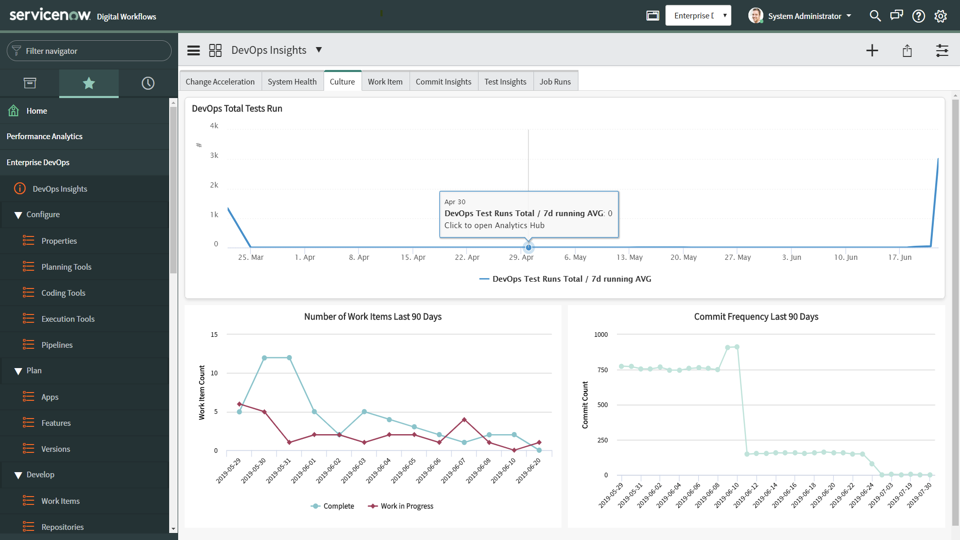
    Richard Hawes, director of product marketing for ServiceNow, said ServiceNow DevOps will provide IT operations teams relying on an ITIL-based framework accessed as a software-as-a-service (SaaS) application visibility into DevOps processes and events occurring in on-premises environments or public clouds.

    At present, ServiceNow DevOps is available for financial services organizations based in the Northeast region of the United States and the UK. The service gradually will be rolled out to additional ServiceNow customers over the course of 2020. ServiceNow DevOps initially integrates with Jira Software, GitHub, BitBucket and Jenkins, with more integrations expected to be rolled out periodically.

    Hawes said ServiceNow recognizes that IT organizations are building and deploying applications at rates that are faster than existing ITIL-based approaches can track. However, ITIL-based frameworks provide the highly structured set of processes around which the bulk of IT environments are managed. ServiceNow DevOps enables IT teams to automate change management tasks such as planning, development, testing, deployment and operations via a single dashboard surfacing a common set of metrics, he said. He added in many cases, those preset rules and policies will eliminate manual processes that often conspire to slow the rate at which applications can be deployed and updated within any IT environment, said Hawes.

    No developers need to be involved in those processes because IT operations teams can set rules and policies, and developers will see their code running in production environments in a matter of minutes regardless of what tools they employ, said Hawes. That approach also will make it easier to scale DevOps across an enterprise IT organization at a time when adoption of DevOps is still uneven at best, he noted.

    At the same time, that level of integration should also make it easier for IT teams to audit DevOps processes using a common framework to capture events such as when code is checked into a DevOps platform, he said. That capability is a critical requirement for any company trying to apply best DevOps processes with the context of a highly regulated industry such as financial services.

    Hawes said the majority of organizations that have adopted ServiceNow to manage IT have also adopted a DevOps platform. Overall, Forrester Research reports 56% of global infrastructure decision-makers now report that their organizations are implementing, have implemented or are actively expanding their DevOps initiatives. ServiceNow doesn’t expect DevOps processes to supplant ITIL-based frameworks as much as it anticipates both approaches co-existing as they continue to evolve, he said.

    With the release of the latest version of the ITIL framework, it’s apparent that the proponents of ITIL have come to recognize that IT needs to become more agile to meet the needs of digital business. The challenge they face is finding ways to enable IT teams to become more agile without sacrificing the gains in stability achieved over the course of the last two decades. With the launch of ServiceNow DevOps, the effort to find a middle ground between those two extremes can now begin in earnest.

    — Mike Vizard

  • Testim Adds SDK to AI-Based Testing Platform

    Testim Adds SDK to AI-Based Testing Platform

    Testim this week launched a beta release of a software development kit (SDK) consisting for a set of JavaScript application programming interfaces (APIs) that will enable DevOps teams to build tests that leverage machine learning algorithms from within their integrated development environment (IDE).

    Company CEO Oren Rubin said the Testim Development Kit makes it possible to call capabilities such as the ability to record user interface interactions via an application programming interface (API).

    The Testim approach to applying artificial intelligence (AI) testing differs from rivals in that Testim allows DevOps teams to fully inspect how algorithms construct a test, he noted. DevOps teams can also customize those algorithms to fit their own requirements, which is critical when it comes time for DevOps to explain how tests were conducted as part of a compliance audit.

    Testim will continue to provide access to its platform via a graphical user interface, but with the edition of the SDK, Rubin said his company expects to see an increase in the number of DevOps teams that will incorporate Testim within the context of continuous development/continuous deployment (CI/CD). Once that occurs, the number of tests those teams will be willing to run against software before it’s deployed in a production environment should also increase, especially as more developers leverage APIs to create their own tests, Rubin said. That doesn’t eliminate the need for another set of eyes to test an application, but it should reduce the number of common errors made before any piece of code is tested by someone else on the DevOps team.

    One of the most time-consuming elements of any DevOps process is the time it takes to create tests for each application. The Testim platform employs machine learning algorithms to discover the entire application environment and then begin creating appropriate tests. As DevOps teams modify those tests, the Testim platform continues to learn how to build tests the way the DevOps team prefers.

    The Testim platform doesn’t eliminate the need for testing expertise on the DevOps team, but it does enable organizations to scale their testing processes by augmenting whatever testing expertise they have on hand to reduce bottlenecks and improve overall software quality. Those algorithms also provide the added benefit of never taking a day off or quitting to take a more lucrative position elsewhere.

    When it comes to AI, there is naturally a lot of fear and loathing. On the one hand, IT professionals become concerned AI will replace them. On the other hand, they are often disappointed when machine learning algorithms don’t instantly automate a process to their satisfaction. It takes a significant amount of time for algorithms to learn how any IT environment operates, with each update to that environment requiring those algorithms to discover new functions. At this juncture, it’s not a question of whether AI will play a role in DevOps processes, but rather to what degree. Given the repetitive nature of testing, Testim is betting application testing will prove to be an area that lends itself to AI sooner than later.

    — Mike Vizard

  • WhiteSource Acquires Renovate to Automate Dependency Updates

    WhiteSource Acquires Renovate to Automate Dependency Updates

    WhiteSource has acquired Renovate, a provider of an open source automated dependency update platform that the company plans to make available for free.

    Rhys Arkins, co-founder of Renovate who is now director of product for WhiteSource, said that as software projects become more complicated, there’s an increased need for a mechanism to identify and track dependencies and automatically update them as changes and updates are made.

    That requirement is becoming especially acute with the rise of microservices-based applications, which substantially increase the number of dependencies that exist within and between applications, added Arkins. Microservices make it possible for DevOps teams to build and deploy applications faster, but the dependencies between the microservices often result in an application environment that becomes too complex to manage. Most recently, Renovate added support for Helm Charts used to package applications in Kubernetes environments, on which many microservices are now being deployed.

    In addition, WhiteSource plans to add support for Cocoapods, a dependency manager for Swift and Objective-C Cocoa projects.

    Prior to the acquisition, WhiteSource was reselling the Renovate platform, which has more than 150 contributors. Now that WhiteSource owns the Renovate platform, including a hosted GitHub application and self-hosted GitHub and GitLab applications, the company has decided to make it available for free under the WhiteSource Renovate brand name.

    In the future, The WhiteSource Renovate app will add support for Bitbucket Cloud and Azure DevOps, thereby expanding the sources of dependency data that can be employed to make updates less risky and time-consuming, said Arkins. In effect, WhiteSource wants its automated dependency platform to become a natural extension of any continuous integration/continuous delivery (CI/CD) platform, he added.

    Arkins said that when it comes to managing dependencies, the biggest challenge is getting developers to identify them. In the absence of a platform for managing that process, developers will either not declare dependencies at all or, more commonly, not provide the right version number for a specific release of software on which their application is dependent. The more automated that process becomes, the less likely it is DevOps teams will find applications breaking because of a dependency that they were unaware of or lost track of at some point during the project.

    With the rise of DevOps, many organizations are now employing a more structured approach to dependencies. However, Arkins noted, many organizations are unaware that an open source platform is available that automatically updates all dependencies.

    WhiteSource is best known for helping organizations discover vulnerabilities in open source code. With the acquisition of Renovate, the company is furthering its ambitions to become a provider of software composition analysis tools.

    It remains to be seen just how many organizations will incorporate an automated dependency update platform into their DevOps processes. While many organizations have embraced DevOps, the level of maturity in terms of DevOps sophistication is uneven. The more software projects an organization launches, however, the more likely it becomes apparent there is a need for a better way to manage software dependencies.

    — Mike Vizard