Author: Mike Vizard

  • Keysight Technologies Jumps into App Testing by Acquiring Eggplant

    Keysight Technologies Jumps into App Testing by Acquiring Eggplant

    Keysight Technologies, a provider of tools to test and measure embedded systems and mobile computing devices, has acquired Eggplant, a provider of a platform that automates application testing, for $330 million.

    Dr. John Bates, CEO of Eggplant, said the acquisition enables Keysight to expand the scope of its testing portfolio beyond hardware. Keysight traces its lineage back to Agilent Technologies, which it spun out of in 2014. Agilent was spun out of Hewlett-Packard in 1999. Keysight retains the test and measurement portfolio that began with HP back in 1939.

    Bates said Eggplant, which has annual revenues of $38 million, will operate for now as an independent arm of Keysight. Over time, however, there should be increased opportunities to converge testing of applications software running on embedded systems that increasingly are being deployed at the network edge, he noted.

    Eggplant’s Digital Automation Intelligence (DAI) platform is designed to automate the entire testing lifecycle process as part of a larger best DevOps practice. The rate at which application tests can be built and run winds up being a bottleneck as applications are being built. The DAI platform is designed to automate the creation of UI tests and then launch them against application code to eliminate as much testing friction as possible. IT teams can also track user behavior to create user journeys based on their interactions with applications and store tests created using modeling tools provided by Eggplant in its cloud service.

    Eggplant has been investing in deep learning algorithms that, for example, automatically identify and classify user interface (UI) elements such as buttons and text fields across any platform and then generate all the automation assets needed to instantly run an automated test.

    With the rise of DevOps, there’s now more application code to be tested than ever. As such, testing backlogs within many IT organizations are growing. The challenge is finding a way to thoroughly test applications without resulting in missed deployment deadlines. When those deadlines are in danger of being blown, testing typically is the first thing to be scaled back. Of course, when an application has to be rolled back, the primary reason often is because a key component was not tested properly.

    Bates noted testing becomes even more complicated as organizations embrace microservices. The level of dependency between microservices spanning multiple platforms makes testing even more challenging, he said, adding IT organizations will need to rely on automated testing platforms to test applications at levels of unprecedented scale.

    It’s not clear to what degree the COVID-19 pandemic may have accelerated demand for applications based on emerging 5G wireless services. Some organizations are forging ahead while others may be delaying initiatives as they cope with the economic impact of the pandemic. One way or another, a raft of applications running on a wide variety of edge computing platforms will need to be tested. Chances are good a much larger percentage of those applications soon will be tested by machines rather than humans that can’t scale to meet the challenge.

  • AWS Brings Machine Learning to Code Optimization

    AWS Brings Machine Learning to Code Optimization

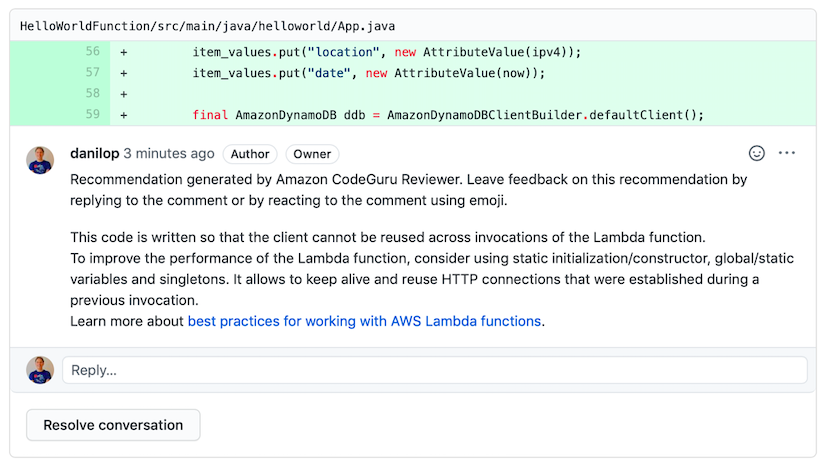
    Amazon Web Services (AWS) has made generally available a tool dubbed Amazon CodeGuru that employs machine learning algorithms to recommend ways to improve code quality and identify which lines of code are the most expensive to run on its cloud service.

    Peder Ulander, director of open source for AWS, said Amazon CodeGuru not only helps improve performance and resource utilization but also reduces the time and effort spent optimizing applications before and after they are deployed.

    Amazon CodeGuru is based on a set of AWS machine learning algorithms to identify best practices for deploying code. It creates a profile of the code deployed and then surfaces recommendations to improve performance and reduce costs by employing the most appropriate tier of the cloud service.

    That latter capability is critical because developers don’t always factor costs into deciding which tier of a cloud service to employ. Amazon CodeGuru enables IT teams to proactively optimize their cloud usage, noted Ulander.

    Amazon CodeGuru can pull code from either GitHub or CodeCommit repositories, with support for other repositories planned. It requires developers to insert agent software developed by AWS into their code. Once a pull request is made, Amazon CodeGuru automatically starts evaluating the code using trained artificial intelligence (AI) models developed using data gathered from thousands of different open source software projects by AWS and its parent company.

    Once the analysis is completed, Amazon CodeGuru will generate a graph showing such metrics as latency issues and CPU utilization rates, as well as human-readable recommendations to surface specific issues and remediations that include example code and links to relevant documentation for any line of code. Amazon CodeGuru can observe application runtimes and profile application code every five minutes.

    Amazon CodeGuru has two core components. Amazon CodeGuru Reviewer automatically flags common issues that deviate from best practices and provides recommendations to fix them, including example code and links to relevant documentation. It then opens a pull request and automatically starts evaluating the code using machine learning models to identify the line of code, specific issue and recommended remediation, and provides access to a pull request dashboard that lists all the information gathered by all code reviews.

    IT teams can provide feedback on CodeGuru Reviewer recommendations by clicking on a thumbs up or thumbs down icon, which helps improve recommendations over time using machine learning.

    The second component is Amazon CodeGuru Profiler, which identifies the most expensive lines of code by analyzing the runtime behavior of their applications. Armed with those insights, IT teams can identify and remove code inefficiencies, improve performance and decrease compute costs.

    IT teams today spend an inordinate amount of time debugging code to address a broad range of issues. The paradox is the more applications they deploy, the more time they spend debugging. Perhaps the time has come to finally let machines discover code issues in the hopes that developers will use their time writing new code, not fixing it.

  • VMware’s Blue Medora Buy Advances AIOps

    VMware’s Blue Medora Buy Advances AIOps

    VMware has announced it will acquire Blue Medora, a provider of a service for integrating data collected by IT monitoring tools, to expand its efforts to advance the adoption of artificial intelligence to automate IT operations (AIOps).

    Roy Ritthaler, vice president of cloud management for VMware, said Blue Medora provides VMware with a software-as-a-service (SaaS) platform that is employed to inform VMware vRealize, an IT automation suite that is now being used by more than 400 customers.

    The data Blue Medora collects will also be employed within Project Magna, a research and development initiative that applies machine learning algorithms and other forms of artificial intelligence (AI) to automate IT operations, he said. Project Magna is based on a reinforcement learning engine that automates the tuning of multiple sub-components of the overall IT environment, resulting in what VMware calls “self-driving data centers.”

    Ritthaler said the goal is not to replace IT professionals as much as it is to eliminate rote tasks while making it easier to manage increasingly complex IT environments at scale. It then will become feasible for a smaller number of IT professionals to manage hybrid cloud computing environments, he noted.

    Blue Medora’s True Visibility Suite provides VMware with visibility not just into IT infrastructure but also all the way up the application stack.

    Ritthaler said it’s only a matter of time before most management frameworks are accessed as service, given all the data that needs to be collected and then analyzed to surface meaningful insights. It’s not clear how roles with IT organizations will evolve once those insights are surfaced regularly. Most enterprise IT organizations today rely on multiple specialists to optimize all the components that make up the IT environment. In theory, AIOps will make it possible for IT generalists to manage an IT environment without having to rely on so many specialists.

    AIOps undoubtedly will also have a profound impact on DevOps processes. As more IT operations become automated, the amount of time and effort spent managing IT infrastructure should decline.

    Interest in IT automation is on the rise in the wake of the COVID-19 pandemic. With many IT professionals working from home as much as possible, organizations are looking to automate rote IT processes to make them easier to manage remotely. In many cases, achieving that goal will require IT teams to rely more on tools that are accessed as a cloud service.

    Regardless of the path forward, it’s apparent the management of IT is about to be utterly transformed.

    It’s not that IT organizations will suddenly have a greater appreciation of IT automation. However, the pandemic has added more urgency to an IT transition that was already underway prior to the pandemic. The issue now is not so much whether to embrace IT automation as it is determining what can be automated for a consistent outcome across IT environments that frequently are made up of a diverse yet not especially well-integrated range of platforms.

  • ShiftLeft Brings Security Workflows to DevOps Processes

    ShiftLeft Brings Security Workflows to DevOps Processes

    ShiftLeft has updated its NextGen Static Analysis (NG SAST) tool to include workflows that are purpose-built for developers.

    Company CEO Manish Gupta said the security workflows are designed to make it easier for DevOps teams to incorporate them within their application development and deployment processes. In fact, a survey of more than 165 developers, application security and DevOps professionals conducted by ShiftLeft finds 89% of respondents said the current disconnect between developers and cybersecurity teams is the biggest inhibitor of productivity.

    The issue with rival static analysis tools is they were not designed from the ground up to incorporated into a DevOps process, said Gupta. As a result, he noted, security workflows are managed around application development processes rather than being incorporated within them.

    The survey finds that most IT teams are performing security scans too late in the software development life cycle (90%) and when they do discover an issue they often lack any remediation guidance (88%).

    Most existing cybersecurity processes can’t keep pace with the rate at which applications are being deployed. The survey finds nearly 70% of software development organizations are releasing multiple times per month or more, with 18% releasing at least daily.

    Gupta said NG SAST overcomes that issue by automating code analysis during every pull/merge request. That approach enables developers to address security issues much the same way they do any other bug. Rather than having to wait on a report from an application security team, developers can remediate a security issue from within their development environment log before it ever shows up in a report, he said.

    Productivity and application quality improves because vulnerabilities get fixed faster while the code at issues is still uppermost in the mind of the developer, Gupta said.

    DevOps teams can also create build rules that accept or deny merges based on how many security vulnerabilities there are, he added. That capability prevents security flaws from become too deeply embedded within the build process before they can be more easily remediated.

    Gupta said security scans are also run locally where applications are deployed, which means source code never has to leave the organization. That approach also eliminates the need for network and firewall architecture updates to access an external scanning service. It also reduces bottlenecks inside organizations that might need to do as many as 20 scans per hour, he noted.

    Overall, Gupta said it’s not uncommon to see developer productivity increase by a factor of 40 because ShiftLeft NG SAST enables scans to be run instantly. The days when developers took a coffee break while waiting for a security scan to run are now over, he said.

    Of course, the level of productivity gain for development teams that might be gained by embedding static analysis within the application development process will vary widely. However, given the fact that developers outnumber cybersecurity professionals by several orders of magnitude, it’s also readily apparent dedicated application security teams can’t keep up. Unless organizations give developers the security tools they need, any ambitions an organization may have about implementing best DevSecOps processes will remain largely a pipe dream.

  • HCL Software Expands DevOps Portfolio

    HCL Software Expands DevOps Portfolio

    HCL Software has launched a DevOps practice and portfolio along with three updates to HCL tools.

    Version 2.0 of HCL Accelerate 2.0 adds support for policy management and out-of-the-box reports to the value stream management platform, while version 7.1 of HCL Launch automates the application of corporate governance rules to the continuous delivery platform.

    HCL Software has also updated HCL OneTest 10.1 to include OneTest Server, a wizard-driven test authoring environment and OneTest Data, a data fabrication tool that ensures the right data is on-hand for testing, along with support for Kubernetes and Red Hat OpenShift application development and deployment platform.

    Finally, HCL Software is making available HCL Software DevOps Power Pack, which bundles HCL Accelerate, HCL Launch and HCL OneTest, along with 40 hours of services for installation, configuration and team adoption into a single offering.

    Steve Boone, head of product management for HCL Software DevOps, said the goal is to make sure IT organizations that adopt HCL tools as part of a DevOps initiative are successful.

    Boone said HCL Software is focused on extending the value of investments made in continuous integration (CI) platforms. Most organizations today have multiple CI platforms installed, some of which even come from different vendors. The HCL Software portfolio enables DevOps teams to scale deployment processes across multiple platforms along with tools such as value stream management software to better manage DevOps processes.

    In contrast, CI/CD platform providers often offer many of the same capabilities, but those offerings are optimized for a specific CI/CD platform.

    The HCL Software portfolio of DevOps tools traces its lineage back to IBM, which sold its AppScan, BigFix and Lotus Notes technologies to HCL at the end of 2018. Since then the company has expanded its portfolio to include DevOps tools and services but it is no longer committed to developing those offerings in lock-step with IBM. As a result, IT organizations should expect to see more frequent updates, Boone said.

    In the meantime, interest in DevOps tools and processes has increased in the wake of the COVID-19 pandemic, as organizations accelerate multiple digital business transformation initiatives, he said. As part of those efforts, those same organizations are starting to appreciate the need for DevOps tools that go beyond providing basic CI capabilities.

    Different organizations are, of course, going to achieve a level of DevOps maturity at varying rates. It’s not uncommon for different teams within the same organization to differ widely in terms of DevOps maturity. Rather than simply providing software, Boone said HCL Software is committed to providing the expertise in the form of services that enable organizations to maximize the potential of any DevOps investment.

    It’s not clear to what degree organizations will want IT vendors to include professional services engagements with the acquisition of software. However, the less proficient any organization is in terms of their DevOps processes, the more valuable those services generally become.

  • Fastly Facilitates Observability at the Edge

    Fastly Facilitates Observability at the Edge

    Fastly this week announced it is adding the ability to collect tracing, customizable logging data and both real-time and historical metrics from a serverless computing framework designed to be deployed on edge computing platforms.

    Company CTO Tyler McMullen said the goal is to make it easier for IT to bring observability within the context of a DevOps to an edge computing platform.

    The Compute@Edge serverless compute platform enables IT teams to employ functions to execute code on an edge computing platform versus having to install virtual machines or containers. Those edge computing platforms are connected to a content delivery network (CDN) managed by Fastly.

    McMullen said that approach provides a way to deploy microsecond applications at the edge while still attaining observability in keeping with best DevOps practices. Otherwise, edge computing platforms become yet another black box that provides IT teams with no visibility.

    DevOps teams can send real-time logs to 27 and counting supported endpoints. Default log fields are automatically exposed to better determine the root cause of any issue. DevOps teams can also capture custom event details.

    Metrics such as CPU and RAM utilization can also be surfaced either in real-time or on a historical basis. The Compute@Edge service also honors request tracing parameters by maintaining them when they enter and leave the Fastly platform. Developers can tag individual end user requests with unique identifiers that can be shared with third-party platforms such as Datadog.

    Currently available in beta, Compute@Edge makes it easier for IT teams to employ a serverless computing framework to drive event-driven applications at the edge, McMullen said. Latency issues that arise when applications attempt to access cloud services are pushing more organizations to deploy real-time applications at the network edge. Functions running on a local serverless computing platform enable IT teams to achieve that goal in a way that consumes the smallest amount of IT infrastructure possible, he added.

    With the rise of 5G networking services, it’s now only a matter of time before the number of platforms on which a DevOps team needs to deploy code expands significantly. Most DevOps teams are already challenged by all the unique platforms to which need to deliver code. Edge computing could potentially exacerbate those issues because each edge computing platform tends to have unique attributes. A common serverless computing framework running on each of those edge computing platforms could help streamline continuous delivery.

    Of course, it’s too early to say what impact the downturn on the economy will have on edge computing projects. In theory, at least, organizations are gearing up to deploy these applications in anticipation of wireless 5G connectivity services being widely available and affordable. Chances are high, however, with more organizations not willing to send people to install applications on those endpoints manually, reliance on DevOps processes and CDNs to automate application delivery at the edge will become a requirement.

  • Open Mainframe Project Pushes Zowe Platform Into LTS

    Open Mainframe Project Pushes Zowe Platform Into LTS

    The Open Mainframe Project (OMP) announced this week that a long-term support (LTS) edition of Zowe, the open source integration platform for mainframes running z/OS, is now generally available.

    Announced at the virtual Open Source Summit, this edition of the framework for integrating administration, management and development tools based on web technologies will not be updated again for the next 24 months. OMP, an arm of The Linux Foundation, will continue to update other editions of Zowe for IT organizations that want to incorporate new capabilities as they are made available.

    John Mertic, director of strategic programs at The Linux Foundation, said the LTS edition of Zowe is required because many IT organizations that have mainframes will only deploy software that is guaranteed to be stable enough to require only a minimal number of patches and updates for an extended period of time.

    Launched last year by Broadcom, IBM, Phoenix Software and Rocket Software, the Zowe framework consists of a web user interface (UI) that provides a virtual desktop that includes applications to access a 3270 terminal and a VT Terminal, as well as an editor and explorers for working with JES, MVS Data Sets and Unix System Services. Additional features include an application programming interface (API) mediation layer that provides a gateway that acts as a reverse proxy for z/OS services along with a catalog of REST APIs and a command-line interface (CLI) that enables developers to remotely interact with mainframe via a variety of tools. Via the API Mediation Layer, Zowe also provides access to a single sign-on framework.

    The Zowe framework is part of a broader initiative to make z/OS more accessible. Rather than requiring IT teams to acquire and retain specialized skills, IBM and the rest of independent software vendors (ISVs) that make up the mainframe ecosystem have been modernizing tools and processes as part of an effort to make mainframes running z/OS much like any other platform an IT organization deploys application on. IBM, for example, this month updated the DevOps tools for z/OS it provides using container technologies that encapsulate IBM middleware. That approach makes it easier to build and test z/OS applications using x86 platforms.

    At the same time, IBM is working toward making Kubernetes available on zOS in addition to researching the feasibility of running COBOL applications natively on that platform.

    Historically, mainframe applications have been built using mainly waterfall-based processes. However, as organizations launch digital business transformation initiatives, there is a growing need for DevOps tools and processes that enable z/OS applications to be built and updated faster. Using existing waterfall processes, often it can take IT organizations more than a year to build, test and deploy an application.

    It’s not clear to what degree IT organizations managing mainframes will abandon waterfall-based processes in favor of DevOps. However, as the pressure to become more agile continues to mount, it’s now more of a question of how much organizations should embrace DevOps, rather than if or even when.

  • Survey Finds IT Teams Rising to COVID-19 Challenge

    Survey Finds IT Teams Rising to COVID-19 Challenge

    In many ways, the COVID-19 pandemic has been the ultimate test for IT teams. The bulk of many workforces overnight became remote workers. Many of those end users are now starting to return to the office, but no one knows for sure if they will be sent back home again because of another flare-up.

    A survey of 519 IT professionals conducted by ManageEngine, a provider of IT service management (ITSM) software, suggest most IT teams have risen to the COVID-19 challenge. According to the survey results, 85% of respondents said they were equipped with the right remote-support equipment or were able to procure it quickly to enable a productive remote work environment. In addition, 83% of respondents said they believe IT will be better appreciated in terms of budgets, salaries and recognition in the wake of the COVID-19 crisis.

    Overall, nearly three-quarters (72%) said the ITSM tools continue to be effective despite remote work conditions. For example, 40% cited knowledge management as their greatest challenge, while just over 50% noted that prior to the pandemic Bring Your Own Device (BYOD) policies were non-existent in their organizations.

    In terms of mobile computing devices, only 32% said they were already providing them. Nearly half (47%) are now planning to provide them.

    Self-service support options aren’t being used by 28% of the organizations, and of those who do use them only 40% found they truly helped. Among the respondents who use chatbots for their self-service, 50% found them beneficial for remote support. Only 7% of respondents felt that the service desk wasn’t up to meeting the remote IT support challenges that the pandemic presented.

    In addition, only 40% said they are equipped to tackle the increase in security and privacy concerns that result from more employees working outside the office.

    Cloud services were also critical, with more than half of respondents (53%) saying such services helped their organization’s business continuity. However, 20% of respondents said they did not have a business continuity or disaster recovery plan in place for emergency situations. Among those who had them, 50% were happy with those plans. Almost a third (29%) of respondents admitted they did not do enough prior testing of their action plan.

    A fifth of respondents also noted shadow IT is impacting services and applications, while nearly a third said they were unsure.

    Pradyut Roy, a product manager for ManageEngine, said it’s apparent many IT organizations will need to update IT policies and processes in the wake of the pandemic. It’s also probable the IT environment will become more heterogeneous in the wake of the pandemic as, for example, more desktops move into the cloud, said Roy.

    In general, IT teams will need to adjust to a much more fluid IT environment. Many more end users will be rotating in and out of the office to enable organizations to comply with social distancing mandates. Regardless of what the new normal becomes, however, it should be apparent to all by now that IT will play a more central role in most business decisions from here on out.

  • Commvault Extends Data Protection Alliance with Microsoft

    Commvault Extends Data Protection Alliance with Microsoft

    Commvault and Microsoft are extending their existing relationship to integrate Commvault’s data protection software with Azure Blob Storage.

    Azure Blob Storage is a service based on object-based storage optimized for unstructured data. Commvault last year launched the Metallic software-as-a-service (SaaS) platform, which provides a cloud-based approach to managing data protection, that runs on Azure.

    The two companies have pledged to extend that relationship to not only align engineering efforts but also enable their partners to more easily resell both Metallic and Azure cloud services under the same user contract.

    Manoj Nair, general manager for the Metallic service, said the Commvault offering presents IT administrators with a simple graphical user interface (GUI) and exposes application programming interfaces (API). That latter capability enables DevOps teams to automate the backup and recovery process via a cloud service, said Nair.

    Rather than having to rely on an IT administrator, the API enables DevOps teams to remove friction from the data protection process, he noted.

    The bulk of data protection processes are still managed by IT administrators. However, as DevOps processes continue to mature, data protection processes are becoming more automated. Developers not only want to be able to instantly recover data in the event of system failure but they also often use data protection tools to move data into and out of cloud computing environments.

    Nair said Commvault opted to extend its relationship with Microsoft in part because the amount of data being stored in the Azure cloud continues to expand exponentially as more organizations adopt Microsoft Office 365, Microsoft Teams and low-code applications built using Microsoft PowerBuilder tools. Collectively, those applications increase the amount of data gravity the Microsoft Azure cloud exerts. As the amount of data increases in the Azure cloud, the number of applications looking to access that pool of data increases steadily. As that data continues to grow, Nair said there will be a greater need for tools to protect that data.

    In general, Nair said many organizations underappreciate the need to back up and recover data stored by cloud service providers. The assumption is the cloud service provider will make it possible to recover data in the event of failure. In reality, cloud computing is based on a shared responsibility model between the end customer and the cloud service provider, under which responsibility for data protection—along with all other data management functions—belongs to the end customer.

    Of course, there is no shortage of data protection tools available. Many of those relied on today reside in an on-premises IT environment. In the wake of the COVID-19 pandemic, interest has grown regarding shifting data management tools to SaaS platforms that are more accessible. The issue many IT organizations will need to decide next is whether they want to rely on dedicated IT administrators to manage those processes versus reducing costs by employing APIs to automate a set of routine tasks that no one in IT especially enjoys managing.

  • Businesses Modernizing Apps in Wake of Pandemic

    Businesses Modernizing Apps in Wake of Pandemic

    A survey of 5,000 business decision-makers, IT decision-makers and app developers published suggests organizations are taking advantage of the crisis created by the global COVID-19 pandemic to accelerate the modernizing of apps using DevOps practices.

    Conducted by the market research firm Vanson Bourne, the survey finds 80% of respondents said organizations must modernize the technologies they use to develop and deploy software to be more successful. Nearly as many (79%) said their organization will not be able to deliver a best-in-class end user experience without successfully modernizing software development processes.

    In addition, 80% of respondents said embracing developer processes such as test and learn would enable organizations to work more effectively and efficiently.

    The survey also finds some organizations are not letting a proverbial good crisis go to waste. A total of 70% said they have good or excellent alignment between application development and IT teams, up from 64% prior to the pandemic. Alignment between business teams and application development (67%) and IT teams (67%) increased by 10% and 12% respectively since the start of the pandemic, according to the survey results.

    Sumit Dhawan, senior vice president and chief customer experience officer for VMware, said the need to make applications more accessible and reliable is accelerating a transition to the cloud. The survey finds the primary benefits of modernizing apps are enabling remote workforces (54%); pushing quick updates in response to changing landscape (42%); and maintaining reliable uptime (41%).

    The scope of application modernization initiatives varies widely. Some organizations are simply lifting and shifting existing application workloads along with the virtual machines they run on into the cloud. Others are refactoring applications to run natively on a different virtual machine platform provider by a cloud service provider. Others are wrapping existing applications in containers so they don’t have to be refactored when deployed on another virtual machine. Still others are employing containers and Kubernetes to develop entirely new microservices-based applications that tend to be more flexible and reliable than existing monolithic applications.

    Regardless of the path forward, the inability to physically access local data centers during the pandemic has accelerated a shift to the cloud that was occurring even before the pandemic hit. There still will be many applications that for performance, security and compliance reasons may need to remain in on-premises IT environments. However, it might not be long before IT organizations also modernize those applications to make them both more accessible, flexible and resilient.

    Most IT teams will find themselves managing microservices-based applications alongside modernized monolithic applications for years to come. Over time, however, many of those monolithic applications will be deconstructed into a core set of microservices.

    At the core of all those initiatives will be a set of best DevOps processes that each IT team defines for itself based on the nature of the application portfolio that needs to be developed, deployed, secured and maintained. The challenge now is determining which applications should be modernized versus simply replaced by either a software-as-a-service (SaaS) application or a custom cloud-native application that is a better fit for the purpose.