Author: Mike Vizard

  • Dynatrace Adds Security Module to Observability Platform

    Dynatrace Adds Security Module to Observability Platform

    Dynatrace announced today it is adding a module to provide continuous runtime application self-protection (RASP) capabilities to its observability platform.

    The Dynatrace Application Security Module leverages existing Dynatrace tracing and artificial intelligence (AI) technologies to detect threats in real-time and then apply appropriate policies to automatically secure applications.

    Andreas Lehofer, chief product officer for Dynatrace, said that with the rise of highly dynamic microservices-based applications, the time has arrived to extend the company’s platform into the realm of application security. In contrast, there aren’t typically as many changes to monolithic applications to justify adding a security module to an application performance management (APM) platform, he said.

    Lehofer said the Dynatrace Application Security Module has also been designed to reduce false positives by only surfacing alerts concerning code that is actually running. Rival RASP platforms will detect modules and start generating alerts about libraries that may be present in an application environment but are not actually employed, said Lehofer.

    The Dynatrace Application Security Module working with the Smartscape topology mapping and PurePath tools for analyzing code also make it possible for DevSecOps teams to better understand dependencies between microservices, he added.

    At the core of the Dynatrace approach to DevSecOps is its OneAgent software for application instrumentation, which collects data and feeds it back to an observability platform that includes an artificial intelligence (AI) engine dubbed Davis. As the Dynatrace Application Security Module continues to evolve, IT organizations should expect Dynatrace to apply AI capabilities to application security more broadly, Lehofer said.

    The ability of DevSecOps teams to automatically remediate applications that are discovered to have significant security issues depends on their ability to roll back applications after they have been deployed. Most IT organizations at the moment still have to manually roll back an application after it’s been deployed, he noted.

    Longer-term it’s not clear to what degree AI might advance DevSecOps; however, the more automated the process of identifying vulnerabilities becomes, the easier it should be to automate remediation.

    In the meantime, as the observability capabilities of platforms such as Dynatrace extend into application security, the easier it should become for organizations to embrace best DevSecOps practices by employing a module that is added on to an existing APM platform.

    Dynatrace, of course, is betting microservices-based applications will increase the adoption of its observability platform. Historically, IT teams tended to employ an APM only to instrument their most mission-critical applications because of the costs involved. However, as IT environments become more complex in the age of microservices, platforms that can observe all the dependencies that exist in a distributed computing environment are now critical. Extending that platform to include application security further extends the economic case for investing in an observability platform.

    It may be a while before most organizations reach a level of DevSecOps maturity that requires continuous observability, but as responsibility for application security continues to shift further left, it’s now only a matter of time before more automation is applied.

  • Aruba Aims to Centralize Network Management

    Aruba Aims to Centralize Network Management

    Aruba, a unit of Hewlett-Packard Enterprise (HPE), unveiled orchestration software that makes it possible to centralize the management of network switches in the data center, across an extended campus and at the network edge.

    In addition, Aruba is adding a family of five 1/10/25/40/100 GbE switches to its portfolio that are designed to be deployed in the data center or network edge.

    Finally, Aruba is making available integrations for HPE ProLiant DL and DX servers as well as SimpliVity, Nimble, Synergy, Cray Shasta, Cray ClusterStor, SAP HANA, VMware and Nutanix platforms.

    William Choe, vice president of product management for Aruba, said Aruba Fabric Composer can also be coupled with HPE GreenLake, a managed service HPE provides to remotely manage HPE servers on behalf of customers.

    Based on a graphical interface, Aruba Fabric Composer is designed to make it possible for IT generalists to provision any type of switch, Choe said. The goal is to reduce the total cost of networking by enabling IT teams to centralize the management of switches regardless of whether they are a data center, campus or edge computing environment.

    With the rise of edge computing, the number of network switches that are being employed across a distributed computing environment is increasing. The challenge IT teams face is they can’t easily dispatch personnel to physically provision switches in remote locations at a time, as most IT staff members are working from home to help combat the spread of the COVID-19 pandemic.

    Aruba Fabric Composer, which is designed to be accessed via a VMware console, eliminates the need to manage enterprise networks in a piecemeal fashion, added Choe.

    Arguably, the centralization of network management is long overdue. Too many IT organizations are still managing each individual switch via a command-line interface (CLI) for each box. That not only makes managing a large network cumbersome, but it also creates a rigid IT environment that is unable to adroitly respond to rapid changes being made to the application environment. At a time when many organizations are trying to accelerate the deployment of applications needed to drive digital business transformation initiatives, legacy approaches to networking are hampering the modernization of IT.

    There are other networking equipment providers working to centralize the management of switches. However, it remains to be seen whether IT organizations are prioritizing the centralization of network management during the economic downturn brought on by the pandemic. But there is an absolute need to increase network bandwidth, so one way to justify an upgrade to the network is to make it less expensive to operate.

    As part of that effort, many organizations are also starting to converge network operations with best DevOps practices using application programming interfaces (APIs) and overlays such as service meshes to programmatically manage network underlays. Regardless of approach, the days when networks were managed by a dedicated team of specialists are on the wane.

  • DevOps Deeper Dive: ServiceNow and DevOps, One Year In

    DevOps Deeper Dive: ServiceNow and DevOps, One Year In

    It’s now been a year since ServiceNow launched its DevOps integration initiative. Since then, thanks to the arrival of the COVID-19 pandemic, the way organizations manage IT has utterly changed. With more employees now regularly working from home, more organizations have shifted toward relying on IT service management (ITSM) platforms that, like ServiceNow, run in the cloud.

    At the same time, the overall IT environment has become more complex as a greater number of applications based on microservices that span everything from containers to serverless computing frameworks are deployed in production environments. Most of those distributed applications are being built and deployed by DevOps teams who are finding it necessary to collaborate more with IT operations teams who still rely on ticket-based workflows to manage jobs and tasks.

    As organizations invest more in digital business transformation initiatives fueled by these applications, the pressure has intensified to bridge the cultural divide that has long existed between traditional IT operations teams and application development teams that have embraced best DevOps practices.

    At the core of that divide is a desire on the part of DevOps teams to automate IT process management. Tasks that once required IT personnel to implement manually increasingly now are being automated by developers employing tools and platforms that expose both APIs and command-line interfaces (CLIs). Not every IT task can be fully automated just yet, but with the rise of machine learning algorithms and other forms of artificial intelligence (AI), a great leap forward is clearly being made.

    In fact, the rise of AI coupled with a need to more aggressively reduce costs are motivating organizations to investigate how they can better unify the management of IT, said Judith Hurwitz, principal analyst for Hurwitz and Associates, an IT consulting firm.

    “It’s a major change,” said Hurwitz. “There’s a lot more focus on the issue of managing errors.”

    ServiceNow is investing in AI to address that issue, including partnering with providers of DevOps platforms to gain access to the data required to train AI models. That effort will simultaneously improve the developer’s experience at a time when organizations need to accelerate the rate at which applications are being developed, deployed and updated, said RJ Jainendra, vice president and general manager for IT business management and DevOps at ServiceNow.

    “The change management process is becoming automated,” he said.

    ServiceNow, which has more than 1,000 customers and contract values in excess of $1 million, is not the only provider of an ITSM with similar ambitions. Not only are providers of rival ITSM platforms moving down the same path, but new entrants have also emerged in the form of vendors that are extending DevOps platforms into the realm of ITSM. Atlassian, for example, has launched an ITSM initiative aimed specifically at DevOps teams looking to eschew a ticket-based approach to IT in favor of workflows that are managed directly by DevOps teams.

    As the responsibility for managing IT end-to-end continues to shift left toward DevOps teams, many won’t embrace ticket-based workflows. Eventually, DevOps platforms and legacy approaches to managing IT using tickets will converge. ITSM platforms are still the systems of record for recording IT events, so integration between DevOps and ITSM platforms is required.

    In the meantime, replacing IT processes that employ ticket-based workflows which adhere to frameworks such as ITIL will not be easy, said Mitchell Ashley, CEO and managing analyst at Accelerated Strategies Group.

    “Ticket-based workflows are incredibly sticky,” he said. “It’s not a question of undoing them as much as it is unraveling them.”

    In fact, Ashely said a ticket-based approach to managing IT may be too deeply ingrained in the psyche of IT teams to be replaced.

    “Ticket-based systems are a lot like email,” said Ashley. “They will be with us forever.”

    As long as ticket-based approaches to managing IT workflows remain in place, however, the potential for culture clash across teams that have divergent approaches to managing IT will remain high.

  • Copado Adds Value Stream Management to Salesforce DevOps Platform

    Copado Adds Value Stream Management to Salesforce DevOps Platform

    Copado, a provider of a DevOps platform for building applications that extend software-as-a-service (SaaS) applications from Salesforce, this week announced it has added value stream management capabilities.

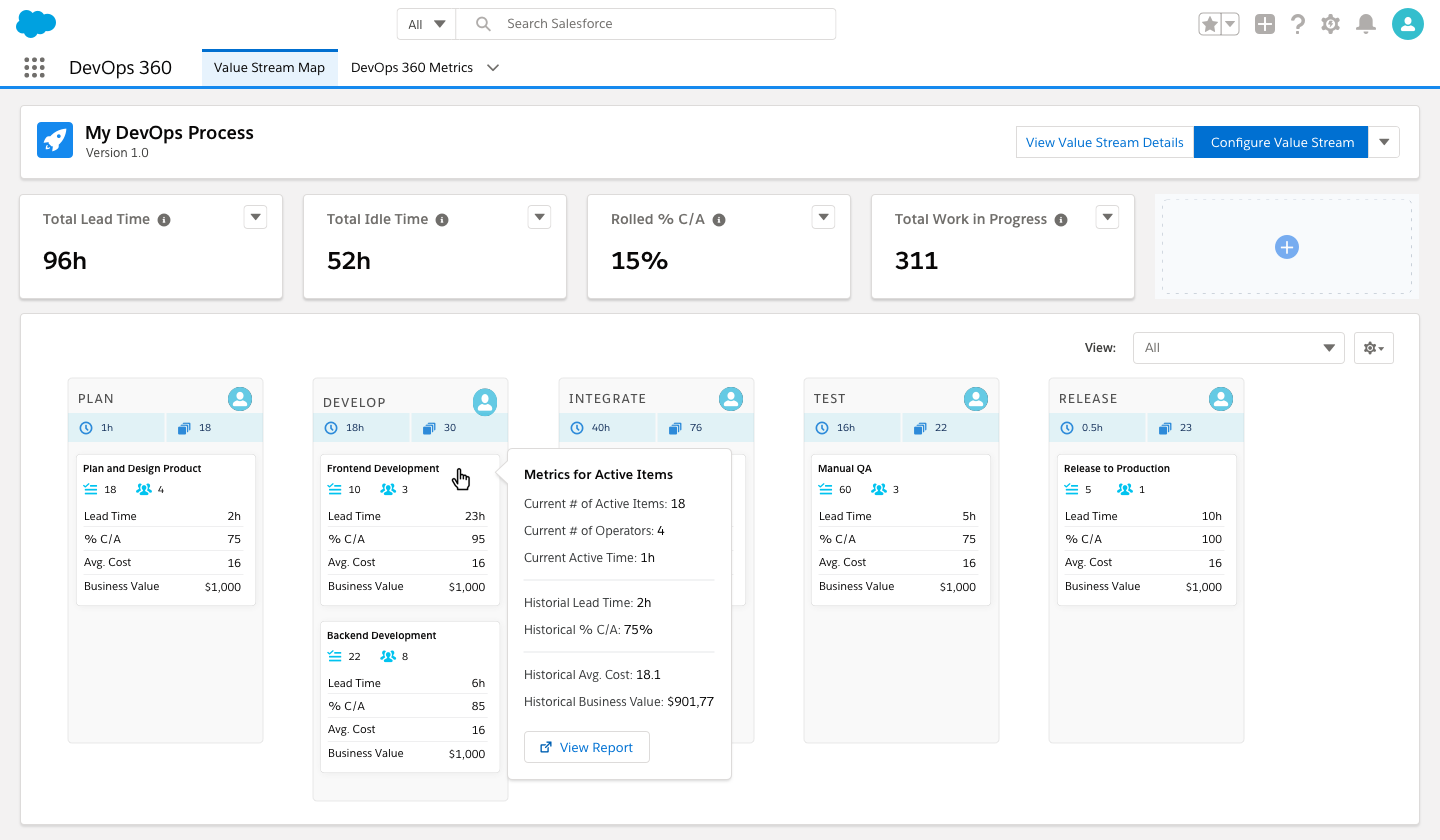
    Andrew Leigh, chief marketing officer for Copado, said providing a platform that accelerates the development and deployment of application code is no longer sufficient. The winter 2021 release of the Copado DevOps 360 platform now includes value stream management capabilities that enable organizations to better prioritize DevOps projects, he said.

    In response to the COVID-19 pandemic more organizations than ever are now relying more on SaaS applications that can be accessed easily by employees working from home. IT organizations are also now using platforms such as Salesforce to jumpstart digital business transformation initiatives. Rather than write develop entire applications from the ground up, many organizations are employing low-code tools from Salesforce and others to extend, for example, customer relationship management (CRM) platforms.

    Leigh said most of the activity revolves around professional developers who are increasingly applying best DevOps practices to build those applications. Copado has certified more than 25,000 developers on its platform, he said.

    Given the current state of the economy, Leigh said interest in DevOps platforms is rising among organizations building Salesforce applications because they want to ensure a return on investment (ROI). Organizations that are investing six figures to build these applications are especially interested in value stream management tools that help make sure these projects are delivered on time.

    The value stream management capabilities added by Copado include support for the Scaled Agile Framework (SAFe) for building complex applications more efficiently. It also provides the ability to synchronize stories from Jira and Agile Planning boards.

    The latest version of the Copado DevOps 360 platform also adds a suite of declarative pipeline builders that allow non-technical teams to define and manage value pipelines without a single line of code. That capability is intended to simplify version control and automation flows to enable developers and administrators who manage Salesforce instances to better align their efforts.

    Copado added deeper integrations to third-party testing tools that incorporate artificial intelligence (AI) and updated its static code analysis and compliance tools.

    Salesforce is clearly not the only SaaS application platform that organizations are looking to extend, but it is among the fastest-growing. For its most recent third quarter, the company posted revenues of $5.42 billion, an increase of 20% year over year. The company is now lifting its future guidance to slightly exceed pre-pandemic levels. Salesforce is projecting fiscal 2021 revenue at the end of its fourth quarter will total $21.11 billion. Revenue guidance for fiscal 2022 has been raised to $25.5 billion. Salesforce earlier this week also announced its intention to acquire Slack, a provider of a messaging platform that is used widely by DevOps teams.

    Leigh said a dedicated DevOps platform for Salesforce applications is necessary because Salesforce applications are constructed using a set of objects and tables unique to the platform versus traditional application code. Regardless of the reason for requiring a dedicated DevOps platform, interest in building and deploying custom applications on top of the Salesforce platform has increased sharply since the start of the pandemic.

  • Atlassian Embeds Metrics for Measuring DevOps in Jira

    Atlassian Embeds Metrics for Measuring DevOps in Jira

    Atlassian today announced it has added four features to Jira Software Cloud that allow developers to visualize and measure progress across DevOps workflows.

    Suzie Prince, head of product for DevOps at Atlassian, said rather than organizations having to acquire and deploy separate tools to track DevOps metrics, Atlassian is moving to incorporate those capabilities in a platform that is already widely employed to manage application development projects.

    Two capabilities being added to the standard edition of Jira Software Cloud are Code in Jira, which makes it possible to view the most recently active repositories in Bitbucket, GitHub, GitLab or Git Integration for Jira from within Jira Software Cloud, and Deployments in Jira, which makes it possible to similarly view in real-time at what stage any deployment is on any continuous integration/continuous delivery (CI/CD) platform.

    The Premium Edition of Jira Software Cloud is gaining tools to track both deployment frequency and cycle times to provide more insight into how application development teams are maturing in terms of their overall DevOps proficiency.

    These tools eliminate the need for analytics tools that otherwise would be required for each DevOps platform an organization employs, noted Prince. Jira Software Cloud also exposes a REST application programming interface (API) through which DevOps teams can integrate the Atlassian platform with other DevOps tools.

    It will be up to each organization to determine how they may want to employ the insights surfaced within Jira Software Cloud. However, Prince said most IT teams should identify areas of weakness where there is an opportunity to coach DevOps teams on how to improve.

    There is, of course, a lot more focus on improvement as application development projects have accelerated in recent months, thanks mainly to the increased focus on digital business transformation. Organizations of all sizes are trying to maximize investments in application development at a time when the economic downturn brought on by the COVID-19 pandemic is forcing IT teams to make difficult tradeoffs. Metrics, of course, are critical when it comes time to prioritize one project over another.

    At the same time, Prince noted that many teams are trying to keep the number of tools and platforms incorporated into a DevOps toolchain to an absolute minimum to limit costs and minimize complexity. Many DevOps teams have been employing Jira software to manage application development projects for years now, so Prince said these new capabilities are a logical extension of the company’s project management software.

    Of course, the best metrics are the ones that manifest themselves automatically. No project manager relishes having to badger developers to enter data into a project management application. The more the data residing in a DevOps platform can automatically populate a project management application, the happier all involved will be. After all, the goal is to head off as many issues as possible today before they become major problems tomorrow.

  • The DevOps Long Tail of Salesforce’s Slack Buy

    The DevOps Long Tail of Salesforce’s Slack Buy

    While most of the focus on the acquisition of Slack this week by Salesforce for $27.7 billion clearly revolves around digital business transformation initiatives, the implications of the deal for DevOps teams that have been employing Slack to collaborate for years is significant.

    Salesforce owns both Heroku and Force.com in addition to providing developers with a set of low-code Lightning tools for building applications on top of software-as-a-service (SaaS) applications built by Salesforce.

    During a conference call with analysts this week, Salesforce CEO Marc Benioff made it clear most of the initial focus will be on tightening integration between Slack and the company’s broad portfolio of customer relationship management, marketing, analytics and artificial intelligence software. However, Slack first gained traction as a collaboration service that DevOps teams employed to share updates and notifications. Many DevOps teams still employ Slack for that purpose and it’s only a matter of time before all the units that make up Salesforce tighten integration with Slack.

    It’s not clear to what degree that integration might convince DevOps teams to either stay with or switch to one of the several platform-as-a-service (PaaS) environments that Salesforce makes available. However, the Lightning PaaS that Salesforce provides for organizations that want to extend the company’s SaaS applications has been gaining significant traction. Rather than writing entire applications from the ground up, the path of least digital business transformation resistance for many organizations is to employ low-code tools such as Lightning to extend existing SaaS applications.

    Salesforce also own MuleSoft, which it positions as a platform for integrating both SaaS and on-premises applications to further those digital business transformation initiatives.

    That approach has gained significant traction in the last six months as organizations have expanded reliance on SaaS applications to enable employees to more easily work from home to help combat the COVID-19 pandemic. For its most recent third quarter, Salesforce posted revenues of $5.42 billion, an increase of 20% year-over-year. Benioff said the company is now lifting its future guidance to slightly exceed pre-pandemic levels. Salesforce is projecting fiscal 2021 revenue at the end of its fourth quarter will total $21.11 billion. Revenue guidance for fiscal 2022 has been raised to $25.5 billion.

    Most of the custom applications being built on top of Salesforce platforms are constructed by professional developers. That shift toward employing Salesforce SaaS applications as a platform has created demand for DevOps platforms from providers such as Copado and Gearset. Most recently, Gearset has begun offering free training to encourage the adoption of best DevOps practices among developers of applications based on the Salesforce platform.

    Benioff said the first fruits of the acquisition of Slack will manifest themselves next year. In the meantime, DevOps teams that have standardized on Slack for collaboration should expect to be hearing a lot more about Salesforce tools and platforms on a Slack channel near them.

    Of course, none of this is lost on Microsoft, which is similarly moving to incorporate Microsoft Teams within DevOps workflows. It will be up to each individual DevOps team to decide which approach to collaboration makes the most sense from here.

  • AWS Expands Breadth, Depth of DevOps Services Portfolio

    AWS Expands Breadth, Depth of DevOps Services Portfolio

    Amazon Web Services (AWS) today launched a bevy of cloud services, including a preview of Amazon DevOps Guru, that collectively promise to make it much easier to deploy and manage cloud applications.

    Announced during the online AWS re:Invent conference, Amazon DevOps Guru is a fully managed service that employs machine learning algorithms to automatically detecting operational issues and recommend specific responses that will be delivered via a notification. Through a single console, IT teams will also be able to visualize their operational data by summarizing relevant data from multiple AWS and third-party data sources, including PagerDuty and Atlassian.

    AWS also unfurled AWS Proton, a service to automate the development and deployment of microservices-based applications built using containers and the AWS Lambda serverless computing framework. Available also in preview, AWS Proton is an application management service that enables IT teams to define reusable application components as “stacks” that can be combined with a set of curated application stacks for security, architecture and tools defined by AWS. This service then automates the provisioning of infrastructure as code, the setting up of continuous integration/continuous delivery pipelines and the setting of monitoring tools.

    AWS CEO Andy Jassy told conference attendees that in effect, AWS will be managing DevOps processes on behalf of developers.

    At the same time, AWS is launching Amazon Elastic Container Service (Amazon ECS) Anywhere, which allows IT teams to use Amazon ECS to orchestrate containers in their own data centers, and Amazon Elastic Kubernetes Service (Amazon EKS) Anywhere, which provides the ability to run EKS on the distribution of Kubernetes that AWS employs in local data centers. There is also now an Amazon Elastic Container Registry (Amazon ECR) Public service for sharing container images.

    At the same time, AWS previewed Amazon Aurora Serverless v2, which will make it possible to scale instances of MySQL databases instantly using the AWS serverless computing framework. Support for PostgreSQL databases is planned for next year.

    AWS also announced it has added a Microsoft SQL Server-compatibility layer to its PostgreSQL database to make it easier to migrate Windows applications to an open source database. The company will also open-source that capability, dubbed Babblefish, as part of an effort to encourage the development of compatibility layers for other databases. PostgreSQL already provides compatibility with Oracle RDBMS applications.

    Jassy chided providers of these proprietary database platforms for changing licensing terms when organizations deploy these databases on public clouds other than their own. Those moves have only created additional demand to migrate faster to open source databases, noted Jassy.

    Finally, AWS is adding a slew of infrastructure options, including Mac instances (EC2 Mac instances) for Amazon Elastic Compute Cloud (Amazon EC2). Built on Mac mini computers, the service will make it possible for developers to more cost-effectively build MacOS applications.

    In addition, AWS is adding 1U and 2U servers to its AWS Outposts portfolio for deploying infrastructure in on-premises IT environments. Those offerings expand AWS Outposts beyond rack-based systems.

    The company is adding AWS Graviton2-powered C6gn instances to deliver 100Gbps networking performance for Arm processors it designed. Those instances offer 40% better price performance over comparable current-generation x86-based instances, according to the company. There is also now M5zn instances of Intel Xeon Scalable processors that offer 45% better compute performance per core than current M5 instances, according to the company.

    AWS is also adding G4ad Graphics Processing Unit (GPU) instances based on processors from AMD and revealed its intention to build its own GPUs next year. The company also plans to add an Amazon EC2 instance based on up to eight Habana GAUDI accelerators from Intel to deliver up to 40% better price performance than current GPU-based EC2 instances, according to the company.

    Overall, Jassy said AWS grew 26% year over year to achieve a $46 billion run rate. As the number of services provided by the company continues to expand, maintaining that growth rate at a time when applications are moving into the cloud faster than ever looks easily achievable.

  • Broadcom Extends AIOps Platform Reach

    Broadcom Extends AIOps Platform Reach

    Broadcom today extended the reach of its artificial intelligence for IT operations (AIOps) platform to provide full-stack observability via integrations with 15 third-party data sources including Dynatrace, Datadog, AppDynamics, PagerDuty, Splunk, ServiceNow, SolarWinds and Microsoft Systems Center Operations Manager.

    In addition, Version 2.0 of AIOps from Broadcom now captures data at the chip level to enable IT teams to triage network congestion and packet loss in real-time.

    The latest release also adds visualizations and dashboards for different IT personas along with a recommendation engine that enables IT teams to automate tasks once the root cause of an issue is surfaced by the platform.

    Sreenivasan Rajagopal, director of products and strategy for Broadcom Enterprise Software, said the new approach allows IT teams to decide what level of automation to apply based on the complexity of the problem and potential risk to the business.

    Collectively, these capabilities are intended to make it easier to align people and processes with business outcomes by creating a continuous feedback loop, he said, noting it takes about 90 days for the machine learning algorithm embedded within AIOps from Broadcom to start delivering on that promise.

    Other capabilities included as part of the latest release are additional machine learning topology and correlation capabilities, causal graphs and intelligent situational analysis for automatic root cause analysis, noise mitigation, alarm clustering and anomaly detection. Broadcom has also added a library of machine learning algorithms, natural language processing and an ontological graphical topology to enable situational correlation.

    Finally, Broadcom has added capacity analytics tools that can be applied to specific groups of services that IT teams are collectively managing and maintaining.

    Rajagopal said it’s now only a matter of time before AI is applied more broadly to enable IT teams to become more agile. AIOps won’t replace IT staff as much as it will simply augment the capabilities of the IT staff, he noted.

    AIOps also will prove vital as older members of the IT team retire, Rajagopal added. Newer members of the IT staff will be able to become productive much faster if they can rely on insights and recommendations surfaced by an AIOps platform.

    It’s not clear to what degree AIOps platforms will exist as a separate entity apart from traditional IT services management (ITSM) platforms that are also being infused with machine learning platforms. Broadcom is making a case for a distinct new IT operations platform that relies on data to align people, processes and platforms. The single biggest obstacle in terms of achieving IT agility is not the tools as much as it is people in different roles who can’t empathize with one another because there is no common source of data that every stakeholder can access, said Rajagopal.

    Regardless of the AIOps path chosen, it’s clear that many of the existing tools IT teams rely on to manage IT environments are slowly becoming obsolete. In fact, there may come a time soon when IT teams won’t even consider an IT management platform that doesn’t have some level of AI capability.

  • InfluxDB to Revamp Storage Engine for Time-Series Database

    InfluxDB to Revamp Storage Engine for Time-Series Database

    InfluxData has launched an open source InfluxDB IOx project that it said will become the foundation for the next generation of the company’s time-series databases.

    At the same time, the company has made InfluxDB Open Source 2.0 generally available. This version of the company’s database comes in the form of a single binary that makes it easier to secure.

    InfluxDB Open Source 2.0 also provides access to Data Explorer visualization tools as well as a lighter-weight Flux query language purpose-built for time series data.

    InfluxData CTO Paul Dix said while improvements are still being made to the existing database offering, the time has come to start working toward addressing a number of issues via a new project anchored around a storage engine that will make it possible to query petabytes of data across thousands of servers. The InfluxDB IOx project will address that issue by eliminating current restrictions on cardinality, data size and cluster size that are inherent in the current platform, he said.

    The InfluxDB IOx project is written in the Rust programming language and incorporates Apache Arrow, an open source in-memory analytics engine that incorporates a columnar data store that is being advanced under the auspices of the Apache Software Foundation (ASF). That approach will also make it possible for InfluxDB to natively support SQL along with InfluxQL and Flux query languages.

    The current plan is to make InfluxDB IOx an optional storage backend in a future point release. By the latter half of next year, InfluxData plans that InfluxDB Enterprise customers will have a commercially supported version of InfluxDB IOx and InfluxDB Enterprise. InfluxDB IOx will have its own builds and can be run separately. In effect, Dix noted, InfluxDB IOx will make it easier to separate compute and storage requirements.

    Dix said that while InfluxDB has served as the foundation that enables a wide range of monitoring tools to collect data in real-time, current cardinality limits that impact the number of tables that can be joined requires a new approach to add support for distributed tracing capabilities required to observe microservices-based applications. The IOx version will also employ object storage platforms to reduce the total cost of ownership while making it possible to address the requirements of distributed computing environments that now include a wide range of edge computing platforms, he noted.

    The decision to embrace Apache Arrow also opens the platform to end users who prefer to work with SQL and other scripting languages, he added.

    It may be a while before observability tools that leverage InfluxDB IOx find their way into DevOps tools. However, it’s clear that time-series databases will evolve to meet the requirements of cloud-native applications that will be based on large numbers of microservices spanning distributed computing environments. The only issue is to what degree the current rate of deployment of these applications might outpace the current ability of InfluxDB to keep pace.

  • IBM Acquires Instana to Advance Observability Strategy

    IBM Acquires Instana to Advance Observability Strategy

    IBM this week announced it plans to acquire Instana, a provider of an application performance management (APM) platform that is optimized for microservices.

    Robin Hernandez, vice president of hybrid cloud management and AIOps for IBM, said Instana will plug an observability gap that has emerged in IBM’s portfolio as organizations start to build and deploy cloud-native applications more broadly.

    Previously, IBM provided APM capabilities via a Tivoli portfolio of tools that were optimized for core static Java applications, noted Hernandez. Instana will add an APM platform designed from the ground up to automatically instrument applications as they are being deployed by DevOps teams, he said.

    Istana also provides distributed tracing capabilities that the existing Tivoli portfolio lacks, Hernandez added.

    The data collected by the Instana agents injected into those microservices also will play a critical role in IBM’s overall approach to applying artificial intelligence to IT operations, also known as AIOps. The IBM approach to AIOps seeks to combine data from platforms such as Instana and Tivoli with third-party data sources such as ServiceNow to advance IT automation, he said.

    Available both as a software-as-a-service (SaaS) platform and as software that can be deployed in an on-premises environment, Instana has gained traction as organizations have embraced observability as a core tenet of a set of best DevOps practices. Historically, IT teams only employed APM platforms to monitor their most mission-critical applications because of both the cost of the APM platform and the inherent difficulties involved in applying agents pervasively.

    Hernandez said observability takes monitoring to the next level because instead of simply tracking a known set of processes, platforms such as Instana make it possible to observe interactions in a way that discovers unknown relationships and dependencies between applications and infrastructure.

    IBM plans to primarily focus its Instana efforts on microservices-based applications. However, Instana can also be applied to observe existing legacy applications. IBM is still studying that use case as part of its ongoing due diligence, he noted.

    Massive amounts of capital have been pouring into observability startups that are trying to supplant legacy APM platforms as organizations transition to microservices. Providers of legacy APM platforms, meanwhile, are re-engineering their platforms to support microservices-based applications that are most often deployed on Kubernetes clusters. IBM is addressing that challenge via an acquisition that complements its renewed focus on hybrid cloud computing and AI, Hernandez said.

    It’s too early to say which vendors will triumph in the observability wars, but the one thing that is certain is there is no shortage of options. It’s not clear to what degree the shift to observability will result in the rolling up of a variety of tools to manage IT, but the days when IT tools simply monitored a process are starting to fade away.