Author: Mike Vizard

  • Copado Acquires New Context to Drive DevSecOps Adoption

    Copado Acquires New Context to Drive DevSecOps Adoption

    Copado, a provider of a DevOps platform for building applications deployed on the Salesforce cloud platform, announced today it has acquired New Context as part of an effort to expand the scope of its portfolio into the realm of DevSecOps best practices.

    Andrew Leigh, chief marketing officer for Copado, said the acquisition brings Copado tools and professional services expertise that will be applied to help organizations build and deploy secure, custom applications on top of the same cloud platform they already use to access a range of software-as-a-service (SaaS) applications.

    The New Context Lean Security Intelligence Platform enables developers to achieve that goal by analyzing code and then surfacing recommendations for when developers should apply specific security controls, Leigh explained. Existing New Context customers include Blue Shield of California, GE, Kaiser Permanente and Royal Dutch Shell.

    Like most organizations that have embraced DevOps best practices, it’s still early days as far as adoption of DevSecOps are concerned. However, it’s already apparent that Copado is well-positioned to advance adoption of a complementary Lean Security Intelligence Platform, said Leigh. Copado, which claims to have more than 1,000 customers, recently raised an additional $96 million in funding to help fuel those efforts. The company also claims it recorded 120% growth in annual recurring revenue (ARR).
    In the wake of the COVID-19 pandemic, more organizations are employing SaaS applications to drive digital business transformation initiatives. Rather than building every application from the ground up, it is often simpler to extend, for example, a Salesforce customer relationship management (CRM) application.

    Once organizations reach a certain level of scale, they then start to apply DevOps best practices to those builds. These efforts, however, are often uneven. A recent survey, conducted on behalf of Copado, found that while 82% have increased or maintained the size of their Salesforce development teams, the change fail rate jumped from 23% last year to 33% in 2020 when compared to a similar survey conducted a year ago. The survey also notes time to recover increased from 110 hours in 2019 to nearly 196 hours in 2020.

    The next major challenge facing organizations that have embraced DevOps is, of course, DevSecOps. The challenge is that, since Salesforce environments are unique, applications are constructed using a set of objects and tables that are specific to that platform. As such, Salesforce environments generally require a DevOps platform designed from the ground up to work with objects and tables.

    Salesforce, in its most recent fourth quarter, reported revenue of $5.82 billion, up 20% year-over-year despite the lingering economic impact of the COVID-19 pandemic. As such, the number of custom applications being developed on top of Salesforce should steadily increase, especially as low-code tools become more widely adopted. It’s now only a matter of time before more organizations reach application development initiative critical mass that warrants investing in a DevOps platform to manage them.

  • Teleport Adds Database Support to Security Gateway

    Teleport Adds Database Support to Security Gateway

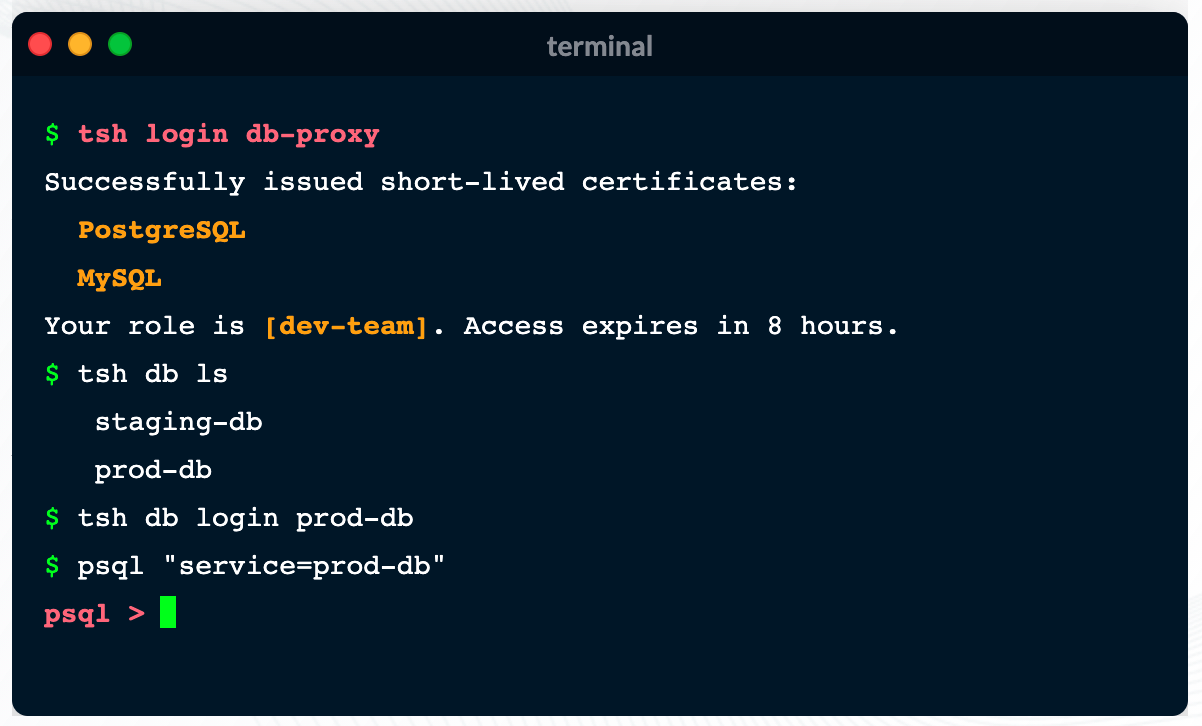
    Teleport announced today it has added support for databases to a security gateway, delivered as a cloud service, that is currently used to secure Linux servers and Kubernetes clusters.

    Ev Kontsevoy, CEO, said Teleport intends to extend the reach of the security gateway up the entire stack of IT infrastructure that developers routinely use to remotely access databases. Initially, Teleport 6.0 adds support for open source PostgreSQL and MySQL databases.

    Teleport has gained traction as an access management tool because it provides a single binary that can be easily deployed by developers to encrypt IT platforms and enforce session controls. It automatically discovers all the resources in an IT environment, along with the protocols needed to access them. Teleport also provides a unified audit log, in a JSON format, that enables IT teams to track what resources are being accessed, when and by whom.

    Other features include the ability to authenticate identities via built-in single sign-on (SSO) and multi-factor capabilities, discover and see all database instances, integrate with command line interfaces (CLIs) and a set of workflows for managing privilege escalation.

    Access control is becoming a bigger issue due to a number of factors. The overall IT environment is becoming more complex as the infrastructure stack required to run applications continues to grow; most IT teams continue to work from home to help combat the COVID-19 pandemic. Teleport provides a fine-grained approach to streamlining access management across servers, clusters and databases in a way that eliminates the need to rely on virtual private networks (VPNs). In effect, Teleport enables IT teams to move toward a more identity-centric approach to unifying the management of access, Kontsevoy said.

    That’s critical at a time when the rise of DevSecOps is pushing responsibility for security further left toward developers, Kontsevoy added. While the rate at which that transition occurs will vary widely, Kontsevoy said it’s clear developers are taking more control over access control as part of a broader effort to roll out secure applications, faster.

    It may be a while before DevOps teams are able to aggregate all the access control protocols they currently employ under a single proxy. However, Kontsevoy said, the massive amount of time and effort spent managing access control today will drive DevOps teams to look for ways to automate what is currently a very manual process.

    Less clear is what role cybersecurity teams might play in supervising access management. The days when a separate overlay was needed to manage access may be coming to a close.

    In the meantime, it’s clear VPNs were not designed to address access management, in an era where the bulk of IT teams – and the employees they support – are working from home. More employees may be soon be heading back to the office more frequently, but it’s likely that remote work will remain prevalent. That means legacy approaches to managing remote access that were never designed to scale will becoming increasingly obsolete.

  • Logz.io Adds Prometheus Service to Observability Portfolio

    Logz.io Adds Prometheus Service to Observability Portfolio

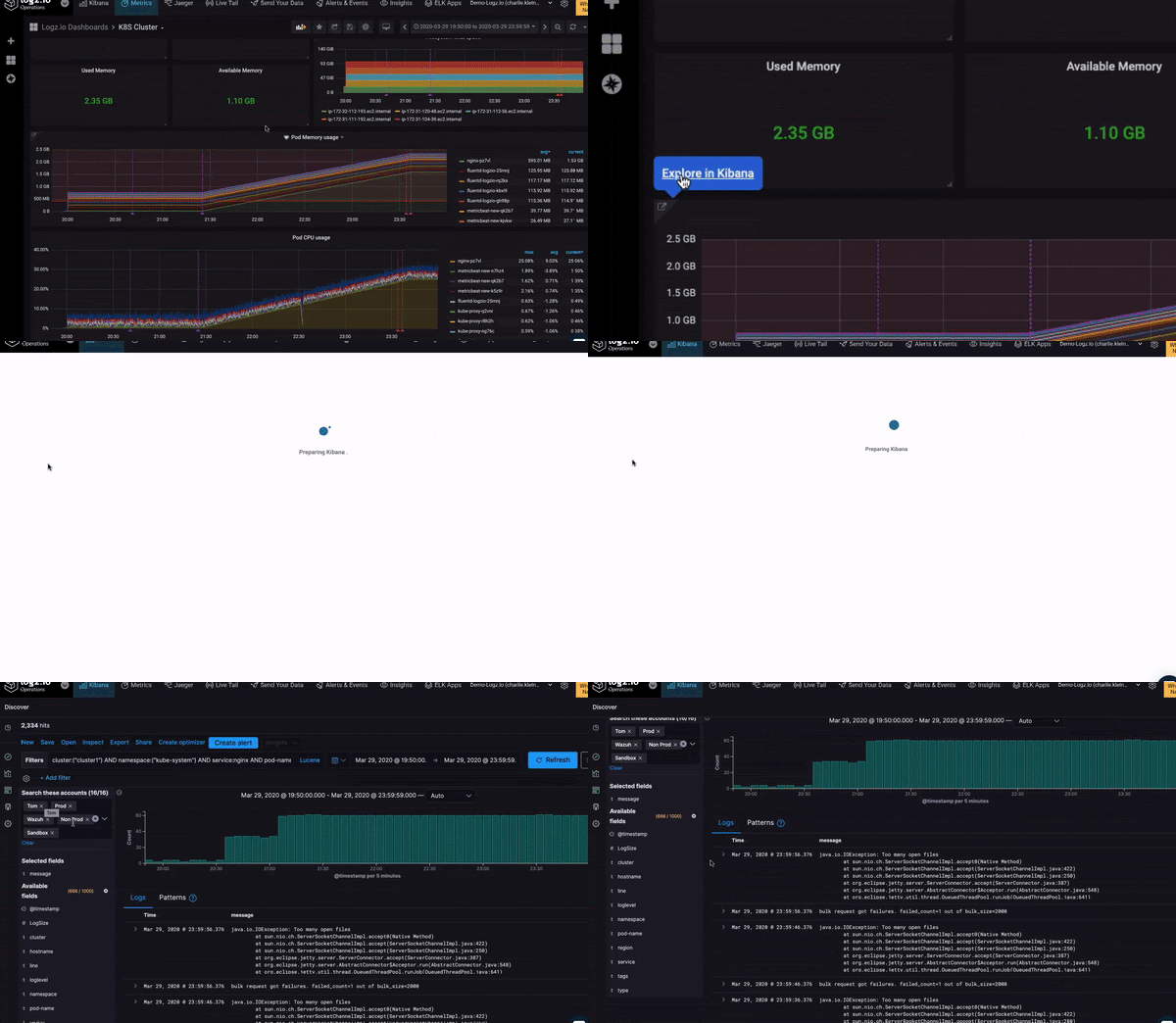
    Logz.io announced today the general availability of a cloud service, based on Prometheus, that can collect and analyze metrics alongside its existing log management service.

    Jonah Kowall, CTO, Logz.io, said the goal for Prometheus-as-a-Service is to provide IT teams with a centralized approach to analyzing data collected from instances of Prometheus running on local servers and clusters. While Prometheus is relatively easy to deploy, it’s not designed to scale horizontally, which means IT teams have to deploy multiple instances of Prometheus on a fleet of clusters and servers. The Logz.io service makes it easier to aggregate and analyze all the data those instances of Prometheus collected, said Kowall. That approach not only offloads the storage of those metrics, Kowall said, it presents an opportunity to correlate that data against logs and traces that Logz.io already collects.

    Logz.io, as part of that effort, is also making it possible to upload a Grafana dashboard, typically employed to visualize Prometheus data as a JSON file, to Logz.io, which will then convert the Grafana dashboards to dashboards based on the Logz.io user interface.

    While Prometheus is closely identified with Kubernetes, IT teams are starting to deploy the open source monitoring tool more widely to collect metrics. A recent Gartner report predicts that, by 2025, half of new cloud-native application monitoring deployments will rely on some form of open-source software to instrument applications. As part of that transition, Prometheus has already emerged as a de facto standard, Kowall noted.

    The primary focus, at least initially, is still on monitoring IT platforms, but as IT teams start to correlate metrics, logs and traces, they begin to benefit from additional context, otherwise known as observability, Kowall said.

    Observability, of course, has always been a core DevOps principle. However, as more applications become instrumented using open source tools and agent software, it’s becoming less costly to achieve. DevOps teams will still need to instrument each application, but the costs associated with collecting metrics and other data continues to decline. Most providers of monitoring tools and observability platforms are moving toward adding support for open source tools and agents to collect data alongside the proprietary tools and agent software they already make available. It will be up to each DevOps teams to decide whether to rely on open source tools or continue to rely on proprietary software that may be able to surface deeper insights or is simply easier to deploy.

    Regardless of the path chosen, the rise of microservices-based applications with numerous dependencies is forcing the observability issue. Microservices-based applications may not crash as frequently as a monolithic application because they are, ideally, designed to degrade gracefully in the absence of a single point of failure. The challenge is that, once they do degrade, it’s difficult to pinpoint the source of the issue; this may result in applications running sub-optimally for an extend period of time.

    The good news is that DevOps teams should now have the tools required to diagnose and resolve those issues long before any end user notices.

  • JumpCloud Brings Zero-Touch Provisioning to the Mac

    JumpCloud Brings Zero-Touch Provisioning to the Mac

    JumpCloud today announced it is adding a zero-touch enrollment for Macs capability to its cloud directory platform that will also be extended over time to applications.

    Greg Keller, JumpCloud CTO, said this new capability extends Apple Business Manager, formerly known as Apple Device Enrollment Program (DEP), all the way down to specific users by leveraging data that resides in the JumpCloud platform.

    Whenever a user logs into a new Mac, it can automatically be synchronized with the JumpCloud Directory, which then uses the identity of that end user to configure the device in addition to providing the appropriate access to all corporate resources via their JumpCloud credentials.

    Keller said the need for zero-touch approaches to IT administration has become more acute in the wake of the COVID-19 pandemic. With employees working from home more frequently even after the pandemic eventually subsides, Keller noted the days when IT teams could physically provision a Mac are on the wane.

    While Apple Macs still represent less than 10% of all the PCs shipped in a year, Keller noted small-to-medium (SMB) businesses are adopting Macs at a faster rate than large enterprises. As the endpoints become more diverse, Keller said the JumpCloud platform provides an alternative to Microsoft Active Directory for managing both Windows and Mac devices. Apple, of course, last year acquired Fleetsmith to gain access to provisioning tools. However, those tools are not yet integrated with any type of directory.

    Most recently, JumpCloud has added a tool that enables IT teams to remotely install software onto end user Windows devices, as well as integrations with Slack, Salesforce, Atlassian, GitHub and Amazon Web Services (AWS).

    Fresh from raising an additional $100 million in funding, JumpCloud is making a case for a zero-trust approach to managing endpoints using a directory that verifies the identity of each end user. JumpCloud, which makes a free edition of its platform available for individuals and small teams, is already being used by more than 100,000 organizations spanning more than a hundred countries. More than 3,700 of those organizations, including Cars.com, GoFundMe, Nimbus Therapeutics, Grab, Pulselive, SlimPay, Foursquare, Beyond Finance and Funding Societies, are paying customers.

    In the longer term, there may come a day when verbal commands are employed to provision endpoints for specific end users. In the meantime, the process of configuring and provisioning those endpoints is becoming more automated. IT teams are now able to remotely manage fleets of endpoint devices without having to physically touch them. In fact, there may be no need for IT managers to return to an office, as tasks become increasingly automated and able to be performed remotely.

    While there are a lot of options available to achieve that goal, Keller said the number of them that are tightly integrated with a directory to ensure the right system winds up in the right end user’s hands is few and far between. The challenge now is getting organizations to rethink their directory requirements at a time when IT teams are increasingly expected to deliver personalized, white-glove services regardless of where an end user is located.

  • Oracle Updates Java Development Platform

    Oracle Updates Java Development Platform

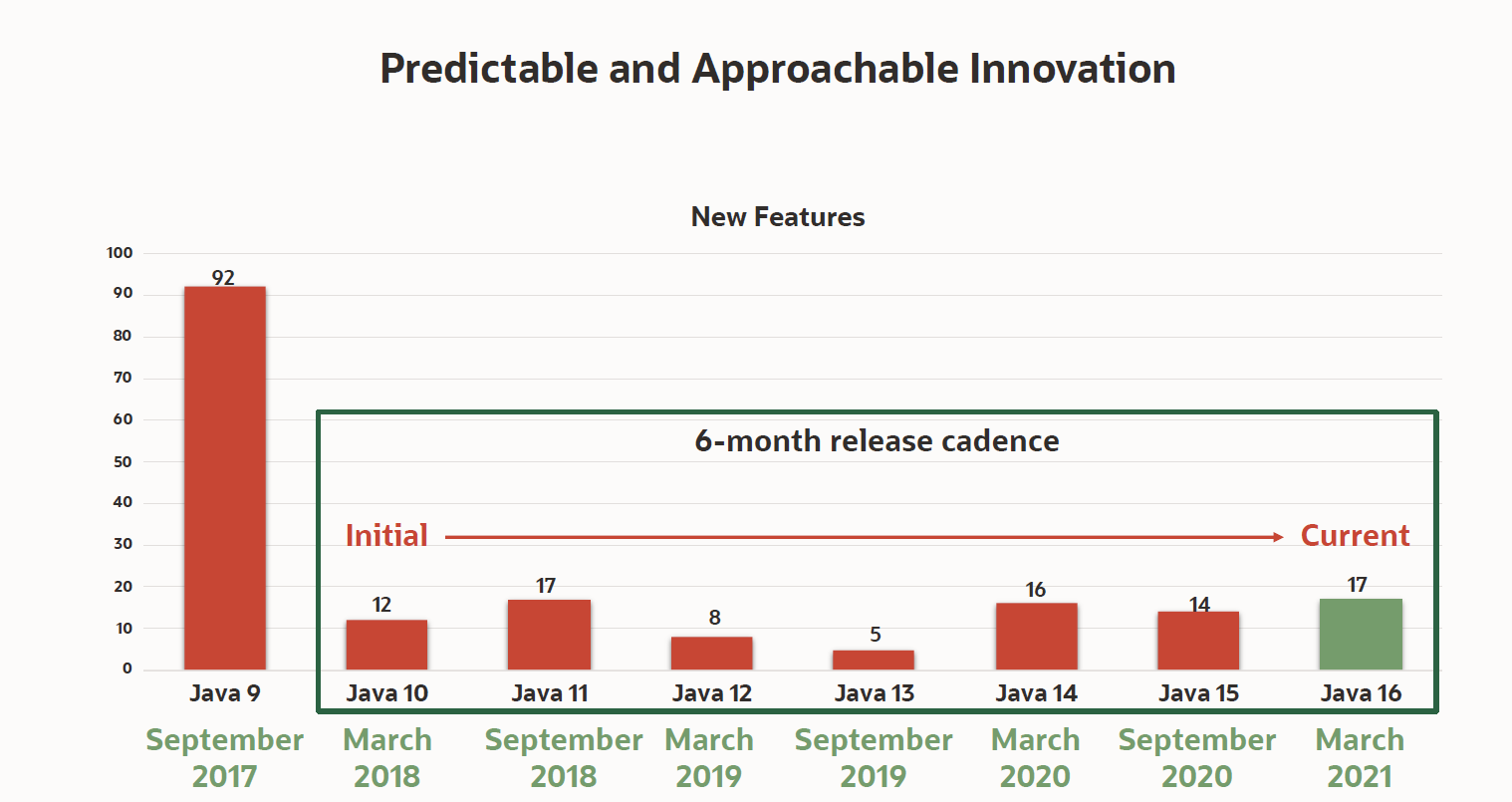
    Oracle announced today the availability of Java 16, which adds 17 enhancements to a software development kit that is now being updated every six months.

    Georges Saab, vice president of development for the Java Platform Group at Oracle, said while most Java development teams are still using Java 8 or earlier editions of the platform, the expectation is that many of them will soon move forward, as updates are made available in smaller increments that are easier to test and vet.

    At the same time, Oracle is committing to make available long term release editions of Java that won’t be updated as frequently. While there are many organizations anxious to take advantage of new capabilities as quickly as possible, Saab noted there are just as many that value stability more than innovation.

    The latest edition adds support for finalized pattern matching for instances and records, as well as other language enhancements that were previewed in Java 14. Developers can also employ a packaging tool to ship self-contained Java applications that will make it easier to deploy in modern IT environments, said Saab.

    Additional capabilities now available include the Vector application programming interface (API), the Foreign Linker API (JEP 389), and the Foreign-Memory Access API that are all available in incubations as well as a sealed classes capability that is being made available as a preview.

    In general, Saab said, one of the primary reasons many organizations don’t tend to update Java more frequently is the frameworks they rely on to employ it at a higher level of abstraction are still optimized for older versions. However, as Java updates are delivered in a more modular fashion, it will become easier for the providers of those frameworks to keep pace.

    It’s not precisely clear to what degree IT teams are employing Java to build next-generation applications based on microservices. However, a recent survey published by VMware, found 95% of respondents have either already used the open source Spring framework, based on Java, to either containerize an application (65%) or plan to do so (30%).

    A quarter of a century after its initial development, Java is still the dominant programming language relied on to build enterprise applications. In many instances, the lack of tools for building Java applications for Kubernetes platforms was a significant inhibitor of adoption for the cloud-native platform. In the last six months, however, the number of tools for building and deploying Java applications on Kubernetes clusters has increased.

    Despite the proliferation of alternative platforms for building and deploying applications on Kubernetes platforms, the appetite for retraining legions of Java developers is low. Most developers will rely on the programming tool they already know, especially when it comes to building mission-critical applications for the enterprise. That may mean some of those applications might not be as fast as they could be, but, given the level of risk, there’s always going to be a natural tendency toward being safe rather than sorry.

  • Sonatype Acquires MuseDev to Add Code Analysis

    Sonatype Acquires MuseDev to Add Code Analysis

    Sonatype today revealed it has acquired MuseDev, a provider of a code analysis tool, in addition to updating its Nexus platform for discovering vulnerabilities in software supply chains.

    Muse analyzes code each time a pull request is made, which makes it easier for developers to discover and address issues long before they commit code. Muse is integrated with 24 pre-configured code analyzers for GitHub, GitLab and Bitbucket repositories. It then analyzes each pull request to surface bugs, as part of automated code review, and includes analysis of interprocedural information flow and thread safety issue analysis, along with guidance to fix any bugs discovered.

    In addition to adding support for Muse, the latest edition of the Nexus platform integrates a container firewall from NueVector along with a set of tools for identifying and providing guidance on how to address misconfiguration issues that frequently arise when developers employ open source Terraform software to programmatically manage infrastructure as code.

    Finally, Sonatype added tools to provide better guidance on the implications of open source licensing terms attached to various projects, while at the same time starting its own community for organizations migrating from Bintray and JCenter, now that those tools have been sunsetted.

    Brian Fox, Sonatype CTO, said the expectation is Muse will create an opportunity to introduce the complete DevSecOps portfolio to developers as they analyze code. Most developers are keenly interested in both optimizing and securing their code. They would just prefer to achieve that goal on their own versus being informed of an issue after code has been committed to a repository managed by a larger DevOps team, noted Fox.

    An advanced development pack was added to the Nexus platform last year to make it easier to surface dependencies in code that are vulnerable to threats. It applies machine and deep learning algorithms to automatically identify and block software supply chain attacks based on typosquatting and malicious code injections. Collectively, these tools give developers control over third-party open source code, first-party source code, infrastructure as code and containerized code, Fox said.

    Sonatype claims it now counts 70% of the Fortune 100 as customers, and supports more than 2,000 commercial engineering teams. In 2020, it claimed it saw a 35% annual growth in Nexus repository installs, which now stands at more than 250,000 instances employed by nearly 15 million developers.

    Overall, it’s not clear how much progress is being made toward embracing DevSecOps best practices. Sonatype, however. is making a case for putting DevSecOps tools directly into the hands of developers to address software supply chain security. In the wake of some recent high-profile breaches involving software supply chains, that approach may soon gain additional traction. After all, for all the encouragement being provided by application development team leaders these days, there’s nothing quite as effective as providing developers with a set of tools that enables them to achieve that goal on their own terms versus requiring them to follow a set of procedures dictated by a DevOps management team.

  • VMware Enhances Management Portfolio

    VMware Enhances Management Portfolio

    VMware today rolled out a series of updates to its automation and monitoring portfolio as part of an ongoing effort to simplify management of highly distributed IT environments.

    Updates to the VMware vRealize Cloud automation portfolio include VMware vRealize Automation 8.4’s tighter integration with the open source Salt automation framework the company gained by acquiring SaltStack last year, in addition to a range of tools for provisioning and governing instances of VMware software running on Google Cloud, Microsoft Azure and VMware Cloud on Amazon Web Services (AWS).

    There is also a set of tools to enable organizations running NSX network virtualization software for vSphere to migrate to NSX-T, an instance of network virtualization software that can be deployed anywhere.

    VMware vRealize Operations, meanwhile, is being updated to support a total of 57 AWS services along with the ability to predict the cost of deploying VMware Cloud on AWS. The latter capability includes tracking potential savings generated by powering off idle or unused virtual machines as well as snapshots, orphaned disks and oversized virtual machines. There are also now ten additional dashboards for tracking various costs, including return on investment, total cost of ownership and potential cost savings. IT teams can also more easily track capacity utilization trends on AWS.

    VMware is adding support for the open source Telegraf Agent to enable IT teams to collect metrics from any platform, in addition to providing an update to VMware vRealize Log Insight 8.4 and vRealize Log Insight Cloud that enables these monitoring tools to store data collected from multiple cloud services more efficiently. IT teams will also be able to collect logs from both Microsoft Azure and AWS.

    Finally, VMware is expanding its network monitoring tools to provide greater visibility across multiple clouds.

    Fidelma Russo, senior vice president and general manager for cloud services at VMware, said the rate at which IT teams are consuming the software-as-a-service (SaaS) editions of VMware management and observability tools or full-blown managed services has increased sharply since the start of the COVID-19 pandemic, as IT teams managed on-premises and cloud instances of VMware software from home.

    It’s not clear what percentage of VMware’s installed base are now consuming the company’s automation and monitoring tools, but as the number of VMware instances deployed on public clouds increases alongside on-premises IT environments, so, too, do the management challenges. The choice IT teams generally have to make is deciding between automation and observability tools that are optimized for a specific platform versus adopting frameworks that work more broadly. With the acquisition of Salt and support for Telgraf, it is apparent VMware is moving to expand the reach of its management portfolio beyond its own software.

    In the meantime, IT teams are not only being asked to manage more complex IT environments, but the expectation that, through automation, they will be able to more effectively implement cost controls. This is happening at a time when many organizations have not been quite so sensitive to the total cost of IT. The challenge, of course, is those organizations are being asked to spend money on automation today in the hopes of spending less because of it tomorrow.

  • IBM Deepens DevOps Insights on Mainframes

    IBM Deepens DevOps Insights on Mainframes

    IBM today extended its effort to enable IT organizations that have mainframes to embrace DevOps best practices by updating the analytics tools it provides.

    Tom McPherson, vice president for IBM Z Software, said a version 6.0 update to the suite of IBM application discovery and delivery intelligence (ADDI) for IBM Z tools surfaces more granular insights by leveraging a new version of Wazi Analyze that now analyzes code immediately after a change is made. That capability is critical, because most of the workloads running on a mainframe are highly tuned. Any issue that is likely to occur can usually be traced directly back to the latest software update made to the environment, McPherson said.


    Wazi Analyze also can now be deployed as a set of containers, which McPherson said means IT teams can opt to run the analytics application on a platform other than the mainframe.

    ADDI also has been updated to improve Assembler support by making it easier to analyze multi-level dynamic assembler macro calls. A set of application programming interfaces (APIs) for feeding that data back to a continuous integration/continuous delivery (CI/CD) pipeline has also been added.

    Finally, IBM revealed it signed a licensing agreement with ITP Software Systeme GmbH, Munich (ITP) to enhance application analytics capabilities. That capability will be added to a future release of DevOps for IBM Z Hybrid Cloud, which includes ADDI and IBM Wazi Developer, to enable organizations to determine how best to modernize legacy monolithic applications as they transition to a microservices-based, cloud-native computing environment.

    Naturally, not every monolithic application is going to be converted into a series of microservices. However, McPherson said, it’s clear there is a need for analytics tools that will enable IT teams to more easily determine which elements of an application are better suited to being reconfigured as microservices that could be deployed on, for example, a Red Hat OpenShift cluster.

    For the last several years, IBM has been encouraging IT organizations that have mainframes to embrace DevOps best practices as part of a larger effort to position mainframes as another type of distributed computing platform. The overall goal is to lower the total cost of mainframe ownership by reducing the need to rely on specialists to manage mainframe application environments. Each year, more of those specialists retire. IBM wants to make it more feasible for organizations to replace those specialists with IT generalists, like those that typically manage distributed computing environments. At the same time, management of distributed computing environments is becoming more automated, thanks to the rise of DevOps.

    Of course, mainframe processes have been highly automated for decades. IT teams managing mainframes may still rely primarily on waterfall-based processes to deploy applications, but the underling infrastructure is designed to scale up and down on demand as application workloads require. Convincing IT teams that, for decades, have employed the same processes to manage mainframes often requires a significant amount of cultural change.

    Regardless of motivation, however, the winds of DevOps change are now blowing through mainframe environments just as fiercely as they have through the rest of IT.

  • ServiceNow Adds Low-Code Tool to Platform

    ServiceNow Adds Low-Code Tool to Platform

    ServiceNow today made available an update, dubbed Quebec, to its Now platform that adds a set of low-code application development tools.

    Marcus Torres, general manager for IntegrationHub and vice president of platform product management at ServiceNow, said the Creator Workflows tool leverages existing App Engine and IntegrationHub capabilities in the platform to make it possible for both end users and professional developers to build custom applications faster using a visual development tool dubbed App Engine Studio. A set of templates that provide a set of pre-built workflows is also included.

    The goal is to make it easier to develop applications that would otherwise not be built because professional developers, using existing tools, would simply not have the time, Torres said.

    The Quebec release of the software-as-a-service (SaaS) platform is also used for IT operations management (ITOM), adding artificial intelligence (AI) capabilities in the form of ITOM Predictive AIOps that surfaces potential issues before they become a major issue. It is now also easier to set up the virtual agents that ServiceNow makes available to enable conversational AI, and there is now an AI search capability built into the ServiceNow portal. ServiceNow gained these capabilities via its recent acquisitions of Loom Systems and Attivio.

    Finally, ServiceNow has added process optimization and workforce optimization modules, along with an engagement messenger module that extends the self-service capabilities it provides to third-party portals, and a universal request tool that enables agents to collaborate and transfer tickets across departments while keeping employees informed of the status of their ticket.

    Thanks to the general enthusiasm for digital business transformation initiatives being accelerated in the wake of the COVID-19 pandemic, reliance on low-code tools to build applications has significantly increased. The challenge organizations encounter, however, is that a low-code tool can build a relatively simple application. However, development means may need to drop down to a lower level of abstraction to address more complex issues as an application continues to evolve. The Creator Workflows tool from ServiceNow is designed to provide development teams with that option.

    In general, ServiceNow is making a case for building applications on the same platform that many IT organizations already employ to manage IT. Many organizations already take advantage of workflows that ServiceNow has built to extend its core platform to address a wide range of uses cases involving, for example, human resources applications. The addition of the low-code tool will make it easier for IT teams to create applications that address use cases unique to their organization.

    Of course, there is no shortage of options when it comes to low-code and no-code tools these days. IT teams will need to decide to what degree platform-specific low-code tools make sense versus adopting low-code tools that enable them to build applications that can be deployed anywhere. Regardless of the path forward, however, it’s clear the number of applications that need to be deployed is dramatically increasing with each passing day.

  • LinearB Raises $16M for Software Delivery Intelligence

    LinearB Raises $16M for Software Delivery Intelligence

    LinearB announced today it has raised an additional $16 million in funding to advance adoption of a software delivery intelligence platform.

    Ori Keren, LinearB CEO, said rather than relying on antiquated processes that require software development teams to track progress by reentering data into a project management application, it’s now possible to automatically collect all the relevant data required from the tools and platforms being employed to build software.

    The LinearB platform correlates DevOps pipeline data gathered from code, Git, projects and releases to provide visibility and context to every member of the development team. LinearB employs machine learning algorithms to construct and correlate that data, in real-time, to provide accurate insights into project status. That’s critical, because it empowers every individual on that team to make informed decisions about which tasks to prioritize without waiting for an explicit directive, Keren said.

    LinearB will, in part, use the funding to build integrations with a wider range of DevOps platforms and tools, Keren added.

    Software delivery intelligence differs from value stream management (VSM) platforms; though they provide similar insights, those surfaced by LinearB are aimed at developers rather than C-level executives trying to optimize deployment of limited resources across multiple teams, said Keren. In many ways, the data collected by LinearB could be employed to better inform a VSM platform, Keren added.

    LinearB, in contrast, makes it easier to identify which teams and projects need additional help in near-real-time using metrics surfaced in a dashboard that track, for example, cycle times. The goal is to provide insights that make it easier to predict and eliminate project delays, remediate high-risk code before it is included in a production environment, eliminate bottlenecks and make certain the focus of the DevOps team remains on tasks of the highest priority.

    More than 1,500 software development teams are already using LinearB as an alternative to traditional project management applications. Most of those customers are building commercial applications, so the goal now is to extend the reach of LinearB into the enterprise, said Keren.

    LinearB, of course, doesn’t eliminate the need for project managers. However, it does eliminate the need for project managers to nag developers to update a project management application. Given the rate at which application development projects are now updated, much of the data in a project management application is outdated shortly after it is entered.

    There’s a lot of pressure on application development teams these days. Many projects have been accelerated as part of an effort to more rapidly embrace digital business transformation in the wake of the economic downturn brought on by the COVID-19 pandemic. The challenge for many developers is they, too, are working from home to help combat the spread of the virus. That often results in interactions with managers over video conferencing calls that lack context. Having access to a software development intelligence platform should enable everyone with a vested interest in application deployment speed to make more informed decisions faster.