Author: Alan Shimel

  • Variable Speed DevOps

    Variable Speed DevOps

    I was lucky enough to be the host of a Google Hangout last week with some very smart folks who will be speaking at IBM InterConnect 2015. One of the topics that we discussed was Two-speed IT or as Carmen DeArdo of Nationwide called it, variable speed DevOps.

    What is meant by this term is the realization of the fact that different parts of an organization, even different parts of an IT team move at different speeds. Rather than forcing everyone to move at one speed, how can you use DevOps to allow these different size gears to mesh into one smooth functioning machine?

    Constraints and bottlenecks pop up when one part of the process is allowed to proceed untethered only to either be constrained from a lack of resources or data from a pre-requisite or to be wasted as the output then has to sit and wait around for another part of the process to proceed.  It is almost right out of The Goal by Goldratt.

    How do we achieve a “just in time” method of IT? This is a problem that agile has tried to tackle in the development world, but what about the larger canvas of IT? That is variable speed DevOps.

    Perhaps nowhere is this variable speed issue as visible then when talking about legacy mainframe systems working with modern cloud architectures. Yes IBM’s z/system team has numerous examples of exactly this taking place.  But don’t be fooled into thinking that this is about making old stuff work with new stuff, for it is not.

    I have discussed this with Sanjeev Sharma of IBM as well regarding a follow on panel on this subject that both he, Carmen and Rosalind Radcliffe will be participating in this month at the InterConnect 2015 event in Las Vegas (Mobile to Mainframe Experts: DevOps Best Practices for Systems of Engagement and Systems of Record, Session DEM-4399, Monday 2PM).

    The real key to a successful DevOps implementation is recognizing the variable speeds of the different parts of the organization operate at. Yes automate, yes do more faster, yes, yes, yes. But at the end of the day some processes move like Cheetahs, others like Sloths.  A Sloth is never going to be a Cheetah. The trick is making sure the Cheetah is not wasted behind the Sloth.

    To be successful in DevOps, you cannot focus on one process or part of the story without a keen understanding of the big picture, the whole story. That is part of what I like about DevOps. It is a big picture, big goal game. While it is easy for any one of you to focus in on one piece or gear of the machine, it is the machine that counts.  Machines have big gears and little gears, slow gears and fast gears. Getting them to function like clockwork is the key.

    I think too many people try to get all of these gears to function at the same speed. In most cases this is a strategy destined to fail. Understanding the variable speeds of the people and parts of the process is necessary to cook the perfect dish.

    So next time someone tells you that DevOps is about getting things done faster, remind them that we all can’t be the Cheetah. Sometimes speed kills. In real life we all move at variable speeds. So do different parts of the IT stack. Orchestrating them to be most efficient is really where DevOps wins.
  • #ChuckNorrisDevOps Winners

    #ChuckNorrisDevOps Winners

    In January we decided to kick the year off by running a contest asking readers to come up with the reasons why Chuck Norris doesn’t need DevOps. We had a lot of fun with this, thanks to everyone who participated!

    Here are the winners we picked:

    Most ReTweeted – @tknerr_de


    Most Humorous – @JerDoug


    Most Original – @devopscouts


    Honorable Mentions


  • Confident Financial Solutions is cutting edge with ChatOps for log monitoring

    Confident Financial Solutions is cutting edge with ChatOps for log monitoring

    cfs-logo-retina-c0cdab06f0c380b5877a5bf0c779acafIf I told you a company named Confident Financial Solutions is on the front line of adopting DevOps methods to better serve their customers you might say, “Come again?”  Let’s face it Confident Financial Solutions doesn’t sound like the type of company that would be stretching the envelope of technology. But don’t let the name fool you.  Confident Financial Solutions is a web-based SaaS auto repair loan company and part of the Boulder startup scene. Tech is in their DNA as much as finance and cars are.  So the fact they are using ChatOps to monitor and alert based on their logs should not be suprising.

    What CFS does is offer consumers instant approval on auto repair loans. If your car breaks down and the bill is more than what your budget can handle right now, they allow you to finance the repair. Using a web app interface the entire process is handled online. In that regard they are no different than many other SaaS based apps. So why shouldn’t they use the latest and greatest tools.

    Among the tools they use are Slack for ChatOps and Logentries for log and analytics. Using Slack really sped up the communication among the team according to Kyle Lamy, lead software engineer at CFS. So much so that the email alerts and information generated by their cloud based log management system actually slowed the team down.

    Lamy says that communicating via email versus Slack was just dragging everything down. Email with its long threads and back and forth was just not operating at the speed that CFS business demands. Also switching back and forth from email to Slack was a major time drag. He lobbied both Slack and Logentries to integrate.

    Slack and other ChatOps programs of course recognize that the value they deliver is tied to APIs and integrating with 3rd party tools. Otherwise they are little more than instant messengers.  That is the real pay off for ChatOps. Slack is hard at work with API development as well as acquiring new features.  They just announced that they have acquired Screenhero, a YCombinator spawned screen sharing app that will be integrated into Slack. At virtually the same time it was announced by Logentries that they were now integrating with Slack as well.

    In my conversation with Lamy he said having Logentries alerts and analysis in Slack allowed the team to stay in one tool and more importantly put the responsiveness of his team up to warp speed compared to email.

    Kyle says he sees even more ways that ChatOps applications can integrate with other tools to continue to accelerate team performance. He has already given both Slack and Logentries suggestions on things to do to make the integration even better.

    Based on Kyle’s recommendation I signed up and have set Slack up here for our devopsy.kinsta.cloud team. Being virtual and spread out ChatOps has immediately helped. I set up several different groups so as not to overload the entire team and we are already using it. For ongoing communications it is just so much more efficient than long email threads. It really is a no brainer.

    So if you are not using ChatOps at your company what are you waiting for? Go download Slack for free and give it a try. If you don’t see how it helps please tell me why not.

  • 5 best things going on at InterConnect 2015

    5 best things going on at InterConnect 2015

    With IBM InterConnect 2015 less than a month away, here is a quick guide to the 5 Best Things Going on at InterConnect 2015

    [seoslides embed_id=”70823b380482″ script_src=”https://devopsy.kinsta.cloud/embed-script/5-best-things-going-interconnect-2015/3998/” overview_src=”https://devopsy.kinsta.cloud/slides/5-best-things-going-interconnect-2015/” site_src=”https://devopsy.kinsta.cloud” site_title=”devopsy.kinsta.cloud” title=”5 Best things going on at Interconnect 2015″ /]
    You can stay up to date with the latest InterConnect news by following #ibminterconnect

    devopsy.kinsta.cloud will be covering the event live February 23-26

  • CloudBees Raises $23.5 Million

    Funding round to fuel the continuous delivery leader’s significant expansion in 2015

    LOS ALTOS, CA.  – January 27, 2015 – CloudBees, Inc., the Enterprise Jenkins Company and continuous delivery leader, today announced a $23.5 million financing round, led by longtime CloudBees investor Lightspeed Venture Partners. Existing investors Matrix Partners, Verizon Ventures and Blue Cloud Ventures also participated in the round.

    The latest funding announcement follows earlier rounds of $4 million, $10.5 million and $10.8 million, bringing the total investment in CloudBees to just under $50 million since the company’s inception in 2010. Previous venture investment rounds were led by Matrix Partners, Lightspeed Venture Partners, Verizon Ventures with participation from Blue Cloud Ventures, JBoss alumni Bob Bickel and Marc Fleury, and Ed Bugnion, co-founder of VMware.

    CloudBees plans to use the funding to facilitate the ongoing and significant growth the company is experiencing from demand for its continuous delivery (CD) solutions based on Jenkins CI, the leading open source continuous integration (CI) platform. With Jenkins’ global dominance as the hub of continuous delivery for enterprises, CloudBees sees explosive demand in 2015 for its Jenkins-based solutions. The CloudBees solutions enable organizations to leverage Jenkins and CD practices at enterprise scale.

    “This investment in CloudBees tops a year of continuous growth and acceleration, fueled by the adoption of continuous delivery as companies in all markets realize that software is eating the world,” said Sacha Labourey, founder and chief executive officer of CloudBees. “We will use the additional capital to serve the growing demand for Jenkins-based solutions worldwide, to continue to capture market share and to further cement our position as the continuous delivery leader.”

    CloudBees plans to make investments in a variety of areas – including development, marketing, sales and professional services  – to increase marketshare. The company also plans to introduce new products to serve an even broader range of customers – from smaller implementations to full-scale enterprise footprints – and to make new investments in strategic partnerships.

    Growth in the enterprise uptake of Jenkins has been an important business driver for CloudBees and was a primary factor in its successful strategic shift in 2014 to focus solely on continuous delivery solutions powered by Jenkins. Global brands that subscribed to CloudBees’ enterprise offerings in 2014 include Amadeus, 3M, TIAA-CREF, Intuit, Alcatel-Lucent, Discover Financial Services, EMC, Fidelity, Lufthansa, Fannie Mae, Amdocs, The Federal Reserve, Hyatt Hotels, Disney, PG&E, Northrup Grumman, USDA, Robert Bosch, EMC, Verizon, ABN AMRO, Nordstrom, Cisco and T-Mobile.

    “We’ve been with CloudBees since the early days and we continue to be impressed with the way this world-class team delivers on its market vision,” said John Vrionis, general partner with Lightspeed Venture Partners. “The business is scaling quickly and we believe there is a massive opportunity to build a franchise company, given all the momentum in continuous delivery.”

    Additional Resources

    About CloudBees
    CloudBees (www.cloudbees.com), the Enterprise Jenkins Company, is the continuous delivery (CD) leader. CloudBees provides solutions that enable IT organizations to respond rapidly to the software delivery needs of the business. Building on the strength of Jenkins CI, the world’s most popular open source continuous delivery hub and ecosystem, the CloudBees Continuous Delivery Platform provides a wide range of CD solutions for use on-premise and in the cloud that meet the unique security, scalability and manageability needs of enterprises. The CloudBees Jenkins-based CD solutions support many of the world’s largest and most business-critical deployments.

    Backed by Matrix Partners, Lightspeed Venture Partners and Verizon Ventures, CloudBees was founded in 2010 by former JBoss CTO Sacha Labourey and an elite team of continuous integration, continuous delivery and DevOps professionals. Follow CloudBees on Twitter, Facebook,LinkedIn and Google+.

  • CFP for DevOps Connect: DevOpsSec @RSA Conference is now open

    CFP for DevOps Connect: DevOpsSec @RSA Conference is now open


    300x250_Connect_ad2The world comes to talk security at RSA Conference. Every year in San Francisco the RSA Conference is the biggest information themed security conference in the world. This year there is a new addition to RSA Conference. DevOps Connect: DevOpsSec will be held on the Monday of RSA week at the Moscone Center. Attendance is free and open to all RSAC registered attendees. But you must pre-register at the time of registration.

    The keynote and co-chairs for the DevOps Connect program are author and DevOps pioneer Gene Kim of IT Revolution Press and Joshua Corman, CTO of Sonatype and Co-Founder of RuggedSoftware.org and IamTheCavalry.org Gene and Joshua first introduced “Rugged DevOps” at RSAC 2012 and have been building collaborations and bridges between those worlds ever since.

    Additionally, Mark Miller and TheNEXUS are co-producing this show along with devopsy.kinsta.cloud and of course with the sponsorship of RSA Conference.

    “DevOps is one of the fastest rising trends in technology with a tremendous impact on the information security landscape,” said Linda Gray, General Manager, RSA Conference. “We are excited to hear the direction and insights speakers such as Gene Kim and Josh Corman will bring to this event and to our RSAC attendees.”

    The call for papers is now open to speak at this event. The link for the CFP is: http://ow.ly/I27jQ . If you would like to speak at this event, head over now and submit your proposal. Josh and Gene have given a lot of thought in designing the CFP in terms of what the agenda for the conference will be, so please read it carefully before submitting.

    What are they looking for? Here is the pre-amble to the CFP which should help give you a good idea:

    DevOpsSec 2015: Call for Speakers

    Whether we like it or not, DevOps is upon us. The DevOps Enterprise Summit in October 2013 showed us that it’s not just for Internet startups, but it’s for large complex, and highly regulated organizations such as Disney, Capital One, Macy’s, GE, Nordstrom, Target, U.S. Citizenship and Immigration Services at DHS, and many more.

    DevOps and “continuous everything” is profoundly changing the entire software industry. Our goal is to show how the fittest in InfoSec are adapting (and how we all must adapt). The purpose of the DevOps Connect: Security Edition is to assemble the best practitioners who are forging how InfoSec integrates into DevOps, to grow the tribe, and to build relationships and collaborations with DevOps leaders and luminaries outside of the security “Echo Chamber”.

    Gene and Josh first introduced “Rugged DevOps” to RSAC 2012 and have been building collaborations and bridges between those worlds ever since. For 2015, we’ve asked them to host this day-long conference with the following goals:

    • bring the best and brightest of the DevOps and InfoSec communities together
    • share and codify effective patterns and practices, for mutual growth and benefit
    • for new-comers, demystify the DevOps foundational concepts that every InfoSec practitioner needs to know
    • capture the failures and toughest problems facing our industry, and mobilize to solve them

    We are looking for speakers to discuss the unique challenges of adopting DevOps in the enterprise, and the ways to overcome them. Specific topics we’re looking for include, but are not restricted to:

    • How did you get senior management buy-in, what did you do, and how did you quantify the business value?
    • How did you overcome objections inside the organization?
    • How did you design and implement effective controls to mitigate security risks?
    • Which business area (and application) did you start with, why, and what did you do?
    • What were the top challenges, and how did you overcome them?
    • What were your top mistakes, and what advice would you give as a result?
    • In-progress stories (and even nightmares) are welcome!

    Other submission guidelines:

    • Talk slots will be 30 minutes, of which a few minutes should be reserved for Q&A.
    • Attendees must be able to use the bulk of the presentation’s lessons without buying or using a particular tool or service.
    • While we love consultants and vendors (they’re some of our favorite people!), we are looking for stories from the organizations adopting these practices. We are prioritizing practitioner presentations (or joint ones with their game changing consultant/vendors).
    • You can submit up to three talks for the conference. No spamming.
    • Each submission should end with a slide communicating three things:
      1) A specific challenge you could use help with (people, process, or technology).
      2) A specific offer of how you could help other attendees (people, process, or technology).
      3) If you could wave a magic wand and get any change you want from the DevOps and “continuous everything” toolchains you depend upon, what would it be and why?

    The closing date for submissions is midnight Pacific time, February 15, 2015.

    SUBMISSIONS DEADLINE: MIDNIGHT PACIFIC TIME, FEBRUARY 15, 2015
    LINK:REGISTRATION FORM

    Thanks for your interest in DevOps Connect: Security Edition and we look forward to reading your proposal!

    Thank you!
    Josh Corman, Gene Kim


  • Chuck Norris doesn’t need DevOps Contest

    Chuck Norris doesn’t need DevOps Contest

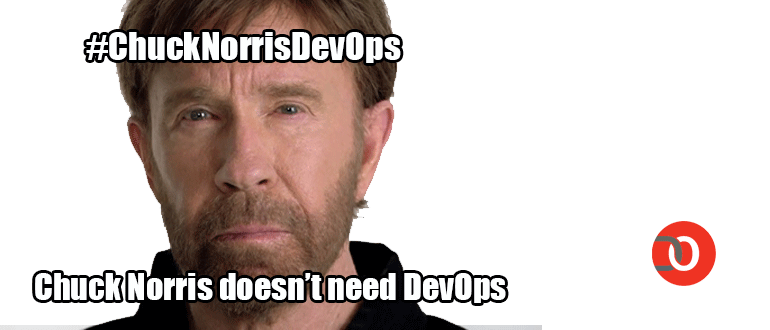
    I think just about everyone on the Internet knows that Chuck Norris is one bad ass dude. But did you know he is so bad ass that he doesn’t need DevOps? Why doesn’t Chuck Norris need DevOps?

    In doing our year end review of our metrics we discovered that due to an article I wrote back in March of 2014 one of the most popular search terms that brought people to our site was … wait for it, that’s right, Chuck Norris.  Well as long as we are attracting the Chuck Norris crowd we might as well have some fun with it.  So we are going to run a contest asking readers to come up with the best reason why Chuck Norris doesn’t need DevOps.

    We will have several categories with prizes in each category:

    Most Original 
    Most Humorous 
    Most ReTweeted 
    Most Favorited 

    The top winner in each category will receive a $50 Amazon.com gift card plus a Chuck Norris DVD collection. Other winners will receive a copy of The Phoenix Project, devopsy.kinsta.cloud t-shirts and more.  In order to enter you must tweet your reason why Chuck Norris doesn’t need DevOps and you must include the #ChuckNorrisDevOps hash tag. You can also use the Chuck Norris meme generator at http://memegenerator.net/Chuck-Norris/caption to generate your image and caption, then retweet it. The contest will be open until the end of January.

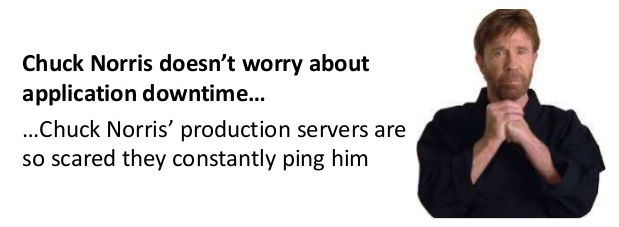
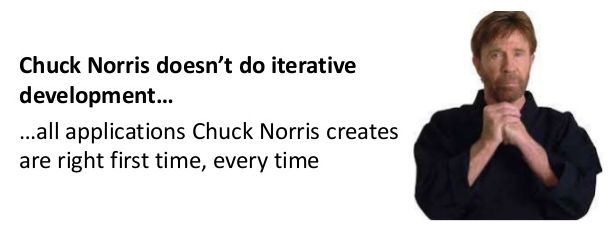
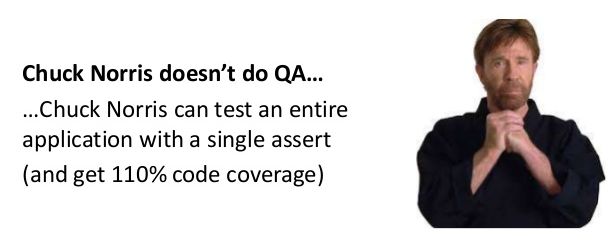
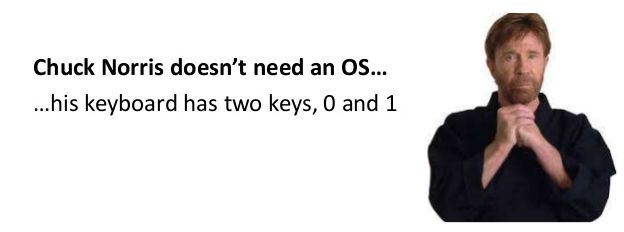
    My original article noted a great presentation by Daniel Bryant of  the tai-dev blog titled Chuck Norris doesn’t need DevOps. Daniel has some great reasons why Chuck doesn’t need DevOps in his slides.  Of course any reasons that Daniel has already published are not eligible for this contest.   Among them are:

    Image1

    Image5

    Image2

    Image3

    Image4

  • What are the most critical DevOps Tools?

    What are the most critical DevOps Tools?

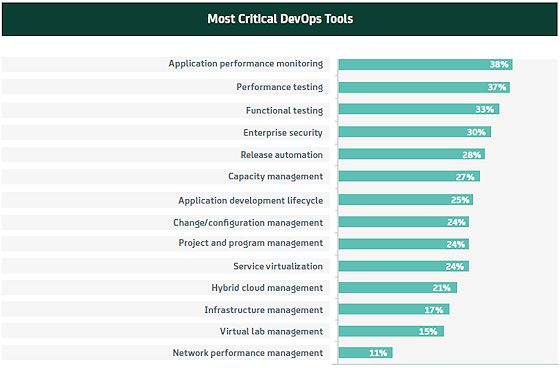
    What are the most critical DevOps tools categories? According to the results of a new survey by CA Technologies the answers may be surprising. That is just one of the insights reported on. The survey results and report are chock full of other great insights about DevOps usage as well.

    The survey shows that a staggering 88% of respondents either are already utilizing or expect to be utilizing DevOps within the next 5 years.  The over 1400 respondents to the survey represented IT or line of business executives and is a significant increase over last years 66% response rate. This would certainly indicate that DevOps is crossing over in the mainstream and is no longer solely in the realm of early adopters and visionaries.

    So according to the study what are the most critical DevOps tools?

    tools

    APM as the most critical? It is a popular segment with players like New Relic, App Dynamics, Dynatrace (Compuware) and CA to name a few. But I thought that change/configuration management which would include Chef and Puppet would be number 1. Also performance testing and functional testing were 2nd and 3rd. Could this be a case of categories CA plays in being over emphasized, the “everything looks like a hammer to a nail syndrome”?  I don’t know, but the numbers speak for themselves. I was happy to see enterprise security coming in 4th on the list (another area CA plays in).  Bringing up the rear at only 11% was network performance management. I think that may have a lot to do with the fact that with the rise of the cloud, so many organizations are less invested about network as the cloud and Internet has replaced much of the internal LAN.

    I spoke to Andi Mann, VP in the CTO’s office at CA and a frequent contributor to devopsy.kinsta.cloud about the survey. Andi said that it is re-enforcement that despite all of the talk about DevOps being about culture, we should not forget that it is about tools as well.

    So what are the reasons given for this massive adoption statistic. What are the perceived benefits and reasons driving DevOps adoption?  According to the survey results:

    devops benefits

    As can be seen over 40% cited improved quality and performance of applications as the driver for DevOps.  For those who wonder about whether you can have increased speed only at the expense of quality, this would seem to show that you can have both with DevOps. Perhaps equally as rewarding was the 2nd most popular response, improving the end customer experience.

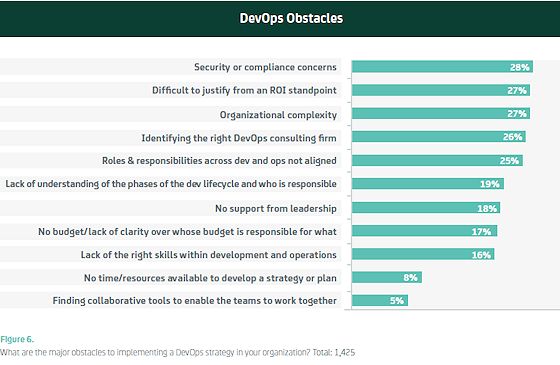
    In any case with 88% of respondents on board with DevOps, one thing is for sure, DevOps is the worst kept secret in IT. However, let’s not paint an overly rosy picture. Not every DevOps effort succeeds. What are the biggest obstacles to DevOps adoption? Again the survey says:

    devops obstacles

    So while enterprise security is a big benefit for adopting DevOps, security and compliance concerns are the biggest obstacles to DevOps adoption as well. I guess that is the Jekyll and Hyde nature of security? I don’t buy the ROI being difficult to justify. Most DevOps examples I have seen show a clear positive ROI.  Identifying the right DevOps consultant firm?  I don’t know about that one either. But then again I am bullish on DevOps, so I may be as guilty of the “hammer looks like a nail” as anyone.  I am surprised though that under obstacles we didn’t see that our culture is not trusting or some other culture related reason.

    You should go have a look at the survey yourself as there are other good insights there. In the meantime here is another indicator of just how deep DevOps is penetrating the IT market.


  • Breaking Builds II – The Butler did it

    Breaking Builds II – The Butler did it

    reakingbadAs editor-in-chief here at devopsy.kinsta.cloud and writing for several other publications I see more than my share of contests, promotions and other marketing campaigns (not to mention pitches from PR agencies), but I came across one this week that I really wanted to share with you.  My friends at CloudBees, the Jenkins company are once again running their Breaking Builds promotion.  In case you don’t know about it, it combines two very different characters. The Butler from Jenkins and Walter White from Breaking Bad. As Sacha Labourey, CEO of CloudBees says in his blog post on the contest morphing these two together is “probably one of the best examples of cognitive dissonance you can get.”

    The marketing and engineering teams at CloudBees have come up with a series of banners with graphics of the Butler as Breaking Bad characters, especially Water White.  They then have come up with captions for the images that are spoofs of lines from Breaking Bad and also have a Continuous Delivery angle to them.  You can see what they have come up with here. Your mission if you accept it is to take the graphics and come up with a better caption than the CloudBees team. You then tweet the image with your caption and you’re entered.

    There are prizes for several categories of captions. The categories are

    • Most Original Caption for any of the 10 #BreakingBuilds images + your caption
    • Most Humorous Caption for any of the 10 #BreakingBuilds images + your caption
    • Most ReTweeted Twitter post* for any of the 10 #BreakingBuilds images + your caption *Dare we call this CI (Continuous Interaction)?  😉
    • Most Favorited Twitter post for any of the 10 #BreakingBuilds images + your caption
    • We may also create additional categories during the contest if we see an emerging theme!

    The categories, prizes and full rules are also available here.

    Personally my favorites of the images and captions done by CloudBees are these two:

    breaking-builds-say-my-namebreaking-builds-done-when-i-say

    So if you are a Jenkins and/or a Breaking Bad fan why not join in the fun. Give it a try. We will also feature some of the winning banners here on devopsy.kinsta.cloud

  • Organic engineering team a must for long term DevOps success

    Organic engineering team a must for long term DevOps success

    Last month I was out in Las Vegas at CA World. While there I had a chance for a one-on-one meeting with CA CEO, Michael Gregoire.  In our discussion Gregoire told me that one of the things he is most proud of in his time at CA is the fact that he has instilled a culture of an “organic engineering team”.  According to Michael you can’t truly be a successful software company (and just about every company is a software company today) or a DevOps empowered organization without this organic engineering team.

    I don’t think any CEO would be against having a high functioning engineering team. But what does Gregoire mean by organic? My understanding is that he is talking about the team being internal. Not outsourced or acquired, but built, grown and nurtured within the organization.

    So what does that mean for outsourcing? When software is eating the world, can you have a successful business when you can’t develop and operate your own software? If DevOps is a key ingredient in a high functioning IT organization, can you outsource DevOpst?

    In the case of DevOps, with cultural change being such an important ingredient in the recipe, it would seem that you can’t outsource culture, it has to be organic. But if you can’t outsource cultural change and DevOps, can you import it? Can you graft a culture of DevOps into your organization?

    This was exactly the conversation I had with another person at CA World and with several people thereafter. At CA World I had a chance to speak with Rohit Antao, a Principal at PwC who heads up many of the DevOps engagements that PwC is involved in. Rohit shared with me that in many of the IT advisory and transformation engagements that the firm undertakes instilling a DevOps friendly culture and process is just about obligatory.

    I asked Antao how they go about grafting a DevOps branch onto the main trunk of a company’s IT tree. Like similar paths I have heard from IBM and others, he explained that their blueprint is usually to pick a few small projects to build success upon. From these small projects where DevOps is injected they seek to expand this DevOps way deeper and deeper into the organization. The idea is that after some months the DevOps way of doing things take root. It becomes organic to the organization.

    Actually this kind of engagement involving coming in and transforming IT from within, then leaving behind a team and new way of doing things while you move on to the next engagement was something I first saw put in action by a company called The Feld Group. Charlie Feld in many ways pioneered modern CIO models. He and his firm would come in and turn an IT department on its head, hire in some new leadership and when things were on track leave to the next engagement. But leave behind a solid team and culture.

    This type of engagement is not only the purview of IBM, PwC and other big name firms. I had a chance to speak with Laszlo Szalvay, VP of SolutionsIQ. They are an Agile Enterprise Solutions company who today announced the acquisition of Boson-based Big Visible to form the largest agile consultancy focused on enterprise transformations.

    Laszlo explained to me that in his view there are two kinds of IT transformation consulting engagements. You can tell them apart by a cup of coffee. In one type of engagement the consultant tells the customer to grab a cup of coffee and leave the consultant to his work. The consultant will let the customer know when finished. In the other type of engagement the customer and the consultant sit down over a cup of coffee and plan how they will work together to accomplish the goal which ends when the consultant hands the keys back to the customer after they have worked together to instill in the case of SolutionsIQ a culture, processes and tools for an agile development team.

    Funny how though the names, faces, technology and tools change, the process stays the same. The same thing the Feld Group was doing 25-30 years ago is what these companies are doing today. You can graft a new culture and a new way of doing things into organizations. If planned well and done correctly you can grow your own organic engineering team.

    Can you outsource DevOps though? Can you have DevOps-a-a-Service? I am not sold on that one. I guess someone will have to convince me on that before I buy into it.